Industry presses for cooperative research and real‑time data to limit broad right whale closures
June 05, 2025 | Natural Resources: House Committee, Standing Committees - House & Senate, Congressional Hearings Compilation, Legislative, Federal
This article was created by AI summarizing key points discussed. AI makes mistakes, so for full details and context, please refer to the video of the full meeting. Please report any errors so we can fix them. Report an error »
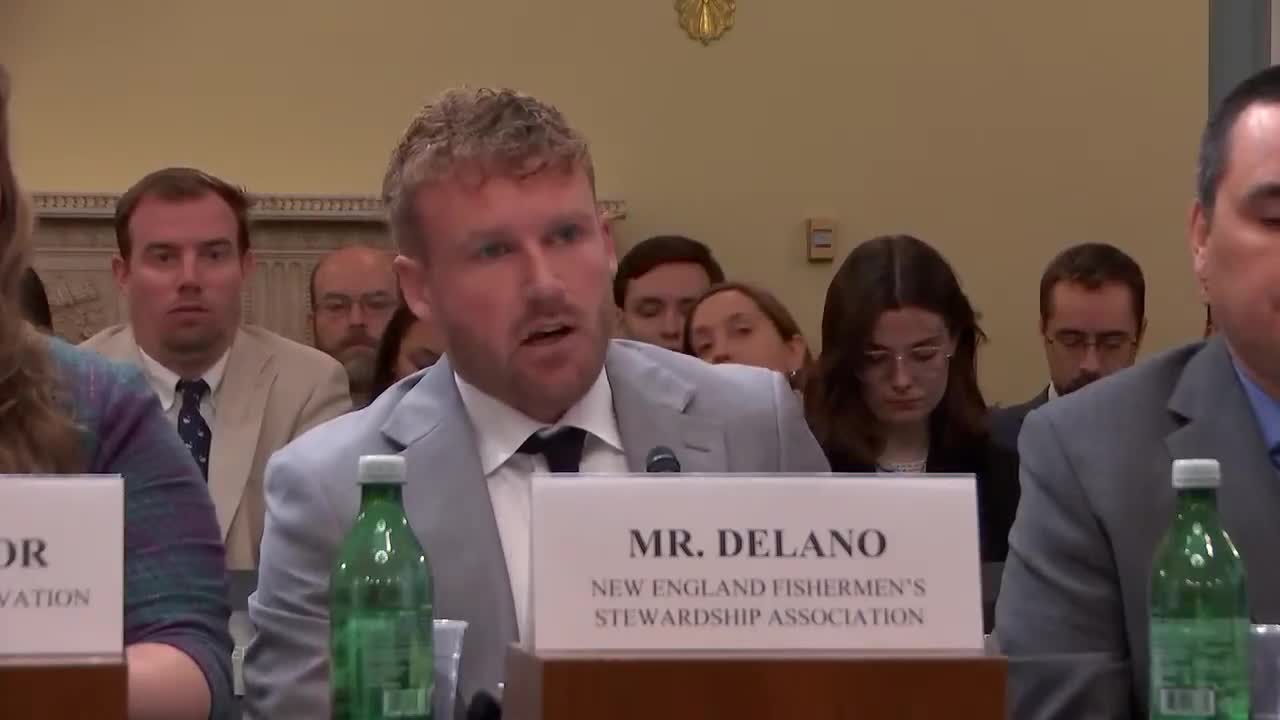
Fishermen told the subcommittee that protecting the endangered North Atlantic right whale is necessary, but they urged a targeted, data‑driven approach that avoids broad seasonal closures that shut out fishing during productive periods.
Dustin Delano, chief operating officer of the New England Fishermen Stewardship Association and a fourth‑generation lobsterman, said his industry has modified gear and accepted costs to reduce entanglement risk but described the economic and safety strain of large closures. “One of the most damaging changes has been the thousand square mile closure off of Maine's coast,” Delano said, explaining that lobsters move offshore and that winter gear shifting is dangerous. He argued that broad closures can become ineffective and harmful to fishing communities unless paired with better data.
Delano recommended expanded cooperative research and gear‑based technology, including industry vessels participating in surveys to supplement the single federal groundfish survey. He also advocated for non‑invasive whale tagging and real‑time location data, citing successes with southern hemisphere programs that helped identify calving grounds and migration routes.
Members asked about timing and sufficiency of data. Delano and other witnesses said that recent congressionally funded monitoring in Maine is just starting and will not be ready in time for the Technical Review Team (TRT) process scheduled to propose draft regulations in early 2026. Delano expressed support for extending timelines so new, locally gathered data can be considered: “Unless the current regulatory process is extended, these restrictions will return before the science is ready.”
The panel also discussed the grey‑zone area around Machias Seal Island and asymmetric enforcement, where witnesses expressed concern about competitive imbalances when neighboring foreign vessels operate under different rules.
Lawmakers framed the conversation as a need to combine whale protections and sustainable fisheries. Witnesses emphasized that solutions should include more cooperative science, real‑time monitoring and international cooperation on enforcement and data sharing.
Dustin Delano, chief operating officer of the New England Fishermen Stewardship Association and a fourth‑generation lobsterman, said his industry has modified gear and accepted costs to reduce entanglement risk but described the economic and safety strain of large closures. “One of the most damaging changes has been the thousand square mile closure off of Maine's coast,” Delano said, explaining that lobsters move offshore and that winter gear shifting is dangerous. He argued that broad closures can become ineffective and harmful to fishing communities unless paired with better data.
Delano recommended expanded cooperative research and gear‑based technology, including industry vessels participating in surveys to supplement the single federal groundfish survey. He also advocated for non‑invasive whale tagging and real‑time location data, citing successes with southern hemisphere programs that helped identify calving grounds and migration routes.
Members asked about timing and sufficiency of data. Delano and other witnesses said that recent congressionally funded monitoring in Maine is just starting and will not be ready in time for the Technical Review Team (TRT) process scheduled to propose draft regulations in early 2026. Delano expressed support for extending timelines so new, locally gathered data can be considered: “Unless the current regulatory process is extended, these restrictions will return before the science is ready.”
The panel also discussed the grey‑zone area around Machias Seal Island and asymmetric enforcement, where witnesses expressed concern about competitive imbalances when neighboring foreign vessels operate under different rules.
Lawmakers framed the conversation as a need to combine whale protections and sustainable fisheries. Witnesses emphasized that solutions should include more cooperative science, real‑time monitoring and international cooperation on enforcement and data sharing.
View the Full Meeting & All Its Details
This article offers just a summary. Unlock complete video, transcripts, and insights as a Founder Member.
✓
Watch full, unedited meeting videos
✓
Search every word spoken in unlimited transcripts
✓
AI summaries & real-time alerts (all government levels)
✓
Permanent access to expanding government content
30-day money-back guarantee
