Skokie reviews Neighborhood Integrity Ordinance in 10th year; emphasizes landlord training, inspections and fair‑housing ties
June 05, 2025 | Skokie, Cook County, Illinois
This article was created by AI summarizing key points discussed. AI makes mistakes, so for full details and context, please refer to the video of the full meeting. Please report any errors so we can fix them. Report an error »
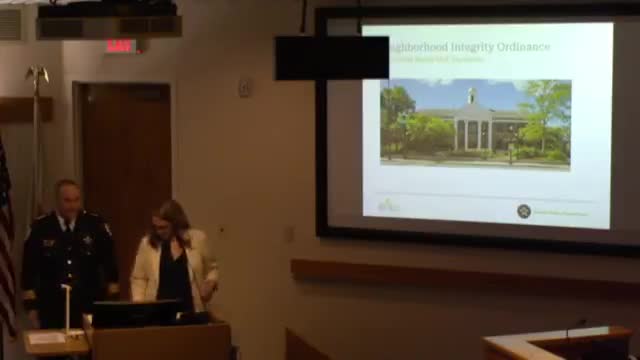
SKOKIE, Ill. — Village staff on June 4, 2025, presented an overview of Skokie’s Neighborhood Integrity Ordinance and related residential rental unit standards as the program marks its tenth anniversary.
Community Development Director Johanna Knighton told the board the ordinance, adopted in January 2014, is “not just an ordinance. It’s an approach to how we, work to support and sustain neighborhoods, throughout Skokie with high quality housing.” The presentation included remarks from Police Chief Jesse Barnes, Health and Human Services Director Mike Charley, Neighborhood Standards Officer Rich Wilkin and Building and Inspection Services Manager Angel Schneert.
Staff described several core components: mandatory landlord training led by the village, a $25 per‑unit rental registration fee (with a waiver available after three years of documented good compliance), a crime‑free lease addendum required for occupied units in the registration program and routine interior, exterior and common‑area inspections. Mike Charley explained how the Neighborhood Integrity Ordinance operates alongside Skokie’s Fair Housing Ordinance; the Human Rights Commission can investigate housing discrimination complaints and impose remedies where appropriate.
Chief Barnes said the program creates “a structured relationship between the police department and landlords and tenants,” adding that a designated liaison — the neighborhood standards officer — serves as a central point for concerns from tenants, landlords and neighbors. “We have clear guidelines, consistency…important for accountability,” Barnes said.
Officer Rich Wilkin described crime prevention through environmental design (CPTED) measures and the program’s security‑survey service, which staff offer to landlords, tenants and other residents. The crime‑free lease addendum, Wilkin said, is an additional rider that requires all occupants over age 18 to agree to conduct standards addressing criminal activity on or near a property; the addendum creates a civil agreement between landlord and tenant that can be used in enforcement actions.
Angel Schneert said property standards implements routine rental inspections and presale inspections that cover full buildings, common areas and individual units, and she emphasized the program is a joint effort among landlords, tenants and village staff.
No formal changes to the ordinance were proposed at the meeting; the presentation framed the ordinance as an ongoing, village‑wide effort to link fair‑housing protections, landlord education and property maintenance to safer neighborhoods.
Community Development Director Johanna Knighton told the board the ordinance, adopted in January 2014, is “not just an ordinance. It’s an approach to how we, work to support and sustain neighborhoods, throughout Skokie with high quality housing.” The presentation included remarks from Police Chief Jesse Barnes, Health and Human Services Director Mike Charley, Neighborhood Standards Officer Rich Wilkin and Building and Inspection Services Manager Angel Schneert.
Staff described several core components: mandatory landlord training led by the village, a $25 per‑unit rental registration fee (with a waiver available after three years of documented good compliance), a crime‑free lease addendum required for occupied units in the registration program and routine interior, exterior and common‑area inspections. Mike Charley explained how the Neighborhood Integrity Ordinance operates alongside Skokie’s Fair Housing Ordinance; the Human Rights Commission can investigate housing discrimination complaints and impose remedies where appropriate.
Chief Barnes said the program creates “a structured relationship between the police department and landlords and tenants,” adding that a designated liaison — the neighborhood standards officer — serves as a central point for concerns from tenants, landlords and neighbors. “We have clear guidelines, consistency…important for accountability,” Barnes said.
Officer Rich Wilkin described crime prevention through environmental design (CPTED) measures and the program’s security‑survey service, which staff offer to landlords, tenants and other residents. The crime‑free lease addendum, Wilkin said, is an additional rider that requires all occupants over age 18 to agree to conduct standards addressing criminal activity on or near a property; the addendum creates a civil agreement between landlord and tenant that can be used in enforcement actions.
Angel Schneert said property standards implements routine rental inspections and presale inspections that cover full buildings, common areas and individual units, and she emphasized the program is a joint effort among landlords, tenants and village staff.
No formal changes to the ordinance were proposed at the meeting; the presentation framed the ordinance as an ongoing, village‑wide effort to link fair‑housing protections, landlord education and property maintenance to safer neighborhoods.
View the Full Meeting & All Its Details
This article offers just a summary. Unlock complete video, transcripts, and insights as a Founder Member.
✓
Watch full, unedited meeting videos
✓
Search every word spoken in unlimited transcripts
✓
AI summaries & real-time alerts (all government levels)
✓
Permanent access to expanding government content
30-day money-back guarantee
