Bowling Green planners weigh ordinance to limit tobacco and vape shops
June 05, 2025 | Bowling Green, Wood County, Ohio
This article was created by AI summarizing key points discussed. AI makes mistakes, so for full details and context, please refer to the video of the full meeting. Please report any errors so we can fix them. Report an error »
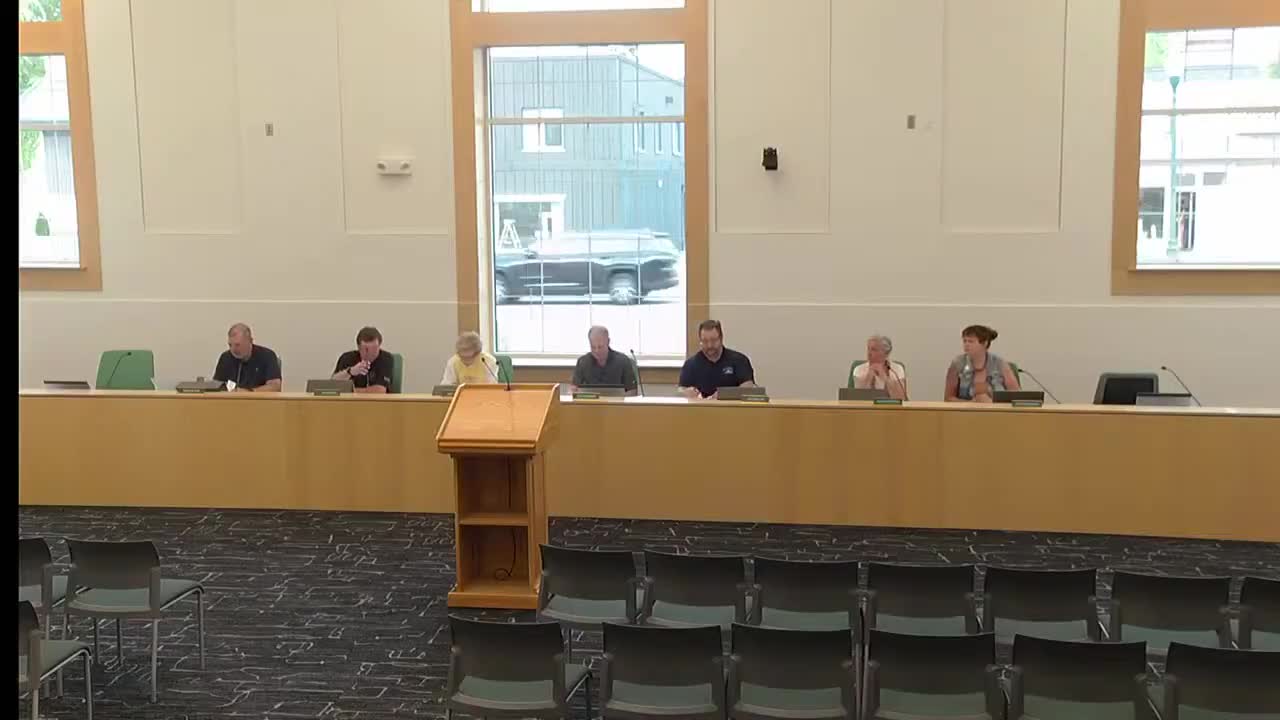
The Bowling Green City Planning Commission on Tuesday reviewed a staff-drafted zoning amendment that would create a new land‑use category called “tobacco or vape store” and impose spacing, buffer, hours and window‑signage limits on those businesses.
Heather, a city planning staff member, presented the draft and said it would add “tobacco or vape store” to the city’s comprehensive use table (section 150.42) and create specific use regulations in a new Section 150.69. Heather said the draft would: require 1 mile of separation between tobacco or vape stores; prohibit such stores within 1,000 feet of schools, universities, public parks, public libraries, places of religious assembly and child day‑care centers (measured from property lines); ban on‑site smoking or lounges; prohibit outdoor display of merchandise; limit in‑window LED/neon/fiber‑optic signage to 25% of window surface and bar animated or flashing signs; and limit in‑person customer service hours to 10 p.m. to 8 a.m. The draft would allow existing stores to continue as legal nonconforming uses regulated under Article 5 (nonconformities).
Why it matters: planners said outlet density is linked in research to greater youth exposure and higher tobacco use in lower‑income neighborhoods. Heather told the commission she used distance standards from other municipalities and noted the state of Ohio’s 1‑mile rule for cannabis dispensaries as a comparison.
Commissioners raised multiple points about how the rules would work in practice. Judy Ennis, commissioner, asked whether drive‑through windows would be covered; Heather said a convenience store that sells tobacco as ancillary sales would not be defined as a tobacco or vape store, and that a drive‑through carryout would likely not be captured if it is not a retail establishment dedicated to tobacco or vape sales. Commissioners noted the city packet contained inconsistent counts of retailers; Heather said staff estimated about 12 primary dedicated shops plus roughly 16 secondary sellers (about 28 total), while a packet note indicated 32. Commissioners urged staff to run spatial models showing how the draft spacing and buffer rules would affect existing and potential new locations.
No ordinance vote was taken. The commission directed staff to refine the draft for the next round of review: make the Central Business District a conditional zone for the use, add model scenarios of density limits (examples included a per‑population cap), and prepare materials for a public hearing. Commissioners generally favored holding the public hearing in August rather than July to avoid the Independence Day holiday; Chair Bob Stalter confirmed the commission would aim for an August hearing and told staff to bring back revised language and models. Heather also said the city could ask the city council to consider an extension of any moratorium if more time is needed to schedule hearings.
The discussion also covered enforcement and technical details: whether window signage rules should apply citywide, how to measure signage and lighting (property line vs. structure-to-structure), whether lumen or brightness limits might be needed to prevent circumvention, and whether a posted “no minors” sign should be required for primary shops (staff said state law requires ID to purchase and that she would check state rules about unaccompanied minors). Commissioners emphasized the need to present a model at the hearing so residents can see the practical effect of spacing, buffers and any cap on the number of stores.
Next steps: staff will revise the draft per the commission’s directions (including treating the Central Business District as a conditional zone and producing density models) and schedule a public hearing, with planners aiming for August.
Heather, a city planning staff member, presented the draft and said it would add “tobacco or vape store” to the city’s comprehensive use table (section 150.42) and create specific use regulations in a new Section 150.69. Heather said the draft would: require 1 mile of separation between tobacco or vape stores; prohibit such stores within 1,000 feet of schools, universities, public parks, public libraries, places of religious assembly and child day‑care centers (measured from property lines); ban on‑site smoking or lounges; prohibit outdoor display of merchandise; limit in‑window LED/neon/fiber‑optic signage to 25% of window surface and bar animated or flashing signs; and limit in‑person customer service hours to 10 p.m. to 8 a.m. The draft would allow existing stores to continue as legal nonconforming uses regulated under Article 5 (nonconformities).
Why it matters: planners said outlet density is linked in research to greater youth exposure and higher tobacco use in lower‑income neighborhoods. Heather told the commission she used distance standards from other municipalities and noted the state of Ohio’s 1‑mile rule for cannabis dispensaries as a comparison.
Commissioners raised multiple points about how the rules would work in practice. Judy Ennis, commissioner, asked whether drive‑through windows would be covered; Heather said a convenience store that sells tobacco as ancillary sales would not be defined as a tobacco or vape store, and that a drive‑through carryout would likely not be captured if it is not a retail establishment dedicated to tobacco or vape sales. Commissioners noted the city packet contained inconsistent counts of retailers; Heather said staff estimated about 12 primary dedicated shops plus roughly 16 secondary sellers (about 28 total), while a packet note indicated 32. Commissioners urged staff to run spatial models showing how the draft spacing and buffer rules would affect existing and potential new locations.
No ordinance vote was taken. The commission directed staff to refine the draft for the next round of review: make the Central Business District a conditional zone for the use, add model scenarios of density limits (examples included a per‑population cap), and prepare materials for a public hearing. Commissioners generally favored holding the public hearing in August rather than July to avoid the Independence Day holiday; Chair Bob Stalter confirmed the commission would aim for an August hearing and told staff to bring back revised language and models. Heather also said the city could ask the city council to consider an extension of any moratorium if more time is needed to schedule hearings.
The discussion also covered enforcement and technical details: whether window signage rules should apply citywide, how to measure signage and lighting (property line vs. structure-to-structure), whether lumen or brightness limits might be needed to prevent circumvention, and whether a posted “no minors” sign should be required for primary shops (staff said state law requires ID to purchase and that she would check state rules about unaccompanied minors). Commissioners emphasized the need to present a model at the hearing so residents can see the practical effect of spacing, buffers and any cap on the number of stores.
Next steps: staff will revise the draft per the commission’s directions (including treating the Central Business District as a conditional zone and producing density models) and schedule a public hearing, with planners aiming for August.
Don't Miss a Word: See the Full Meeting!
Go beyond summaries. Unlock every video, transcript, and key insight with a Founder Membership.
✓
Get instant access to full meeting videos
✓
Search and clip any phrase from complete transcripts
✓
Receive AI-powered summaries & custom alerts
✓
Enjoy lifetime, unrestricted access to government data
30-day money-back guarantee
