Plain City studies stormwater utility fee to fund aging drainage system
June 05, 2025 | Plain City Council, Plain City, Madison County, Ohio
This article was created by AI summarizing key points discussed. AI makes mistakes, so for full details and context, please refer to the video of the full meeting. Please report any errors so we can fix them. Report an error »
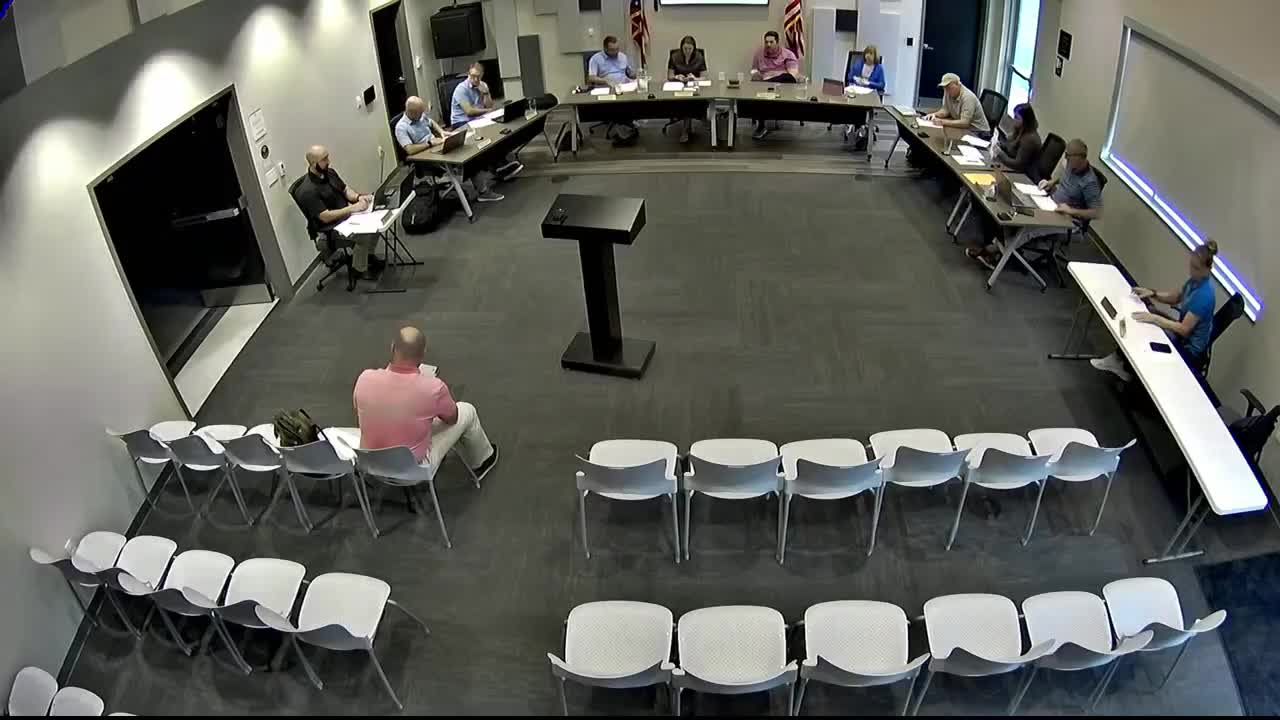
Plain City councilors on Monday heard a presentation from a consultant and staff on a proposed stormwater utility fee intended to fund aging storm-sewer infrastructure and water-quality measures for runoff to Darby Creek.
The study by consultant Randy Van Selberg of Manuka Smith and village staff outlined how the utility would convert a property’s impervious area into “equivalent residential units” (ERUs) and bill residential and commercial customers accordingly. Haley, a village staff member, told the council, “We completely own our stormwater infrastructure.”
The nut graf: Councilors and staff said the village’s storm sewers and outfalls to Darby Creek need investment and that a dedicated utility would provide a stable revenue source for maintenance, capital repairs and to improve the village’s competitiveness for state and federal grants.
The consultant said the study estimated Plain City has about 2,764 ERUs. Using that base, the packet modeled several rates. “If we did $5 a month, it’s … $166,000,” Van Selberg said, describing the arithmetic the council would use to size a fee. Staff noted billing would most likely be handled quarterly via the village’s existing trash bill for residents; commercial billing would be handled separately.
The study included a draft capital improvement program (CIP) extract showing storm-related portions of planned street projects for the next five years; the consultant said the fee would not pay for all projected work but would seed a fund to supplement general-fund spending and to match grants. The packet also described credit policies for property owners that maintain private storm facilities; a draft credit cap in the study was 50 percent for qualifying on-site treatment or detention.
Councilors discussed equity and overlap with existing assessments. Some new subdivisions participate in a county ditch-maintenance assessment; staff and the consultant agreed those property owners could potentially apply for a partial credit, but the village would need rules because the village would still maintain street inlets and some infrastructure even where basins are privately or county-maintained. Staff said the county assessment for some developments was roughly $25 a year and is billed through property tax assessments.
No vote was taken. Council members agreed the proposal had merit and asked staff to proceed with community education and outreach this summer before presenting a draft ordinance. Staff said they would provide comparisons with neighboring communities and prepare public-facing materials explaining why the fee is being considered.
The discussion also covered potential implementation details: whether billing would be monthly or quarterly, the ERU definition (about 2,650 square feet of impervious area in the consultant’s analysis), and a credit program for private treatment systems. Councilors emphasized they were not adopting a fee at the meeting and that any ordinance would return for further review.
Ending: Staff will continue developing the utility study, the draft CIP storm project list, a credit-policy proposal and community outreach materials and return to council with a proposed ordinance and more detailed cost modeling.
The study by consultant Randy Van Selberg of Manuka Smith and village staff outlined how the utility would convert a property’s impervious area into “equivalent residential units” (ERUs) and bill residential and commercial customers accordingly. Haley, a village staff member, told the council, “We completely own our stormwater infrastructure.”
The nut graf: Councilors and staff said the village’s storm sewers and outfalls to Darby Creek need investment and that a dedicated utility would provide a stable revenue source for maintenance, capital repairs and to improve the village’s competitiveness for state and federal grants.
The consultant said the study estimated Plain City has about 2,764 ERUs. Using that base, the packet modeled several rates. “If we did $5 a month, it’s … $166,000,” Van Selberg said, describing the arithmetic the council would use to size a fee. Staff noted billing would most likely be handled quarterly via the village’s existing trash bill for residents; commercial billing would be handled separately.
The study included a draft capital improvement program (CIP) extract showing storm-related portions of planned street projects for the next five years; the consultant said the fee would not pay for all projected work but would seed a fund to supplement general-fund spending and to match grants. The packet also described credit policies for property owners that maintain private storm facilities; a draft credit cap in the study was 50 percent for qualifying on-site treatment or detention.
Councilors discussed equity and overlap with existing assessments. Some new subdivisions participate in a county ditch-maintenance assessment; staff and the consultant agreed those property owners could potentially apply for a partial credit, but the village would need rules because the village would still maintain street inlets and some infrastructure even where basins are privately or county-maintained. Staff said the county assessment for some developments was roughly $25 a year and is billed through property tax assessments.
No vote was taken. Council members agreed the proposal had merit and asked staff to proceed with community education and outreach this summer before presenting a draft ordinance. Staff said they would provide comparisons with neighboring communities and prepare public-facing materials explaining why the fee is being considered.
The discussion also covered potential implementation details: whether billing would be monthly or quarterly, the ERU definition (about 2,650 square feet of impervious area in the consultant’s analysis), and a credit program for private treatment systems. Councilors emphasized they were not adopting a fee at the meeting and that any ordinance would return for further review.
Ending: Staff will continue developing the utility study, the draft CIP storm project list, a credit-policy proposal and community outreach materials and return to council with a proposed ordinance and more detailed cost modeling.
View the Full Meeting & All Its Details
This article offers just a summary. Unlock complete video, transcripts, and insights as a Founder Member.
✓
Watch full, unedited meeting videos
✓
Search every word spoken in unlimited transcripts
✓
AI summaries & real-time alerts (all government levels)
✓
Permanent access to expanding government content
30-day money-back guarantee
