Bay Shore holds first read of new state-mandated bell-to-bell personal device policy
June 05, 2025 | BAY SHORE UNION FREE SCHOOL DISTRICT, School Districts, New York
This article was created by AI summarizing key points discussed. AI makes mistakes, so for full details and context, please refer to the video of the full meeting. Please report any errors so we can fix them. Report an error »
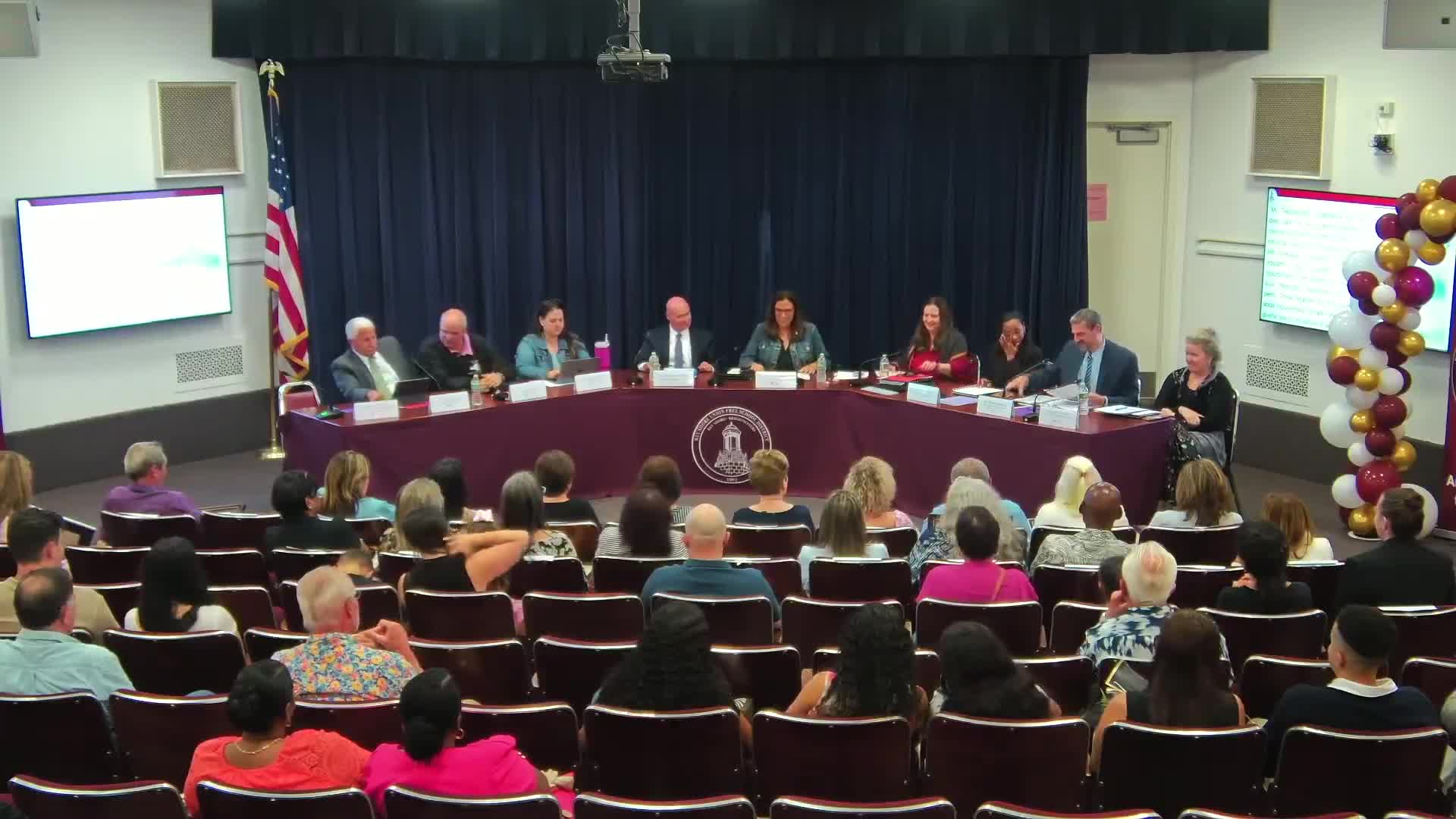
The Bay Shore Union Free School District presented a first read May 28 of a new personal electronic devices policy required by recent state legislation attributed to Governor Kathy Hochul’s budget enactment. The district assembled an implementation team and described grade-level rules, exceptions and enforcement options ahead of a scheduled second reading.
The policy, described in the meeting as the newly required NISPA policy received only days earlier, would implement a bell-to-bell restriction on personal smartphones, tablets and internet‑connected smartwatches during the school day across classrooms, cafeterias, hallways and school grounds. A second read was scheduled for June 18 to allow board members more time to review the draft.
Presenters said the district convened a working group of teachers, administrators, one parent and one student to craft an implementation plan that aligns the state requirement with local practice. The draft policy outlines grade-differentiated storage expectations: elementary students would keep devices in backpacks or a teacher-designated classroom space; middle school students would silence devices and store them in lockers or belongings; high schools would rely on classroom-by-classroom device caddies and require devices to be out of sight in non‑instructional common areas.
The draft lists limited exceptions that require principal approval, such as documented medical needs, translation assistance and student caregivers; medical exceptions may require documentation. For testing integrity, the policy reiterates longstanding practice that no phones or wearable devices are permitted during state, AP and IB testing unless explicitly approved in advance by a school.
On enforcement, the draft suggests initial confiscation and use of the district code of conduct for consequences; presenters said out‑of‑school suspension cannot be imposed specifically for a device‑use violation. The policy also allows individual schools some flexibility to determine appropriate consequences.
District staff noted they are still reviewing the suggested NISPA text and that some districts have integrated the requirement into existing technology use policies rather than adopting a stand‑alone policy. The presenters told the board that the state set an August 1 compliance expectation and that districts across the state are in the same review process.
No final vote was taken; the board will review a redline and hold a second read. The district did not specify final enforcement protocols, nor list which principals or schools would use which storage options until further review and local alignment.
The policy, described in the meeting as the newly required NISPA policy received only days earlier, would implement a bell-to-bell restriction on personal smartphones, tablets and internet‑connected smartwatches during the school day across classrooms, cafeterias, hallways and school grounds. A second read was scheduled for June 18 to allow board members more time to review the draft.
Presenters said the district convened a working group of teachers, administrators, one parent and one student to craft an implementation plan that aligns the state requirement with local practice. The draft policy outlines grade-differentiated storage expectations: elementary students would keep devices in backpacks or a teacher-designated classroom space; middle school students would silence devices and store them in lockers or belongings; high schools would rely on classroom-by-classroom device caddies and require devices to be out of sight in non‑instructional common areas.
The draft lists limited exceptions that require principal approval, such as documented medical needs, translation assistance and student caregivers; medical exceptions may require documentation. For testing integrity, the policy reiterates longstanding practice that no phones or wearable devices are permitted during state, AP and IB testing unless explicitly approved in advance by a school.
On enforcement, the draft suggests initial confiscation and use of the district code of conduct for consequences; presenters said out‑of‑school suspension cannot be imposed specifically for a device‑use violation. The policy also allows individual schools some flexibility to determine appropriate consequences.
District staff noted they are still reviewing the suggested NISPA text and that some districts have integrated the requirement into existing technology use policies rather than adopting a stand‑alone policy. The presenters told the board that the state set an August 1 compliance expectation and that districts across the state are in the same review process.
No final vote was taken; the board will review a redline and hold a second read. The district did not specify final enforcement protocols, nor list which principals or schools would use which storage options until further review and local alignment.
Don't Miss a Word: See the Full Meeting!
Go beyond summaries. Unlock every video, transcript, and key insight with a Founder Membership.
✓
Get instant access to full meeting videos
✓
Search and clip any phrase from complete transcripts
✓
Receive AI-powered summaries & custom alerts
✓
Enjoy lifetime, unrestricted access to government data
30-day money-back guarantee
