Ohio committee hears broad testimony on short-term rental substitute bill that would limit local bans and cap lodging taxes
May 28, 2025 | Local Government, Senate, Committees, Legislative, Ohio
This article was created by AI summarizing key points discussed. AI makes mistakes, so for full details and context, please refer to the video of the full meeting. Please report any errors so we can fix them. Report an error »
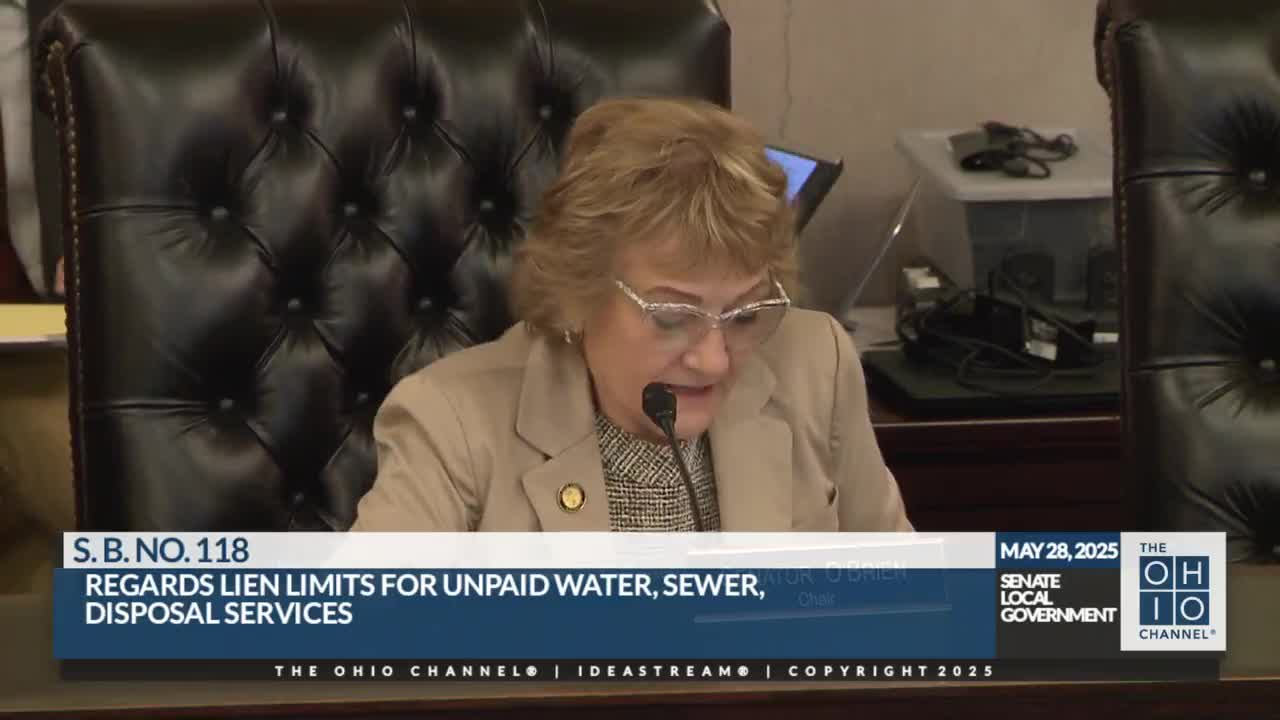
The Senate Local Government Committee on March 12 adopted a substitute as its working document for Senate Bill 104 and heard public testimony for and against provisions that would restrict local governments’ ability to ban or heavily regulate short-term rentals and would cap lodging taxes for those rentals at 7.5%.
Supporters, including short-term rental owners and trade groups, told the committee the bill would create consistent statewide rules and protect property owners from what they described as arbitrary local bans. Opponents, including local convention and visitors bureaus, said the substitute limits local control, constrains local revenue and administration, and was distributed to stakeholders too recently for adequate review.
Senate Bill 104, as discussed in committee, would: grandfather existing local regulations in place before the bill’s effective date; allow local governments to suspend operation of a short-term rental for up to 30 days after three violations of the same local requirement within 180 days; replace a $20 licensing fee with a one-time $50 fee and prohibit renewal fees in certain forms; cap combined lodging/excise taxes on short-term rentals at 7.5%; prohibit levying both an excise and a lodging tax on the same short-term rental stay; and require all local lodging tax collections to be remitted directly to the Ohio Department of Taxation beginning July 1, 2026. The substitute text also would prevent localities from imposing short-term-rental–only taxes that exceed hotel tax rates.
Property owners and hosting companies offered examples of economic and community benefits they attribute to short-term rentals. Marcy Barkema of Huron told the committee she used cleaning work in Airbnbs to support her family and that short-term rentals “have been an opportunity for me to provide a stable income for my family.” Brian Ice, a host from Tuscarawas County, argued state-level uniformity would speed investment and reduce patchwork regulation. The Northern Ohio Short Term Rental Association’s president said short-term rentals in his region account for a small share of housing stock while generating local spending and jobs.
Several speakers urged the panel to preserve a cap on taxes and to move tax collection to platforms to increase compliance. One witness described data showing cities already collect excise or lodging taxes from short-term rentals and argued owners are generally small operators—“not Wall Street hedge funds”—and cannot absorb large new tax burdens without pricing guests out.
Opponents included Lauren Diaz of the Ohio Association of Convention and Visitors Bureaus, who said destination marketing organizations and local governments need time and flexible fee authority to administer licensing, inspections and enforcement. She told the committee many CVBs and local governments only learned of the substitute recently and remain concerned about the effects of preemption and fee limits. Diaz said the substitute’s grandfathering provisions could pressure localities to rush rulemakings prior to an effective date.
Committee members asked several witnesses for clarifications. Ranking Member Smith requested data on how many counties currently exceed the 7.5% combined lodging cap; a committee staffer said she would ask the sponsor to provide that information. Vice Chair Gabbard briefly stepped out for other Senate business during the hearing.
Procedurally, the committee accepted the substitute as the working document “without objection.” The chair noted the amended bill was not marked for a committee vote that day and that the committee would not report SB 104 out of committee at this hearing. The committee then took public testimony and closed the fourth hearing on the bill.
Supporters and opponents asked the committee to continue working with stakeholders to clarify definitions and implementation details, including whether and how platforms would be required to collect and remit taxes, how local policing and nuisance enforcement would be preserved, and how grandfathered local rules would be handled.
With the substitute adopted as the working document, the committee left open whether it will schedule further amendments or a vote. Several witnesses asked for additional time and data to assess how the changes would affect local budgets, tax allocation to destination marketing organizations, and enforcement operations.
Supporters, including short-term rental owners and trade groups, told the committee the bill would create consistent statewide rules and protect property owners from what they described as arbitrary local bans. Opponents, including local convention and visitors bureaus, said the substitute limits local control, constrains local revenue and administration, and was distributed to stakeholders too recently for adequate review.
Senate Bill 104, as discussed in committee, would: grandfather existing local regulations in place before the bill’s effective date; allow local governments to suspend operation of a short-term rental for up to 30 days after three violations of the same local requirement within 180 days; replace a $20 licensing fee with a one-time $50 fee and prohibit renewal fees in certain forms; cap combined lodging/excise taxes on short-term rentals at 7.5%; prohibit levying both an excise and a lodging tax on the same short-term rental stay; and require all local lodging tax collections to be remitted directly to the Ohio Department of Taxation beginning July 1, 2026. The substitute text also would prevent localities from imposing short-term-rental–only taxes that exceed hotel tax rates.
Property owners and hosting companies offered examples of economic and community benefits they attribute to short-term rentals. Marcy Barkema of Huron told the committee she used cleaning work in Airbnbs to support her family and that short-term rentals “have been an opportunity for me to provide a stable income for my family.” Brian Ice, a host from Tuscarawas County, argued state-level uniformity would speed investment and reduce patchwork regulation. The Northern Ohio Short Term Rental Association’s president said short-term rentals in his region account for a small share of housing stock while generating local spending and jobs.
Several speakers urged the panel to preserve a cap on taxes and to move tax collection to platforms to increase compliance. One witness described data showing cities already collect excise or lodging taxes from short-term rentals and argued owners are generally small operators—“not Wall Street hedge funds”—and cannot absorb large new tax burdens without pricing guests out.
Opponents included Lauren Diaz of the Ohio Association of Convention and Visitors Bureaus, who said destination marketing organizations and local governments need time and flexible fee authority to administer licensing, inspections and enforcement. She told the committee many CVBs and local governments only learned of the substitute recently and remain concerned about the effects of preemption and fee limits. Diaz said the substitute’s grandfathering provisions could pressure localities to rush rulemakings prior to an effective date.
Committee members asked several witnesses for clarifications. Ranking Member Smith requested data on how many counties currently exceed the 7.5% combined lodging cap; a committee staffer said she would ask the sponsor to provide that information. Vice Chair Gabbard briefly stepped out for other Senate business during the hearing.
Procedurally, the committee accepted the substitute as the working document “without objection.” The chair noted the amended bill was not marked for a committee vote that day and that the committee would not report SB 104 out of committee at this hearing. The committee then took public testimony and closed the fourth hearing on the bill.
Supporters and opponents asked the committee to continue working with stakeholders to clarify definitions and implementation details, including whether and how platforms would be required to collect and remit taxes, how local policing and nuisance enforcement would be preserved, and how grandfathered local rules would be handled.
With the substitute adopted as the working document, the committee left open whether it will schedule further amendments or a vote. Several witnesses asked for additional time and data to assess how the changes would affect local budgets, tax allocation to destination marketing organizations, and enforcement operations.
View the Full Meeting & All Its Details
This article offers just a summary. Unlock complete video, transcripts, and insights as a Founder Member.
✓
Watch full, unedited meeting videos
✓
Search every word spoken in unlimited transcripts
✓
AI summaries & real-time alerts (all government levels)
✓
Permanent access to expanding government content
30-day money-back guarantee
