Sponsor says SB118 would protect property owners from municipal utility liens arising from tenant delinquencies
May 28, 2025 | Local Government, Senate, Committees, Legislative, Ohio
This article was created by AI summarizing key points discussed. AI makes mistakes, so for full details and context, please refer to the video of the full meeting. Please report any errors so we can fix them. Report an error »
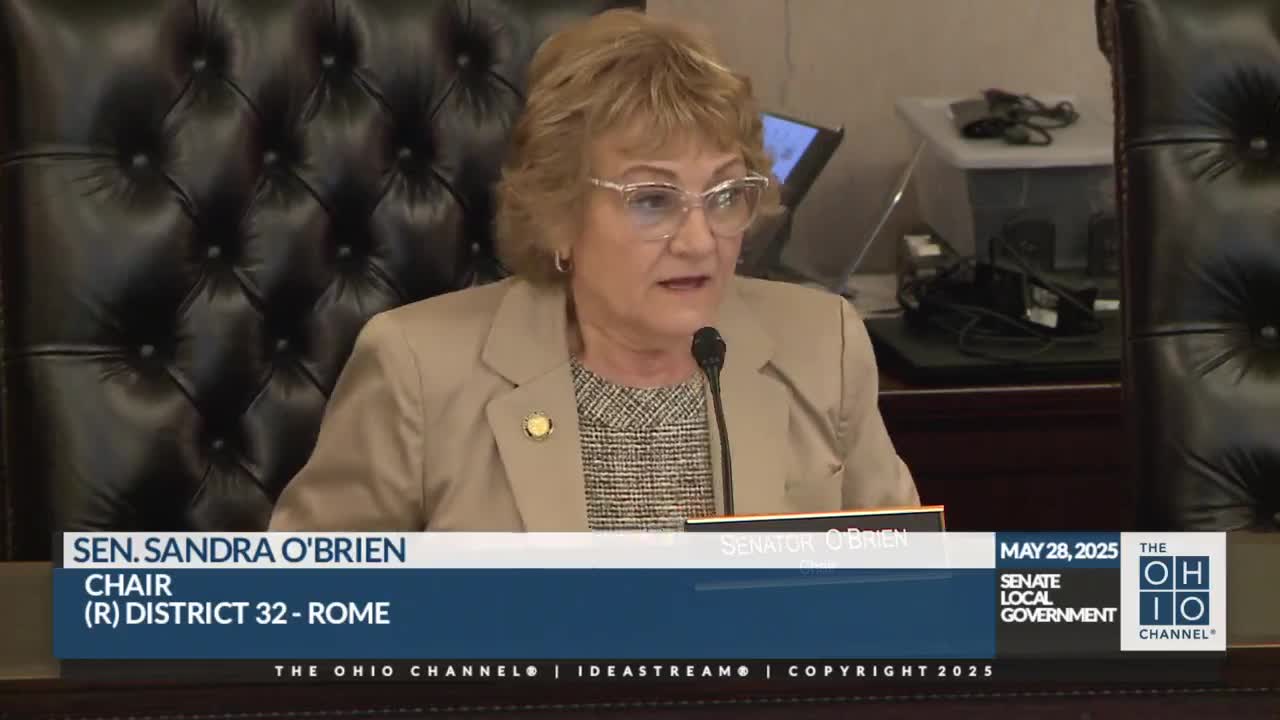
Senator Lang gave sponsor testimony in the Senate Local Government Committee on March 12 for Senate Bill 118, saying the bill would prevent “unexpected and unwarranted property liens placed on innocent property owners” when tenants fail to pay utility bills.
Lang said SB118 clarifies the Ohio Revised Code so that a property owner cannot be charged more than the “termination amount” tied to restoration or continuation of utility service. The bill would require a municipal authority to provide verification to the county auditor and give notice to the property owner before placing a municipal lien on a property, Lang said, a change he said constituents have repeatedly requested. He also said appeals by landlords claiming a former tenant is responsible for utility charges would be reviewed by courts rather than the Environmental Review Appeals Commission.
In sponsor remarks, Lang described a constituent example in which a property owner incurred nearly $10,000 in unpaid water charges, unpaid rent and cleanup fees after a tenant disconnected and then reactivated water service; Lang used the anecdote to illustrate how the bill would offer “recourse in the event of a tenant utility payment delinquency.” Lang emphasized the bill would not require county treasurers to collect sewer or disposal liens as separate payments, a provision he said would avoid expensive software changes for treasurers. Lang closed by characterizing SB118 as “a common sense overdue fix” and offered to answer questions; the committee had none during the first hearing.
The committee concluded the first hearing on SB118 with no committee action taken that day.
Lang said SB118 clarifies the Ohio Revised Code so that a property owner cannot be charged more than the “termination amount” tied to restoration or continuation of utility service. The bill would require a municipal authority to provide verification to the county auditor and give notice to the property owner before placing a municipal lien on a property, Lang said, a change he said constituents have repeatedly requested. He also said appeals by landlords claiming a former tenant is responsible for utility charges would be reviewed by courts rather than the Environmental Review Appeals Commission.
In sponsor remarks, Lang described a constituent example in which a property owner incurred nearly $10,000 in unpaid water charges, unpaid rent and cleanup fees after a tenant disconnected and then reactivated water service; Lang used the anecdote to illustrate how the bill would offer “recourse in the event of a tenant utility payment delinquency.” Lang emphasized the bill would not require county treasurers to collect sewer or disposal liens as separate payments, a provision he said would avoid expensive software changes for treasurers. Lang closed by characterizing SB118 as “a common sense overdue fix” and offered to answer questions; the committee had none during the first hearing.
The committee concluded the first hearing on SB118 with no committee action taken that day.
View the Full Meeting & All Its Details
This article offers just a summary. Unlock complete video, transcripts, and insights as a Founder Member.
✓
Watch full, unedited meeting videos
✓
Search every word spoken in unlimited transcripts
✓
AI summaries & real-time alerts (all government levels)
✓
Permanent access to expanding government content
30-day money-back guarantee
