Council adopts Neighborhood Code amendments to enable ‘missing middle’ housing; ordinance clears unanimously
June 02, 2025 | Burlington City, Chittenden County, Vermont
This article was created by AI summarizing key points discussed. AI makes mistakes, so for full details and context, please refer to the video of the full meeting. Please report any errors so we can fix them. Report an error »
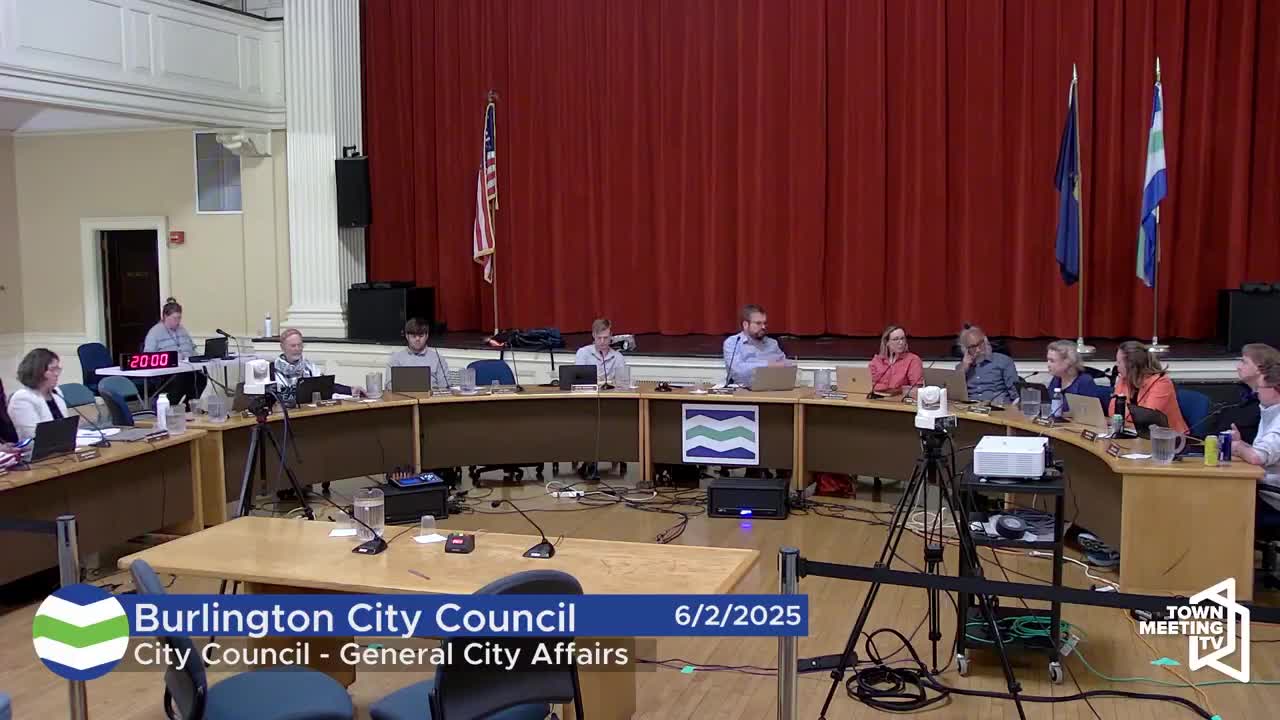
The Burlington City Council voted unanimously to adopt a package of amendments to the city’s zoning code intended to facilitate mid-scale “missing middle” housing across residential neighborhoods.
Planning Director Charles Dillard and Principal Planner Sarah Morgan presented the Neighborhood Code part 2 package, which adds standards to allow planned-unit developments (PUDs) at smaller scales, pocket neighborhoods (cottage courts with shared common space) and fee-simple row houses (townhouses designed to enable ownership). The amendments also make technical changes related to design review, accessory structures and density-bonus language, and they add a narrowly drafted footnote to allow greater building footprint flexibility for specialized residential uses.
Members of the public and housing developers spoke in favor. Kirsten Merryman-Shapiro of Champlain Housing Trust described a prior site-selection process for housing for adults with developmental and intellectual disabilities; she said the code change would help accommodate the type and scale of additions needed to make those projects viable. Sharon Buscher, a resident who testified online, supported the code overall but urged removing parking and drive access from central common areas in pocket neighborhoods to preserve air quality and safety for children.
Planner Morgan said the ordinance committee amended pocket-neighborhood language to disallow parking orientation or vehicle circulation through common areas; that change was shown in the committee’s redlined edits. Councilors asked planning staff about fire and emergency access, universal design for aging-in-place, and minimum unit-size standards. Staff said the standards were designed to meet fire-code requirements and that broader housing forums with AARP and other partners were underway to address aging-in-place and universal-design issues.
Why it matters: The adopted code aims to loosen barriers to a range of smaller-scale housing types—cottage courts, townhouses and smaller mixed developments—so the city can add diverse housing types without requiring large-lot redevelopment or out-of-scale building forms.
What’s next: Planning staff will implement the amended standards; developers and nonprofit housing providers said they expect to bring projects forward that rely on the new footprint flexibility and PUD tiers. Councilors and staff also agreed to continue technical outreach to fire, public-safety and accessibility stakeholders as projects move into permitting.
Speakers quoted are taken verbatim from the meeting record.
Planning Director Charles Dillard and Principal Planner Sarah Morgan presented the Neighborhood Code part 2 package, which adds standards to allow planned-unit developments (PUDs) at smaller scales, pocket neighborhoods (cottage courts with shared common space) and fee-simple row houses (townhouses designed to enable ownership). The amendments also make technical changes related to design review, accessory structures and density-bonus language, and they add a narrowly drafted footnote to allow greater building footprint flexibility for specialized residential uses.
Members of the public and housing developers spoke in favor. Kirsten Merryman-Shapiro of Champlain Housing Trust described a prior site-selection process for housing for adults with developmental and intellectual disabilities; she said the code change would help accommodate the type and scale of additions needed to make those projects viable. Sharon Buscher, a resident who testified online, supported the code overall but urged removing parking and drive access from central common areas in pocket neighborhoods to preserve air quality and safety for children.
Planner Morgan said the ordinance committee amended pocket-neighborhood language to disallow parking orientation or vehicle circulation through common areas; that change was shown in the committee’s redlined edits. Councilors asked planning staff about fire and emergency access, universal design for aging-in-place, and minimum unit-size standards. Staff said the standards were designed to meet fire-code requirements and that broader housing forums with AARP and other partners were underway to address aging-in-place and universal-design issues.
Why it matters: The adopted code aims to loosen barriers to a range of smaller-scale housing types—cottage courts, townhouses and smaller mixed developments—so the city can add diverse housing types without requiring large-lot redevelopment or out-of-scale building forms.
What’s next: Planning staff will implement the amended standards; developers and nonprofit housing providers said they expect to bring projects forward that rely on the new footprint flexibility and PUD tiers. Councilors and staff also agreed to continue technical outreach to fire, public-safety and accessibility stakeholders as projects move into permitting.
Speakers quoted are taken verbatim from the meeting record.
View the Full Meeting & All Its Details
This article offers just a summary. Unlock complete video, transcripts, and insights as a Founder Member.
✓
Watch full, unedited meeting videos
✓
Search every word spoken in unlimited transcripts
✓
AI summaries & real-time alerts (all government levels)
✓
Permanent access to expanding government content
30-day money-back guarantee
