Grand Forks panel vacates bikeway easement near Bethesda Circle after heated public comment
June 04, 2025 | Grand Forks, Grand Forks County, North Dakota
This article was created by AI summarizing key points discussed. AI makes mistakes, so for full details and context, please refer to the video of the full meeting. Please report any errors so we can fix them. Report an error »
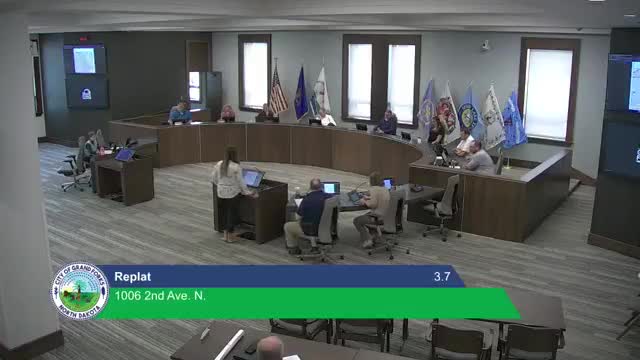
The Grand Forks Planning and Zoning Commission voted to vacate two bikeway and two sidewalk easements behind Bethesda Circle, concluding a months‑long review of a gravel path that runs along the English Coulee.
The easement vacation was proposed after residents and the property owner requested removal of a gravel pedestrian path that dates to the neighborhood’s original plat. Planning staff presented the request and said the path was installed as a marker of a planned connection; staff noted it had not been paved or fully completed. "We received the request to vacate this path," planning staff said during the meeting. "That's what's before you today." (planning staff, first reference)
Why it mattered: Neighbors who live on Bethesda Circle said the unpaved path runs just feet from back doors and bedroom windows and has created safety and privacy concerns. "Security is of an utmost concern for them," resident Terry Doolum told the commission, saying many residents are older and have experienced incidents near the path. Kim Greendale, greenway specialist for the City of Grand Forks, said the path has appeared intermittently on bike maps and that the metropolitan planning organization (MPO) historically resisted removing such connections because they preserve future options.
The debate: Supporters of the vacation — primarily residents of the townhome association adjacent to the path — told the commission the easement had become a path to nowhere and that they had not been aware of a city easement until recently. "I didn't know what it was for, or who put it in," resident Terry Doolum said. Developers and some commissioners noted the path has been on the ground for decades but was never finished; one commissioner said the city and developers had failed to complete a planned connection.
Opponents emphasized the path’s role in the city’s longer-term pedestrian and bicycle network. Planning commissioner Andrew (last name not recorded) argued the easement is part of a multi‑decade assembly of pedestrian connections that link existing multi‑use paths north and south of the site and that vacating it would remove a planned link. "We’ve been assembling all of these pieces from a planning perspective for decades, and now we finally get to...lock it in place and now we want to start taking pieces out again," he said.
The commission also heard technical clarifications: staff said the City required the original gravel path as part of development approvals, that maintenance responsibility had been unclear, and that the easements did not appear to contain utilities. Greendale said she did not have a definitive answer at the meeting about why the path was intermittently shown on MPO maps and offered to follow up.
Outcome and next steps: Commissioner Raul moved to vacate the easements; Mr. Reichert seconded. Planning staff recorded a voice vote; one commissioner stated on the record they would vote against the vacation. The chair called for the voice vote and announced that the motion passed and the easements were vacated. Planning staff said that, unless utilities existed within the easements, vacating would remove the public pedestrian/bikeway rights; utility easements would be retained if present.
What remains unresolved: Staff and commissioners discussed alternatives for pedestrian access if future development reaches the Burkholtz property to the north, including routing walkers to existing sidewalks on the front of townhomes or negotiating access as part of new plats. Greendale said she would check MPO records to clarify the path’s planning status. Residents said lighting and maintenance on the private street are additional security concerns that are separate from the public‑path issue.
The commission’s action transfers the easement rights as shown on the plat; any utilities within the bounded areas would remain subject to separate utility agreements and would be noted on recorded maps.
The easement vacation was proposed after residents and the property owner requested removal of a gravel pedestrian path that dates to the neighborhood’s original plat. Planning staff presented the request and said the path was installed as a marker of a planned connection; staff noted it had not been paved or fully completed. "We received the request to vacate this path," planning staff said during the meeting. "That's what's before you today." (planning staff, first reference)
Why it mattered: Neighbors who live on Bethesda Circle said the unpaved path runs just feet from back doors and bedroom windows and has created safety and privacy concerns. "Security is of an utmost concern for them," resident Terry Doolum told the commission, saying many residents are older and have experienced incidents near the path. Kim Greendale, greenway specialist for the City of Grand Forks, said the path has appeared intermittently on bike maps and that the metropolitan planning organization (MPO) historically resisted removing such connections because they preserve future options.
The debate: Supporters of the vacation — primarily residents of the townhome association adjacent to the path — told the commission the easement had become a path to nowhere and that they had not been aware of a city easement until recently. "I didn't know what it was for, or who put it in," resident Terry Doolum said. Developers and some commissioners noted the path has been on the ground for decades but was never finished; one commissioner said the city and developers had failed to complete a planned connection.
Opponents emphasized the path’s role in the city’s longer-term pedestrian and bicycle network. Planning commissioner Andrew (last name not recorded) argued the easement is part of a multi‑decade assembly of pedestrian connections that link existing multi‑use paths north and south of the site and that vacating it would remove a planned link. "We’ve been assembling all of these pieces from a planning perspective for decades, and now we finally get to...lock it in place and now we want to start taking pieces out again," he said.
The commission also heard technical clarifications: staff said the City required the original gravel path as part of development approvals, that maintenance responsibility had been unclear, and that the easements did not appear to contain utilities. Greendale said she did not have a definitive answer at the meeting about why the path was intermittently shown on MPO maps and offered to follow up.
Outcome and next steps: Commissioner Raul moved to vacate the easements; Mr. Reichert seconded. Planning staff recorded a voice vote; one commissioner stated on the record they would vote against the vacation. The chair called for the voice vote and announced that the motion passed and the easements were vacated. Planning staff said that, unless utilities existed within the easements, vacating would remove the public pedestrian/bikeway rights; utility easements would be retained if present.
What remains unresolved: Staff and commissioners discussed alternatives for pedestrian access if future development reaches the Burkholtz property to the north, including routing walkers to existing sidewalks on the front of townhomes or negotiating access as part of new plats. Greendale said she would check MPO records to clarify the path’s planning status. Residents said lighting and maintenance on the private street are additional security concerns that are separate from the public‑path issue.
The commission’s action transfers the easement rights as shown on the plat; any utilities within the bounded areas would remain subject to separate utility agreements and would be noted on recorded maps.
View the Full Meeting & All Its Details
This article offers just a summary. Unlock complete video, transcripts, and insights as a Founder Member.
✓
Watch full, unedited meeting videos
✓
Search every word spoken in unlimited transcripts
✓
AI summaries & real-time alerts (all government levels)
✓
Permanent access to expanding government content
30-day money-back guarantee
