Council asks operator for clearer valet, delivery and parking plan for Bowdoin Naples Hotel before approving right-of-way items
June 04, 2025 | Naples, Collier County, Florida
This article was created by AI summarizing key points discussed. AI makes mistakes, so for full details and context, please refer to the video of the full meeting. Please report any errors so we can fix them. Report an error »
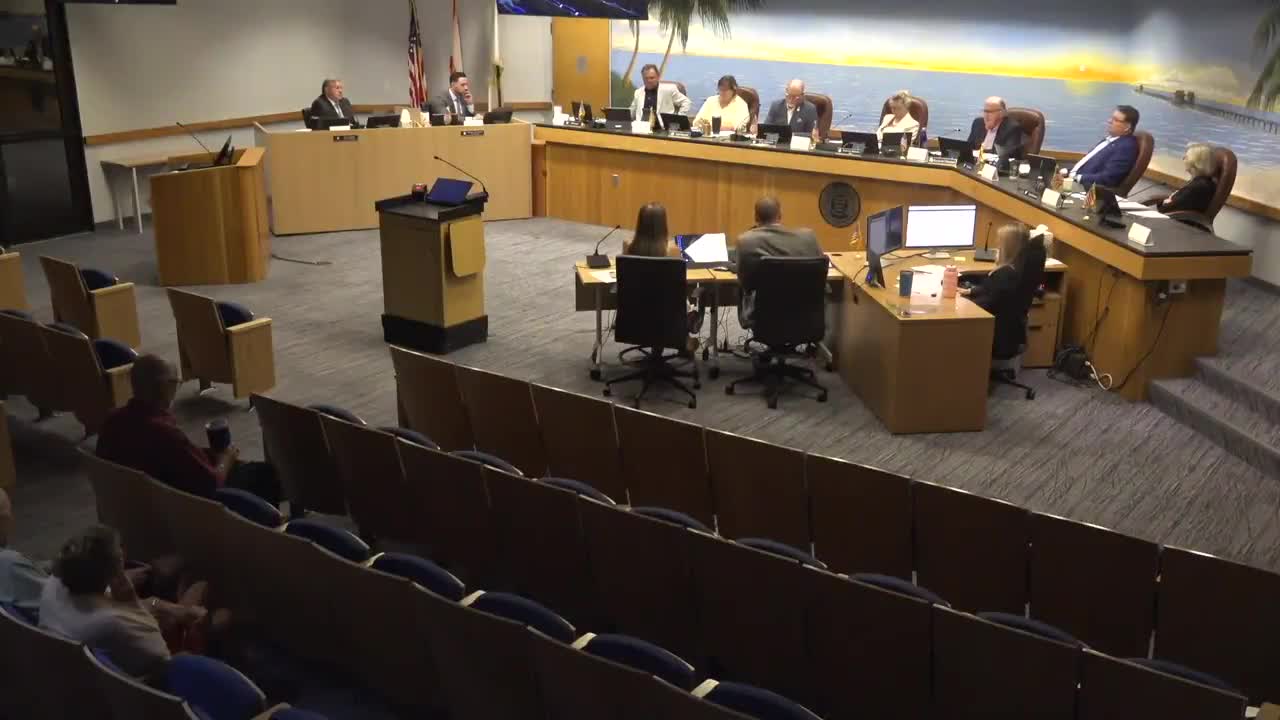
City Council reviewed the Bowdoin Naples Hotel’s circulation and right-of-way plan and approved a near-term intersection improvement while asking the developer and hotel operator to present a more complete valet, delivery and parking plan before final right-of-way approvals. The review followed a March discussion about intersection options and a requirement in the hotel’s 2018 site-plan resolution that the developer pay a share of required public-right-of-way improvements.
Key Lede: Council directed staff to accept a limited, council-sanctioned solution — construction of a northbound right-turn lane on Gordon Drive at Broad Avenue South and a left‑turn lane on Broad toward Gordon — and then to test a four-way stop operation for 12 months to see if it meets traffic and safety needs. The developer agreed to pay a portion of costs; the council asked staff to treat that payment as a credit toward the developer’s longer-term 50% cost-share obligation under the 2018 resolution.
Nut Graf: The central issue was reconciling the hotel’s required valet, delivery and guest operations with traffic, parking and neighborhood access. City staff and the developer proposed several intersection layouts. Council members wanted explicit commitments about deliveries, where trucks will stop, how employees will be handled and how guests will be directed so valet operations do not block travel lanes or neighborhood driveways.
Valet and deliveries: The hotel operator said the project includes 172–173 garage spaces and that employees will be assigned numbered spaces; the operator said delivery frequency is expected to be modest (food deliveries roughly three times daily; beverage deliveries weekly; linen deliveries several times weekly) and that logistics would be coordinated with the operator’s corporate purchasing program.
Short-term intersection fix and conditions: Staff recommended and council approved installing a northbound right-turn lane on Gordon and a southbound left-turn lane on Broad, while operating the intersection as a four-way stop for up to 12 months to evaluate performance, then returning to council with data. The developer offered to pay the right-turn lane cost up front; council accepted that payment as a credit against the developer’s eventual 50% share of any larger intersection project.
Next steps: Council directed staff to negotiate a right-of-way agreement and to return with the valet plan and clearer operational details — including the location of required off-site employee parking and the five on-street spaces the developer previously agreed to construct — before issuing final right-of-way approvals. Staff also will summarize how residents and businesses will be affected by the approved turn-lane installation.
Ending: Council approved the interim traffic action while reserving the right to revisit long-term intersection design and to seek the developer’s contribution toward those costs as required by the 2018 site plan resolution.
Key Lede: Council directed staff to accept a limited, council-sanctioned solution — construction of a northbound right-turn lane on Gordon Drive at Broad Avenue South and a left‑turn lane on Broad toward Gordon — and then to test a four-way stop operation for 12 months to see if it meets traffic and safety needs. The developer agreed to pay a portion of costs; the council asked staff to treat that payment as a credit toward the developer’s longer-term 50% cost-share obligation under the 2018 resolution.
Nut Graf: The central issue was reconciling the hotel’s required valet, delivery and guest operations with traffic, parking and neighborhood access. City staff and the developer proposed several intersection layouts. Council members wanted explicit commitments about deliveries, where trucks will stop, how employees will be handled and how guests will be directed so valet operations do not block travel lanes or neighborhood driveways.
Valet and deliveries: The hotel operator said the project includes 172–173 garage spaces and that employees will be assigned numbered spaces; the operator said delivery frequency is expected to be modest (food deliveries roughly three times daily; beverage deliveries weekly; linen deliveries several times weekly) and that logistics would be coordinated with the operator’s corporate purchasing program.
Short-term intersection fix and conditions: Staff recommended and council approved installing a northbound right-turn lane on Gordon and a southbound left-turn lane on Broad, while operating the intersection as a four-way stop for up to 12 months to evaluate performance, then returning to council with data. The developer offered to pay the right-turn lane cost up front; council accepted that payment as a credit against the developer’s eventual 50% share of any larger intersection project.
Next steps: Council directed staff to negotiate a right-of-way agreement and to return with the valet plan and clearer operational details — including the location of required off-site employee parking and the five on-street spaces the developer previously agreed to construct — before issuing final right-of-way approvals. Staff also will summarize how residents and businesses will be affected by the approved turn-lane installation.
Ending: Council approved the interim traffic action while reserving the right to revisit long-term intersection design and to seek the developer’s contribution toward those costs as required by the 2018 site plan resolution.
Don't Miss a Word: See the Full Meeting!
Go beyond summaries. Unlock every video, transcript, and key insight with a Founder Membership.
✓
Get instant access to full meeting videos
✓
Search and clip any phrase from complete transcripts
✓
Receive AI-powered summaries & custom alerts
✓
Enjoy lifetime, unrestricted access to government data
30-day money-back guarantee
