Cornell Cooperative Extension warns federal cuts could gut local SNAP‑Ed and research supports
June 04, 2025 | Ulster County, New York
This article was created by AI summarizing key points discussed. AI makes mistakes, so for full details and context, please refer to the video of the full meeting. Please report any errors so we can fix them. Report an error »
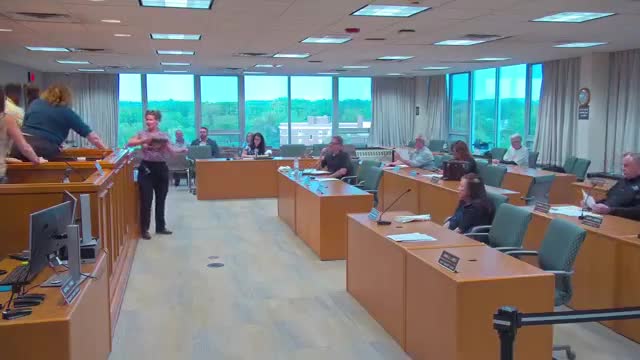
Cornell Cooperative Extension director Melanie Forsstrom told the Ulster County Economic Development, Planning, Education, Employment, Arts & Agriculture Committee on June 3 that proposed cuts in the president’s budget could eliminate local SNAP‑Ed funding and deeply reduce federal support for Cooperative Extension research.
Forsstrom said that as the budget stands “our SNAP Ed budget has is eliminated at this point as it stands here in Ulster County that would affect 1 employee who does deliver programming to, low income individuals to help them eat healthy on a budget, serves thousands of people every year.” She added the county had also “received word that, in the president's budget, there have been significant cuts to USDA funding, which include eliminating all of the Hatch Act, which is research funding, and slashing Smith Lever funding by about 50%.”
The committee heard that SNAP‑Ed funds for the local position—currently funded through September 30—would be at risk if the federal cuts take effect. Forsstrom said the office is organizing advocacy efforts, but that the Cooperative Extension’s statutory relationship with Cornell and its historic funding structure make outcomes uncertain. “We so this is really hot off the press. Like, I learned this today. So I don't have a ton of answers, but I wanted to at least make you all aware,” she said.
Committee members asked whether the cuts would affect programming in 2026; Forsstrom said she could not yet answer and described Smith‑Lever funding as a primary recurring source for state Cooperative Extension operations. She reported Ulster County extension receives a modest direct allocation—“$12,000 directly”—and about $60,000 to help administer shared business services for seven counties.
Forsstrom also notified the committee that Cornell Cooperative Extension and the regional ag team are organizing an agricultural tour for elected officials on July 8, with a rain date of July 9, to highlight local agricultural programming and the extension’s work.
Why it matters: SNAP‑Ed supports low‑income residents with nutrition education and Cooperative Extension research and outreach underpin pest and invasive‑species work and other services used by growers. Loss of those funds would reduce local programming and could affect regional research hubs such as the Hudson Valley Lab, which Forsstrom said relies heavily on federal support and farmer ownership.
The committee had no formal vote on the funding issue; Forsstrom said county and state representatives are being engaged for advocacy and that she will update the committee as more information becomes available.
Forsstrom said that as the budget stands “our SNAP Ed budget has is eliminated at this point as it stands here in Ulster County that would affect 1 employee who does deliver programming to, low income individuals to help them eat healthy on a budget, serves thousands of people every year.” She added the county had also “received word that, in the president's budget, there have been significant cuts to USDA funding, which include eliminating all of the Hatch Act, which is research funding, and slashing Smith Lever funding by about 50%.”
The committee heard that SNAP‑Ed funds for the local position—currently funded through September 30—would be at risk if the federal cuts take effect. Forsstrom said the office is organizing advocacy efforts, but that the Cooperative Extension’s statutory relationship with Cornell and its historic funding structure make outcomes uncertain. “We so this is really hot off the press. Like, I learned this today. So I don't have a ton of answers, but I wanted to at least make you all aware,” she said.
Committee members asked whether the cuts would affect programming in 2026; Forsstrom said she could not yet answer and described Smith‑Lever funding as a primary recurring source for state Cooperative Extension operations. She reported Ulster County extension receives a modest direct allocation—“$12,000 directly”—and about $60,000 to help administer shared business services for seven counties.
Forsstrom also notified the committee that Cornell Cooperative Extension and the regional ag team are organizing an agricultural tour for elected officials on July 8, with a rain date of July 9, to highlight local agricultural programming and the extension’s work.
Why it matters: SNAP‑Ed supports low‑income residents with nutrition education and Cooperative Extension research and outreach underpin pest and invasive‑species work and other services used by growers. Loss of those funds would reduce local programming and could affect regional research hubs such as the Hudson Valley Lab, which Forsstrom said relies heavily on federal support and farmer ownership.
The committee had no formal vote on the funding issue; Forsstrom said county and state representatives are being engaged for advocacy and that she will update the committee as more information becomes available.
View the Full Meeting & All Its Details
This article offers just a summary. Unlock complete video, transcripts, and insights as a Founder Member.
✓
Watch full, unedited meeting videos
✓
Search every word spoken in unlimited transcripts
✓
AI summaries & real-time alerts (all government levels)
✓
Permanent access to expanding government content
30-day money-back guarantee
