Southside ISD bus drivers urge board to address vehicle maintenance, pay and sick-leave penalties
May 29, 2025 | SOUTHSIDE ISD, School Districts, Texas
This article was created by AI summarizing key points discussed. AI makes mistakes, so for full details and context, please refer to the video of the full meeting. Please report any errors so we can fix them. Report an error »
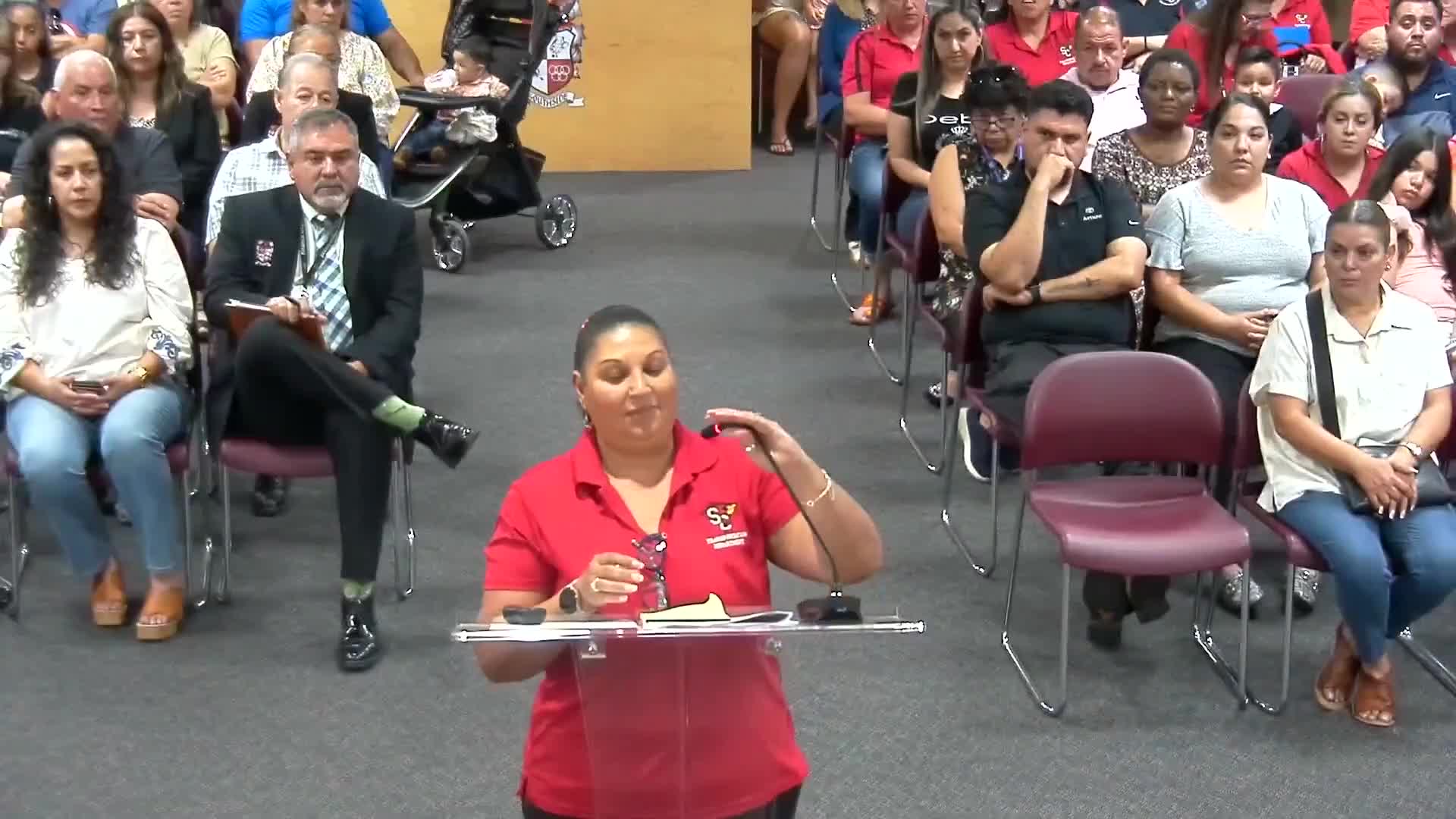
Bus operators and aides told the Southside Independent School District Board of Trustees on May 28 that aging buses, broken air conditioning and a sick-leave practice that removes extra duties from employees are undermining safety and staff retention.
"We drive over 2,000 students per day," said bus operator Mary Cortez during the public-comment period. "We have buses without AC units that are not working. We have buses that are literally being held with zip ties for the wipers. We have buses that the air pressure goes out as we're driving." Cortez said mechanics tell drivers there is "no money" to make repairs and contrasted that with what she described as an approved raise for the superintendent.
The drivers repeated that message. Linda Trinidad, who said she has worked as a transportation employee for 34 years, asked the board to reconsider the district's policy that removes extra duties when drivers call in sick. "If we call in sick on a Monday or a Tuesday, we lose our extra duties for the rest of the week until Saturday," Trinidad said. She and other drivers said the rule can cost them hours and pay when an illness forces an absence.
Delma Pedrosa described a recent medical absence for strep throat that led to lost field-trip work the following week. "If you miss Monday or Tuesday ... they take away the rest of the field trips for the rest of the week," she said, adding that lost hours mean lost income.
Board members listened and acknowledged the comments; President Jesse Hernandez thanked speakers but did not announce any immediate change or formal direction during the meeting. The transcript shows no motion or vote tied to the public comments.
Discussion-only items: the speakers raised operational and personnel concerns and urged the board to review funding and policy. No board action, referral or staff assignment was recorded in the meeting minutes during the public-comment segment.
The board has previously posted meeting notices in accordance with the Texas Open Meetings Act (Texas Government Code Chapter 551), and public-comment rules cited the district's BED(local) policy on audience conduct and complaint procedures.
"We drive over 2,000 students per day," said bus operator Mary Cortez during the public-comment period. "We have buses without AC units that are not working. We have buses that are literally being held with zip ties for the wipers. We have buses that the air pressure goes out as we're driving." Cortez said mechanics tell drivers there is "no money" to make repairs and contrasted that with what she described as an approved raise for the superintendent.
The drivers repeated that message. Linda Trinidad, who said she has worked as a transportation employee for 34 years, asked the board to reconsider the district's policy that removes extra duties when drivers call in sick. "If we call in sick on a Monday or a Tuesday, we lose our extra duties for the rest of the week until Saturday," Trinidad said. She and other drivers said the rule can cost them hours and pay when an illness forces an absence.
Delma Pedrosa described a recent medical absence for strep throat that led to lost field-trip work the following week. "If you miss Monday or Tuesday ... they take away the rest of the field trips for the rest of the week," she said, adding that lost hours mean lost income.
Board members listened and acknowledged the comments; President Jesse Hernandez thanked speakers but did not announce any immediate change or formal direction during the meeting. The transcript shows no motion or vote tied to the public comments.
Discussion-only items: the speakers raised operational and personnel concerns and urged the board to review funding and policy. No board action, referral or staff assignment was recorded in the meeting minutes during the public-comment segment.
The board has previously posted meeting notices in accordance with the Texas Open Meetings Act (Texas Government Code Chapter 551), and public-comment rules cited the district's BED(local) policy on audience conduct and complaint procedures.
View the Full Meeting & All Its Details
This article offers just a summary. Unlock complete video, transcripts, and insights as a Founder Member.
✓
Watch full, unedited meeting videos
✓
Search every word spoken in unlimited transcripts
✓
AI summaries & real-time alerts (all government levels)
✓
Permanent access to expanding government content
30-day money-back guarantee
