CAMS project on schedule, within budget; Capitol set to reopen to public Sept. 29, officials say
June 13, 2025 | Legislative Administration, Joint, Committees, Legislative, Oregon
This article was created by AI summarizing key points discussed. AI makes mistakes, so for full details and context, please refer to the video of the full meeting. Please report any errors so we can fix them. Report an error »
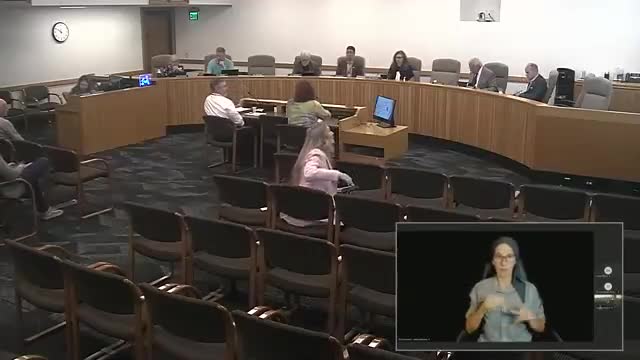
The Capital Accessibility, Maintenance and Safety (CAMS) project is on schedule and within budget, project director Jody Jones told the Joint Committee on Legislative Administration on June 13, 2025, as the Legislature prepares to move back into the renovated Oregon State Capitol.
"Yes, we are. There is no need for us to come back for more money unless somebody does a scope creep on me again," Jody Jones told the committee when asked about budget status. On schedule questions, Jones said the project is "on schedule to start moving people back into the building in September with an opening date for the public September 29." She clarified that some side entrances would remain under work but that rotunda and chambers would be open.
Jones summarized major completed and in-progress work. CAMS addressed Americans with Disabilities Act requirements, added new ADA entrances on all four sides of the building, and upgraded mechanical, electrical and plumbing systems. The project applied fiber reinforced polymer (FRP) to portions of the wings to strengthen them for seismic response and installed base isolators under other portions to reduce seismic forces. Jones described construction under the building: crews installed roughly 158 shoring towers, drove nearly 800 micropiles down about 60 feet, excavated about 36,000 cubic yards of material and poured about 21,000 cubic yards of concrete. She said Phase 3 includes base isolation under the 1938 Building and new stairs and an ADA-compliant concourse level that will house four new hearing rooms, Hearing Room 50, a new press room, a larger cafe and related facilities.
Jones provided additional program details: the project logged more than 1.2 million work hours on Phase 3, involved about 2,500 workers over all phases, and engaged 143 subcontractors. She said approximately 5.4 million pounds of rebar and about 5 million pounds of steel were used in temporary shoring. The new concourse will include hearing rooms with dais seating planned as follows: two new rooms with 17 placements, one with 21 placements and one with 26 placements; audience capacity will range from about 42 to 61 people depending on room configuration. Each new hearing room will include at least one bariatric chair for accessibility.
On schedule and access, Jones said certain closures would occur leading up to reopening: the House and Senate chambers will close for ceiling work through September, northeast and northwest State Street vestibules would be closed to install new restrooms, and some vestibule work is expected to run into December with full site completion in early 2026. Jones said the member parking garage will provide access to the concourse level and that members will be able to move directly from parking into the concourse and committee rooms.
Jones also reported progress on public-facing elements: the plaza is scheduled to open in December, he noted paving elements are on order; the Wilson Park design was still pending final approval; and artwork timelines vary because installation depends on artists' schedules. Jones told the committee that roughly $2,400,000 of CAMS project funds were allocated to artwork and related commissioning, and that the team was coordinating with the parks agency on long-term grounds maintenance.
Committee members asked about safety, workforce diversity and local contracting. Jones said the safety record had no fatalities and described mostly minor incidents; a safety officer was on site and contractors ran safety campaigns, including mental-health initiatives. Jones said she would provide statistics on women and local subcontractor participation; she noted the project subcontractor mix exceeded 50% Oregon-based firms.
Co-chair Wagner and committee members praised the scale of the work and thanked project staff and contractors. The committee closed the informational session with no formal action required.
"Yes, we are. There is no need for us to come back for more money unless somebody does a scope creep on me again," Jody Jones told the committee when asked about budget status. On schedule questions, Jones said the project is "on schedule to start moving people back into the building in September with an opening date for the public September 29." She clarified that some side entrances would remain under work but that rotunda and chambers would be open.
Jones summarized major completed and in-progress work. CAMS addressed Americans with Disabilities Act requirements, added new ADA entrances on all four sides of the building, and upgraded mechanical, electrical and plumbing systems. The project applied fiber reinforced polymer (FRP) to portions of the wings to strengthen them for seismic response and installed base isolators under other portions to reduce seismic forces. Jones described construction under the building: crews installed roughly 158 shoring towers, drove nearly 800 micropiles down about 60 feet, excavated about 36,000 cubic yards of material and poured about 21,000 cubic yards of concrete. She said Phase 3 includes base isolation under the 1938 Building and new stairs and an ADA-compliant concourse level that will house four new hearing rooms, Hearing Room 50, a new press room, a larger cafe and related facilities.
Jones provided additional program details: the project logged more than 1.2 million work hours on Phase 3, involved about 2,500 workers over all phases, and engaged 143 subcontractors. She said approximately 5.4 million pounds of rebar and about 5 million pounds of steel were used in temporary shoring. The new concourse will include hearing rooms with dais seating planned as follows: two new rooms with 17 placements, one with 21 placements and one with 26 placements; audience capacity will range from about 42 to 61 people depending on room configuration. Each new hearing room will include at least one bariatric chair for accessibility.
On schedule and access, Jones said certain closures would occur leading up to reopening: the House and Senate chambers will close for ceiling work through September, northeast and northwest State Street vestibules would be closed to install new restrooms, and some vestibule work is expected to run into December with full site completion in early 2026. Jones said the member parking garage will provide access to the concourse level and that members will be able to move directly from parking into the concourse and committee rooms.
Jones also reported progress on public-facing elements: the plaza is scheduled to open in December, he noted paving elements are on order; the Wilson Park design was still pending final approval; and artwork timelines vary because installation depends on artists' schedules. Jones told the committee that roughly $2,400,000 of CAMS project funds were allocated to artwork and related commissioning, and that the team was coordinating with the parks agency on long-term grounds maintenance.
Committee members asked about safety, workforce diversity and local contracting. Jones said the safety record had no fatalities and described mostly minor incidents; a safety officer was on site and contractors ran safety campaigns, including mental-health initiatives. Jones said she would provide statistics on women and local subcontractor participation; she noted the project subcontractor mix exceeded 50% Oregon-based firms.
Co-chair Wagner and committee members praised the scale of the work and thanked project staff and contractors. The committee closed the informational session with no formal action required.
Don't Miss a Word: See the Full Meeting!
Go beyond summaries. Unlock every video, transcript, and key insight with a Founder Membership.
✓
Get instant access to full meeting videos
✓
Search and clip any phrase from complete transcripts
✓
Receive AI-powered summaries & custom alerts
✓
Enjoy lifetime, unrestricted access to government data
30-day money-back guarantee
