Board discusses new student device policy: caddies, backpacks and enforcement left to buildings
June 19, 2025 | BAY SHORE UNION FREE SCHOOL DISTRICT, School Districts, New York
This article was created by AI summarizing key points discussed. AI makes mistakes, so for full details and context, please refer to the video of the full meeting. Please report any errors so we can fix them. Report an error »
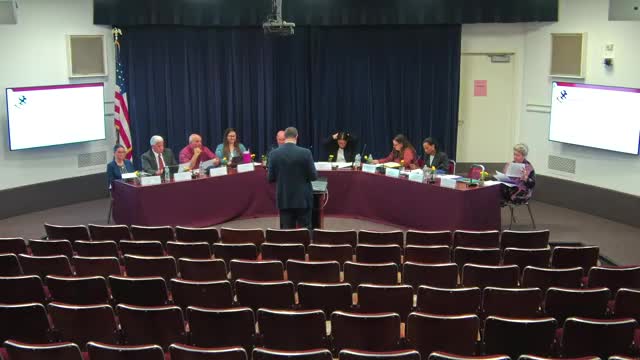
District staff presented a revised district device access and storage policy and discussed enforcement, exceptions and implementation timelines with board members and building leaders.
Presenters said the policy breaks device expectations down by level and directs that devices be kept out of sight during instructional periods, with the high school to adopt additional expectations for noninstructional spaces such as cafeterias and hallways. Staff described one common practice: classroom “caddies” where students place phones at the start of class so teachers know students do not have devices in use.
On enforcement, the presenter said the policy’s intent is education rather than punishment and noted one legal limit: “students may not be suspended for any action related to cell phone usage,” meaning out‑of‑school suspension should not be used for phone violations; other consequences in the district code of conduct can apply. Presenters proposed a period of reminders and warnings as buildings implement protocols before moving to consistent enforcement.
The board and staff discussed operational details for larger instructional spaces (band rooms, gymnasiums, cafeterias) where lockers may be unavailable, and the presenter said principals and building staff will design site‑specific practices, including additional caddies where needed. Staff also noted practical exceptions: school devices for instruction, medical devices with documentation, and teacher‑directed, short‑term device use for classroom assignments.
Trustees and staff raised implementation concerns: monitoring during passing time and lunch, the need for early summer communication to families, potential workload for staff asked to enforce the policy, and questions about wearable devices (watches) and how alerts will be handled. Presenters said management of enforcement will be a building responsibility and that a learning curve is expected during the first months of implementation.
No formal adoption vote on the policy is recorded in the transcript excerpt; presenters said they would work with building leaders to develop the concrete practices and parent communications needed before full enforcement.
Presenters said the policy breaks device expectations down by level and directs that devices be kept out of sight during instructional periods, with the high school to adopt additional expectations for noninstructional spaces such as cafeterias and hallways. Staff described one common practice: classroom “caddies” where students place phones at the start of class so teachers know students do not have devices in use.
On enforcement, the presenter said the policy’s intent is education rather than punishment and noted one legal limit: “students may not be suspended for any action related to cell phone usage,” meaning out‑of‑school suspension should not be used for phone violations; other consequences in the district code of conduct can apply. Presenters proposed a period of reminders and warnings as buildings implement protocols before moving to consistent enforcement.
The board and staff discussed operational details for larger instructional spaces (band rooms, gymnasiums, cafeterias) where lockers may be unavailable, and the presenter said principals and building staff will design site‑specific practices, including additional caddies where needed. Staff also noted practical exceptions: school devices for instruction, medical devices with documentation, and teacher‑directed, short‑term device use for classroom assignments.
Trustees and staff raised implementation concerns: monitoring during passing time and lunch, the need for early summer communication to families, potential workload for staff asked to enforce the policy, and questions about wearable devices (watches) and how alerts will be handled. Presenters said management of enforcement will be a building responsibility and that a learning curve is expected during the first months of implementation.
No formal adoption vote on the policy is recorded in the transcript excerpt; presenters said they would work with building leaders to develop the concrete practices and parent communications needed before full enforcement.
View the Full Meeting & All Its Details
This article offers just a summary. Unlock complete video, transcripts, and insights as a Founder Member.
✓
Watch full, unedited meeting videos
✓
Search every word spoken in unlimited transcripts
✓
AI summaries & real-time alerts (all government levels)
✓
Permanent access to expanding government content
30-day money-back guarantee
