Board reviews 10‑year facilities plan; members press for planned pavement/seal‑coating strategy
June 19, 2025 | St. Cloud Public School District, School Boards, Minnesota
This article was created by AI summarizing key points discussed. AI makes mistakes, so for full details and context, please refer to the video of the full meeting. Please report any errors so we can fix them. Report an error »
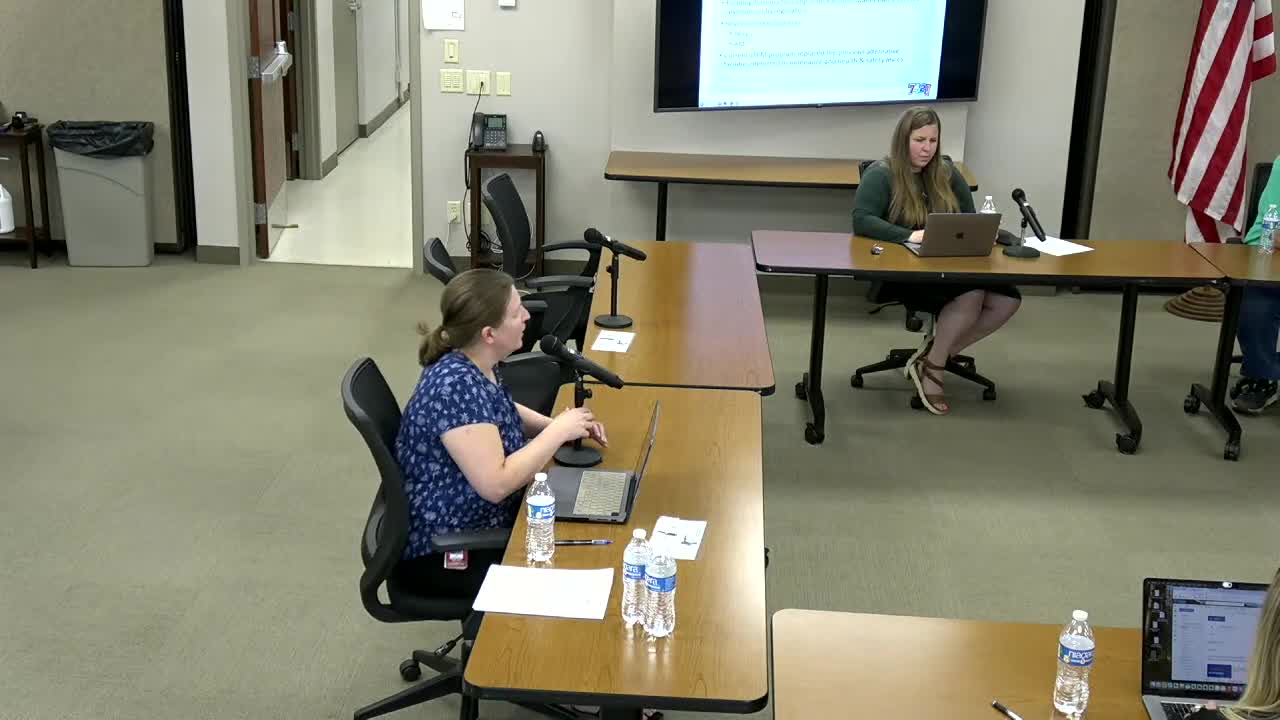
On June 18, 2025, the St. Cloud Area Schools Board of Education reviewed the administration’s proposed 10‑year Long‑Term Facilities Maintenance (LTFM) plan the district will submit to the Minnesota Department of Education.
Amy Scalarud, executive director of finance and business services, explained the LTFM program is funded by state aid and a local levy and is legally restricted to specified categories (ADA work, approved health and safety items, and eligible projects to prevent further facility erosion). Scalarud told the board the administration proposes annual LTFM project spending of about $7,000,000.75 (annual projects) and total LTFM revenue for 2026–27 of approximately $12,869,401, which includes debt service for prior LTFM bonds.
Draft project priorities identified for the 2026 construction window included:
- Talahi: parking‑lot overhaul and associated work (roof/window/air handling/electrical panel and cafeteria partition) so the district can take the building offline and complete multiple projects together.
- Clearview: major roof replacement and related flooring/painting work.
- District‑wide: canopy and foundation repairs, tuckpointing (masonry), paving and concrete repairs, HVAC and plumbing, roofing repairs, door and hardware work and an allocation for unpredicted needs; South track replacement was listed as scheduled.
- A district‑level holding allocation was made for a possible single‑user restroom addition at Tech (Superintendent Putnam requested investigation); no architect or firm estimate was yet available and Scalarud noted the dollar figure was preliminary.
Scalarud said roughly $800,000 remained unallocated in the preliminary plan; staff described the unallocated amount as a contingency to address items that emerge as priorities closer to construction season. She noted that many line items would go out to formal sealed bid to attract contractors for district‑wide masonry and canopy work.
Board members pressed staff on pavement maintenance. Al Dahlgren asked for a district seal‑coating strategy and argued that regular seal coating prevents asphalt deterioration and reduces long‑term replacement costs. Staff acknowledged the concern, said some lots (for example at the TEC site) had recently been seal coated but agreed the district should review seal‑coating type and frequency. Scalarud and board members discussed moving unallocated funds or identifying other sources to ensure adequate pavement maintenance across the district.
No vote was taken; Scalarud said the dollar amounts required for the levy must be set and submitted to MDE by July for levy processing and that the board would formally approve the required LTFM revenue and levy figures in July. She said project lists are preliminary and would be refined with engineers and architects as work is planned for summer 2026.
Ending: The board asked staff to return with further detail on pavement/seal‑coating options and to bring the formal LTFM revenue and expenditure spreadsheets for approval in July.
Amy Scalarud, executive director of finance and business services, explained the LTFM program is funded by state aid and a local levy and is legally restricted to specified categories (ADA work, approved health and safety items, and eligible projects to prevent further facility erosion). Scalarud told the board the administration proposes annual LTFM project spending of about $7,000,000.75 (annual projects) and total LTFM revenue for 2026–27 of approximately $12,869,401, which includes debt service for prior LTFM bonds.
Draft project priorities identified for the 2026 construction window included:
- Talahi: parking‑lot overhaul and associated work (roof/window/air handling/electrical panel and cafeteria partition) so the district can take the building offline and complete multiple projects together.
- Clearview: major roof replacement and related flooring/painting work.
- District‑wide: canopy and foundation repairs, tuckpointing (masonry), paving and concrete repairs, HVAC and plumbing, roofing repairs, door and hardware work and an allocation for unpredicted needs; South track replacement was listed as scheduled.
- A district‑level holding allocation was made for a possible single‑user restroom addition at Tech (Superintendent Putnam requested investigation); no architect or firm estimate was yet available and Scalarud noted the dollar figure was preliminary.
Scalarud said roughly $800,000 remained unallocated in the preliminary plan; staff described the unallocated amount as a contingency to address items that emerge as priorities closer to construction season. She noted that many line items would go out to formal sealed bid to attract contractors for district‑wide masonry and canopy work.
Board members pressed staff on pavement maintenance. Al Dahlgren asked for a district seal‑coating strategy and argued that regular seal coating prevents asphalt deterioration and reduces long‑term replacement costs. Staff acknowledged the concern, said some lots (for example at the TEC site) had recently been seal coated but agreed the district should review seal‑coating type and frequency. Scalarud and board members discussed moving unallocated funds or identifying other sources to ensure adequate pavement maintenance across the district.
No vote was taken; Scalarud said the dollar amounts required for the levy must be set and submitted to MDE by July for levy processing and that the board would formally approve the required LTFM revenue and levy figures in July. She said project lists are preliminary and would be refined with engineers and architects as work is planned for summer 2026.
Ending: The board asked staff to return with further detail on pavement/seal‑coating options and to bring the formal LTFM revenue and expenditure spreadsheets for approval in July.
View the Full Meeting & All Its Details
This article offers just a summary. Unlock complete video, transcripts, and insights as a Founder Member.
✓
Watch full, unedited meeting videos
✓
Search every word spoken in unlimited transcripts
✓
AI summaries & real-time alerts (all government levels)
✓
Permanent access to expanding government content
30-day money-back guarantee
