Council debates moving stormwater and solid-waste billing from Toho to tax roll or city billing
June 19, 2025 | St. Cloud, Osceola County, Florida
This article was created by AI summarizing key points discussed. AI makes mistakes, so for full details and context, please refer to the video of the full meeting. Please report any errors so we can fix them. Report an error »
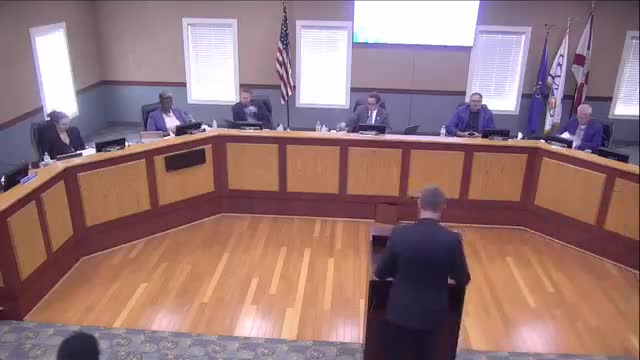
St. Cloud — City public works and finance staff briefed the City Council on options to move stormwater and solid-waste charges off the Toho Water Authority bill and onto either the tax roll or a separate city billing system.
Public Works Director Kevin Feldlinger told the council that the city currently bills stormwater and solid waste on the Toho bill and collects about $4.4 million (stormwater) and $9.1 million (solid waste) annually under the present arrangement. The combined Toho line item for stormwater and solid waste was cited at about $40.88 per month for typical residential customers in staff materials.
Staff said the tax-roll option yields more reliable collection because property tax collection has high initial-year yield (staff estimated roughly 80% of expected revenue is collected early due to early-pay discounts), but it also shifts the city’s cash flow profile. Staff estimated the city could lose the equivalent of the tax-payment early-pay discount (roughly 4% of the billed amount) in the transition year; depending on how many taxpayers paid early, that loss was estimated in staff materials at between about $400,000 and $540,000 in revenue capture for the city’s utilities in the first year.
Feldlinger explained several operational challenges with moving to tax-roll assessment: (1) working with ~33,000 parcel records to assign assessments correctly; (2) designing a commercial billing approach for businesses that now pay per pickup or by dumpster size; (3) the timing gap that could allow newly constructed properties to receive services before tax assessments begin for the fiscal year; and (4) potential one-time consultant costs estimated at $15,000–$30,000 to assist with converting records and files.
Staff also noted Toho charges the city about $378,000 per year to handle billing and that the percentage cost could change if revenue grows. Under the city-run tax-assessment model, staff estimated the administrative fee for the tax collector might be around $10,000 plus the assessment-processing percentage the council would need to evaluate.
Council members discussed other options raised by the city manager, including exploring a return to utility billing through a larger utility partner (historic precedent with power utility partnerships was mentioned) or procuring separate billing software and staff. Several council members asked staff to pursue both paths — investigate the tax-assessment route while also researching city-managed billing vendors and options — and return with timelines and cost analyses.
Staff said the special-assessment path would take months to establish and likely require additional public hearings and council approvals before it could appear on a tax notice; Toho indicated the city could stay on Toho bills through September 2026 while transition work proceeded. The council gave staff direction to research both approaches and return with more detailed options and timelines.
No formal vote on a billing change was taken; the council did direct staff to analyze both the tax-roll assessment approach and alternatives such as a third-party billing contract or a return to consolidated billing with a partner utility.
Public Works Director Kevin Feldlinger told the council that the city currently bills stormwater and solid waste on the Toho bill and collects about $4.4 million (stormwater) and $9.1 million (solid waste) annually under the present arrangement. The combined Toho line item for stormwater and solid waste was cited at about $40.88 per month for typical residential customers in staff materials.
Staff said the tax-roll option yields more reliable collection because property tax collection has high initial-year yield (staff estimated roughly 80% of expected revenue is collected early due to early-pay discounts), but it also shifts the city’s cash flow profile. Staff estimated the city could lose the equivalent of the tax-payment early-pay discount (roughly 4% of the billed amount) in the transition year; depending on how many taxpayers paid early, that loss was estimated in staff materials at between about $400,000 and $540,000 in revenue capture for the city’s utilities in the first year.
Feldlinger explained several operational challenges with moving to tax-roll assessment: (1) working with ~33,000 parcel records to assign assessments correctly; (2) designing a commercial billing approach for businesses that now pay per pickup or by dumpster size; (3) the timing gap that could allow newly constructed properties to receive services before tax assessments begin for the fiscal year; and (4) potential one-time consultant costs estimated at $15,000–$30,000 to assist with converting records and files.
Staff also noted Toho charges the city about $378,000 per year to handle billing and that the percentage cost could change if revenue grows. Under the city-run tax-assessment model, staff estimated the administrative fee for the tax collector might be around $10,000 plus the assessment-processing percentage the council would need to evaluate.
Council members discussed other options raised by the city manager, including exploring a return to utility billing through a larger utility partner (historic precedent with power utility partnerships was mentioned) or procuring separate billing software and staff. Several council members asked staff to pursue both paths — investigate the tax-assessment route while also researching city-managed billing vendors and options — and return with timelines and cost analyses.
Staff said the special-assessment path would take months to establish and likely require additional public hearings and council approvals before it could appear on a tax notice; Toho indicated the city could stay on Toho bills through September 2026 while transition work proceeded. The council gave staff direction to research both approaches and return with more detailed options and timelines.
No formal vote on a billing change was taken; the council did direct staff to analyze both the tax-roll assessment approach and alternatives such as a third-party billing contract or a return to consolidated billing with a partner utility.
Don't Miss a Word: See the Full Meeting!
Go beyond summaries. Unlock every video, transcript, and key insight with a Founder Membership.
✓
Get instant access to full meeting videos
✓
Search and clip any phrase from complete transcripts
✓
Receive AI-powered summaries & custom alerts
✓
Enjoy lifetime, unrestricted access to government data
30-day money-back guarantee
