Montpelier council workshop keeps 75-unit housing target, focuses on near-term actions
June 19, 2025 | Montpelier City, Washington County, Vermont
This article was created by AI summarizing key points discussed. AI makes mistakes, so for full details and context, please refer to the video of the full meeting. Please report any errors so we can fix them. Report an error »
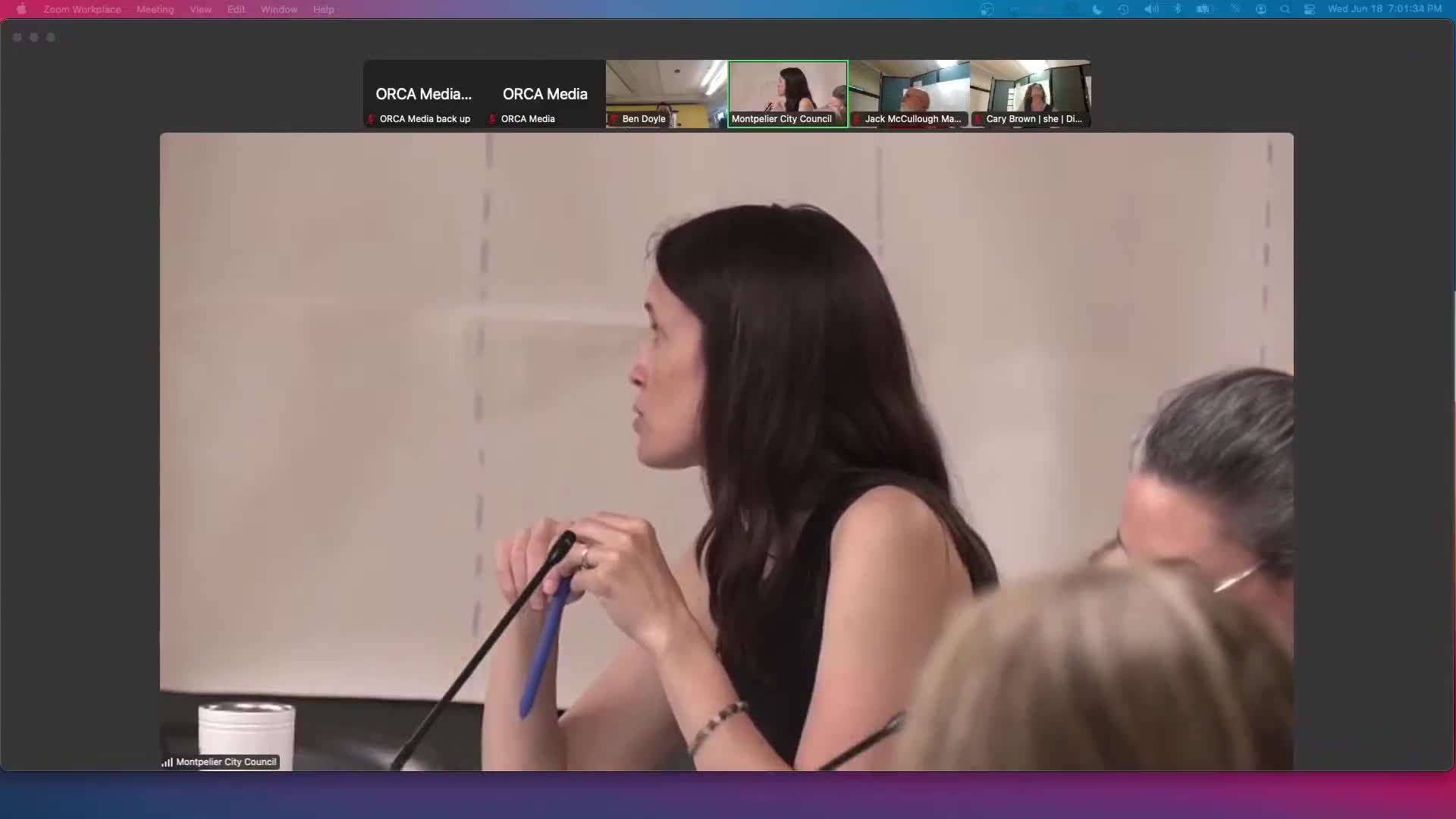
Montpelier City Council and staff spent a workshop session Wednesday focusing on housing goals from the city plan, reaffirming a goal to increase housing by a minimum of 75 units per year and shifting the discussion to which near-term actions will move the city toward that target.
The decision matters because councilors said increasing housing availability underpins workforce retention, childcare access and economic development. Workshop facilitators asked the council to convert long-term aspirations in the city plan into measurable steps for the coming 9–12 months.
Council and staff reviewed survey results that placed housing at the top of members’ priorities. Staff laid out four goals pulled from the city plan and the survey: increase the number of homes in Montpelier by a minimum of 75 units per year; maintain a mix of housing types, sizes and price points; increase support for homeowners, developers and nonprofit partners to create housing; and maintain the city’s commitment to affirmatively furthering fair and accessible housing.
Debate among councilors centered on whether to keep the numeric 75-unit target for the coming year. Councilor Jim and others raised concern that putting a hard number in a 9‑month or partial year period might create an expectation the council cannot meet; other members argued a numeric target creates accountability and urgency. Planning staff said the 75‑unit figure grew out of the planning commission process: “It’s been a number that kinda came out of the the planning commission process,” Mike said, noting Montpelier averaged about 14 units per year from 2010–2020 and that 75 per year over an eight‑year horizon would yield roughly 600 units.
Rather than change the city‑plan target on the spot, the council voted to keep the 12‑month planning structure presented at the workshop and to use the plan’s goals as a framework for crafting actionable strategies. Participants agreed the immediate work should be to break the longer‑term goals into 0–3, 3–6 and 6–12 month actions and assign clear owners and metrics. Staff and councilors listed near‑term actions that would advance housing capacity: coordinate infrastructure design and delivery to serve targeted development sites (for example, bringing water and sewer to growth areas), pursue growth center designation and related grant or tax increment financing tools, continue zoning and city‑plan finishing work, and prepare developer RFP processes and grant applications.
Councilors asked staff to return a plain‑language template that ties each selected goal to specific strategies, owners and measurable milestones so the council can track progress during the next budget cycle. The council and staff emphasized that many of the actions listed do not themselves produce new housing immediately but are intended to remove barriers and stage projects that could produce units in later months or years.
Next steps identified by councilors and staff included drafting the 0–12 month action plan mapped to the city plan goals, defining metrics for each action and returning to the council with a proposed format that the full council can approve at a future meeting.
Ending: The workshop closed with direction for staff to synthesize the session’s ideas into a one‑page, plain‑language action template and for councilors to refine the short‑term strategies before the next formal agenda review.
The decision matters because councilors said increasing housing availability underpins workforce retention, childcare access and economic development. Workshop facilitators asked the council to convert long-term aspirations in the city plan into measurable steps for the coming 9–12 months.
Council and staff reviewed survey results that placed housing at the top of members’ priorities. Staff laid out four goals pulled from the city plan and the survey: increase the number of homes in Montpelier by a minimum of 75 units per year; maintain a mix of housing types, sizes and price points; increase support for homeowners, developers and nonprofit partners to create housing; and maintain the city’s commitment to affirmatively furthering fair and accessible housing.
Debate among councilors centered on whether to keep the numeric 75-unit target for the coming year. Councilor Jim and others raised concern that putting a hard number in a 9‑month or partial year period might create an expectation the council cannot meet; other members argued a numeric target creates accountability and urgency. Planning staff said the 75‑unit figure grew out of the planning commission process: “It’s been a number that kinda came out of the the planning commission process,” Mike said, noting Montpelier averaged about 14 units per year from 2010–2020 and that 75 per year over an eight‑year horizon would yield roughly 600 units.
Rather than change the city‑plan target on the spot, the council voted to keep the 12‑month planning structure presented at the workshop and to use the plan’s goals as a framework for crafting actionable strategies. Participants agreed the immediate work should be to break the longer‑term goals into 0–3, 3–6 and 6–12 month actions and assign clear owners and metrics. Staff and councilors listed near‑term actions that would advance housing capacity: coordinate infrastructure design and delivery to serve targeted development sites (for example, bringing water and sewer to growth areas), pursue growth center designation and related grant or tax increment financing tools, continue zoning and city‑plan finishing work, and prepare developer RFP processes and grant applications.
Councilors asked staff to return a plain‑language template that ties each selected goal to specific strategies, owners and measurable milestones so the council can track progress during the next budget cycle. The council and staff emphasized that many of the actions listed do not themselves produce new housing immediately but are intended to remove barriers and stage projects that could produce units in later months or years.
Next steps identified by councilors and staff included drafting the 0–12 month action plan mapped to the city plan goals, defining metrics for each action and returning to the council with a proposed format that the full council can approve at a future meeting.
Ending: The workshop closed with direction for staff to synthesize the session’s ideas into a one‑page, plain‑language action template and for councilors to refine the short‑term strategies before the next formal agenda review.
Don't Miss a Word: See the Full Meeting!
Go beyond summaries. Unlock every video, transcript, and key insight with a Founder Membership.
✓
Get instant access to full meeting videos
✓
Search and clip any phrase from complete transcripts
✓
Receive AI-powered summaries & custom alerts
✓
Enjoy lifetime, unrestricted access to government data
30-day money-back guarantee
