Woodstock signs contract, sets July 7 start for Morris Street water‑main extension
June 19, 2025 | Woodstock, Grafton County, New Hampshire
This article was created by AI summarizing key points discussed. AI makes mistakes, so for full details and context, please refer to the video of the full meeting. Please report any errors so we can fix them. Report an error »
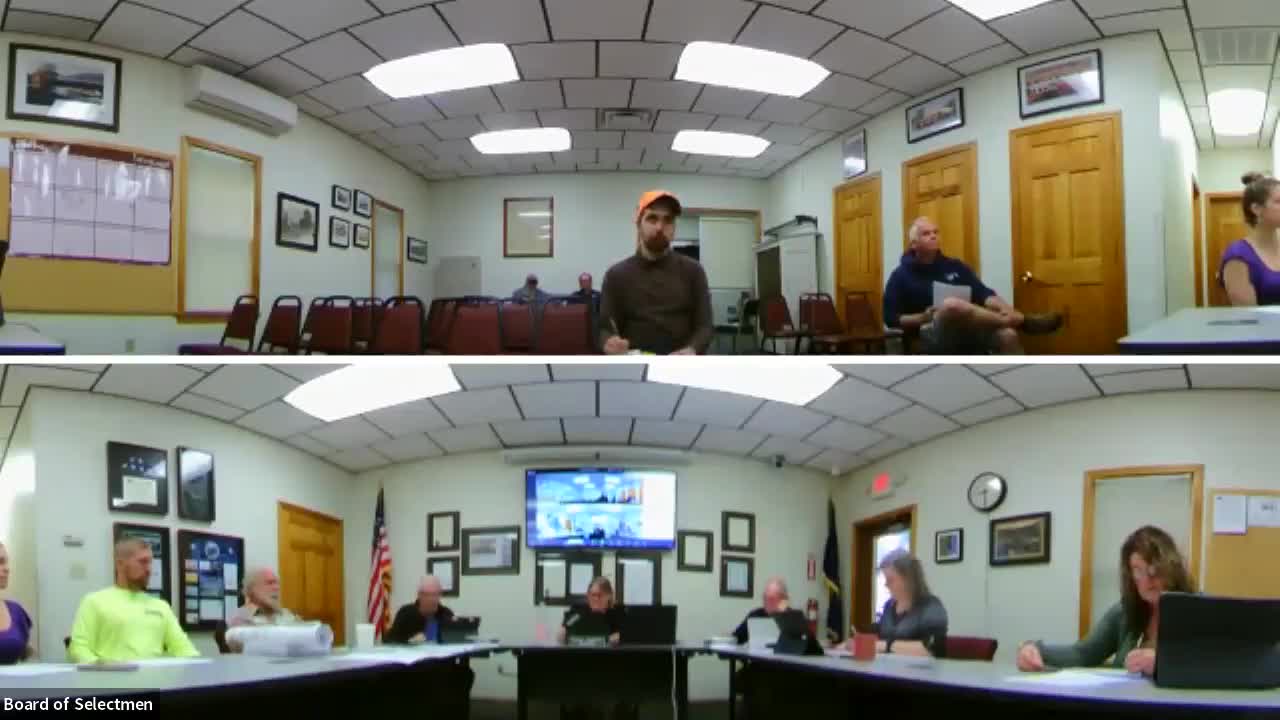
Town of Woodstock officials and the selected contractor executed the agreement for the Morris Street water‑main extension and set a tentative notice‑to‑proceed date of July 7, officials said at a preconstruction conference.
The meeting, led by the project engineer from Horizons Engineering and attended by contractor representatives from Elevated Excavation, town staff and a District 1 DOT representative, focused on contract execution, permitting, traffic control, ledge risk and construction administration. The contract documents include a 45‑day requirement to reach substantial completion from the notice to proceed and a liquidated damages clause of $250 per calendar day if substantial completion is missed, the engineer said.
The meeting matters because it establishes the start date, roles and the baseline schedule for a public utility project that will affect traffic and access on Morris Street and adjacent parking areas. The town and contractor must also secure state permits before work begins; missing permits or unexpected site conditions could change the planned schedule or cost.
Key outcomes and context
The Town executed three copies of the signed agreement so each party — contractor, town and the engineer — will retain one executed copy. The project team tentatively agreed to issue the notice to proceed with a July 7 start, subject to final permit approvals and contractor readiness. Horizons Engineering emphasized the contract’s timing provisions: “There’s 45 days from the time we issue what’s called a notice to proceed to reach substantial completion. If the contractor is not done within the 45 days, there’s a $250 fine per day for each calendar day that they don’t meet that deadline,” the engineer said.
Permits and approvals
The engineer reviewed required permits included with the contract documents. The contractor must obtain a final DOT District 1 trench permit (the meeting included a draft permit), and two shoreland permits are required because portions of the work fall within 250 feet of the river. The shoreland permits include conditions such as installing construction fencing around the disturbance perimeter; one permit also requires the permit to be signed and posted at the site.
Traffic control, public safety and coordination
Contractors are responsible for traffic control during construction; the town and police department offered to assist but warned they must be notified in advance to provide coverage. The public‑works director will be the town’s on‑site owner representative. The group discussed routing traffic, temporary closures and possible use of alternate routes to reduce hazards at the steep approach to the work area. The contractor said materials (pipe, valves, fittings) were expected to be on site the week before the proposed start date.
Site conditions and risk
Engineers noted potential ledge near the top of the hill where the trench requires about 6 feet of cover (roughly an 8‑foot excavation). The project bid includes a ledge allowance (the engineer stated a working quantity of 25 cubic yards in the bid). The team agreed that if ledge is encountered it will be exposed, measured and paid per the contract bid item; the contractor will arrange for hydraulic hammers if needed. Blasting was explicitly ruled out.
Administration, payment and records
A payment and performance bond was provided by the contractor. Given the short anticipated duration, the engineer expected only one pay requisition for the work, though the contract allows multiple estimates and progress meetings if needed. The contractor will supply as‑built markups and record documents so buried utilities can be located after project completion. Change orders will be prepared for any work that affects contract price or time and must be run through the selectboard for authorization when required by the contract.
What remains
Before ground breaking, the contractor must obtain the final DOT trench permit from District 1, secure shoreland permit signings and confirm police/public‑works support for traffic control days. The town and contractor also planned to coordinate final staging, storage locations (Connex and on‑site parking), and porta‑potty placement.
Ending
With the signed contract in hand and a tentative July 7 start date agreed, the project team moved into coordinate‑and‑permit mode: the agreement sets schedule and financial protections, but work cannot begin until final permits and local coordination are completed.
The meeting, led by the project engineer from Horizons Engineering and attended by contractor representatives from Elevated Excavation, town staff and a District 1 DOT representative, focused on contract execution, permitting, traffic control, ledge risk and construction administration. The contract documents include a 45‑day requirement to reach substantial completion from the notice to proceed and a liquidated damages clause of $250 per calendar day if substantial completion is missed, the engineer said.
The meeting matters because it establishes the start date, roles and the baseline schedule for a public utility project that will affect traffic and access on Morris Street and adjacent parking areas. The town and contractor must also secure state permits before work begins; missing permits or unexpected site conditions could change the planned schedule or cost.
Key outcomes and context
The Town executed three copies of the signed agreement so each party — contractor, town and the engineer — will retain one executed copy. The project team tentatively agreed to issue the notice to proceed with a July 7 start, subject to final permit approvals and contractor readiness. Horizons Engineering emphasized the contract’s timing provisions: “There’s 45 days from the time we issue what’s called a notice to proceed to reach substantial completion. If the contractor is not done within the 45 days, there’s a $250 fine per day for each calendar day that they don’t meet that deadline,” the engineer said.
Permits and approvals
The engineer reviewed required permits included with the contract documents. The contractor must obtain a final DOT District 1 trench permit (the meeting included a draft permit), and two shoreland permits are required because portions of the work fall within 250 feet of the river. The shoreland permits include conditions such as installing construction fencing around the disturbance perimeter; one permit also requires the permit to be signed and posted at the site.
Traffic control, public safety and coordination
Contractors are responsible for traffic control during construction; the town and police department offered to assist but warned they must be notified in advance to provide coverage. The public‑works director will be the town’s on‑site owner representative. The group discussed routing traffic, temporary closures and possible use of alternate routes to reduce hazards at the steep approach to the work area. The contractor said materials (pipe, valves, fittings) were expected to be on site the week before the proposed start date.
Site conditions and risk
Engineers noted potential ledge near the top of the hill where the trench requires about 6 feet of cover (roughly an 8‑foot excavation). The project bid includes a ledge allowance (the engineer stated a working quantity of 25 cubic yards in the bid). The team agreed that if ledge is encountered it will be exposed, measured and paid per the contract bid item; the contractor will arrange for hydraulic hammers if needed. Blasting was explicitly ruled out.
Administration, payment and records
A payment and performance bond was provided by the contractor. Given the short anticipated duration, the engineer expected only one pay requisition for the work, though the contract allows multiple estimates and progress meetings if needed. The contractor will supply as‑built markups and record documents so buried utilities can be located after project completion. Change orders will be prepared for any work that affects contract price or time and must be run through the selectboard for authorization when required by the contract.
What remains
Before ground breaking, the contractor must obtain the final DOT trench permit from District 1, secure shoreland permit signings and confirm police/public‑works support for traffic control days. The town and contractor also planned to coordinate final staging, storage locations (Connex and on‑site parking), and porta‑potty placement.
Ending
With the signed contract in hand and a tentative July 7 start date agreed, the project team moved into coordinate‑and‑permit mode: the agreement sets schedule and financial protections, but work cannot begin until final permits and local coordination are completed.
Don't Miss a Word: See the Full Meeting!
Go beyond summaries. Unlock every video, transcript, and key insight with a Founder Membership.
✓
Get instant access to full meeting videos
✓
Search and clip any phrase from complete transcripts
✓
Receive AI-powered summaries & custom alerts
✓
Enjoy lifetime, unrestricted access to government data
30-day money-back guarantee
