Planning and Zoning Board backs 5-foot pool setback for single-family lots, 5-0
June 26, 2025 | City of West Miami, Miami-Dade County, Florida
This article was created by AI summarizing key points discussed. AI makes mistakes, so for full details and context, please refer to the video of the full meeting. Please report any errors so we can fix them. Report an error »
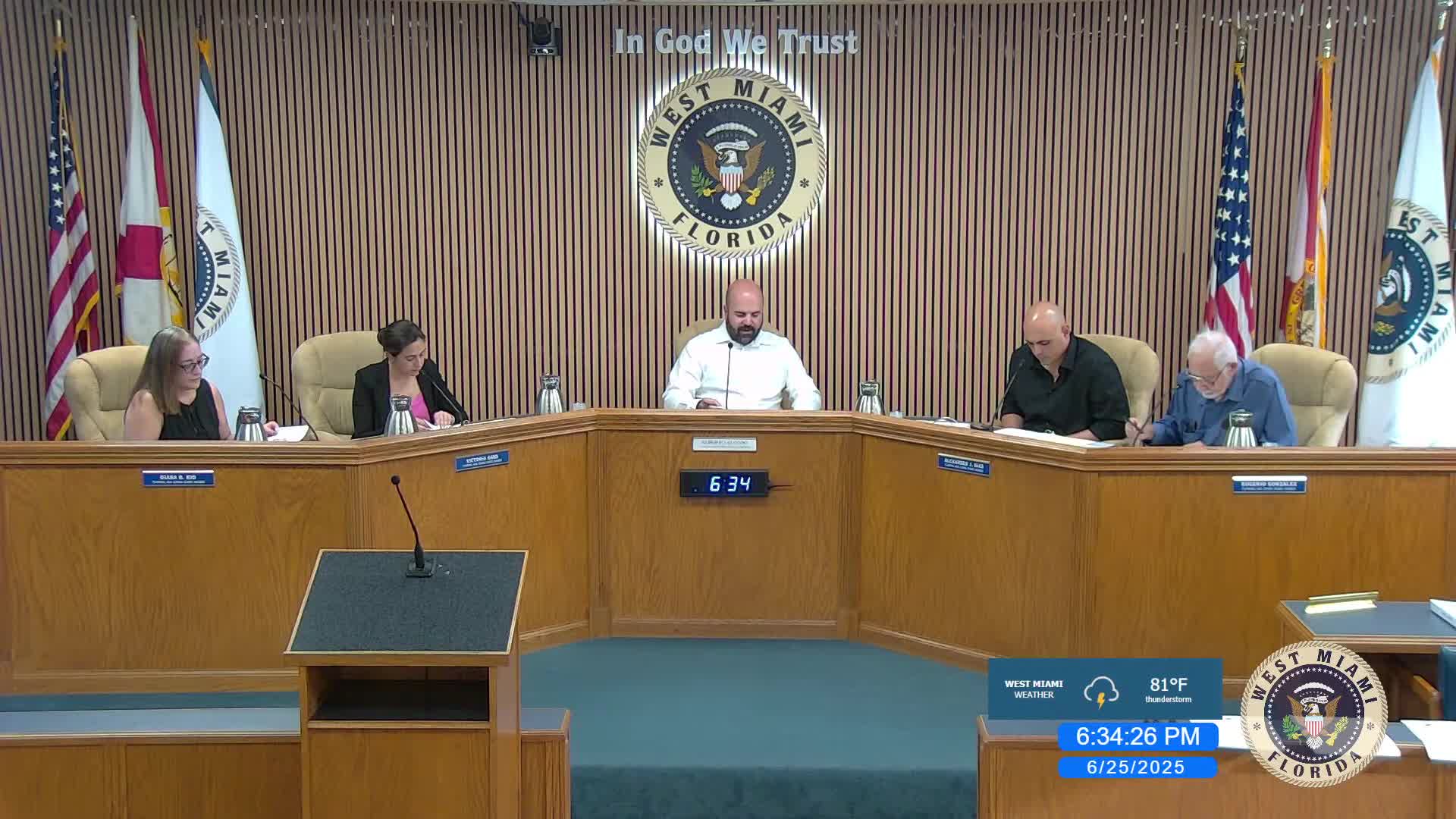
The Planning and Zoning Board of the City of West Miami voted 5-0 to recommend amending zoning ordinance 2-82, section 11.3, to allow swimming pools to be set back 5 feet from side and rear property lines on single-family (R1) lots while leaving a 10-foot requirement for multifamily and commercial properties.
The vote followed a staff and attorney briefing noting frequent variances for pool setbacks on the city’s small lots and a proposal that would measure setbacks from the face of the pool and require a minimum 2.5-foot pervious strip (what staff called "grama") between a pool and any impervious surface such as concrete or screen enclosures. Board attorney Mr. Layman told members that the board’s role is advisory and that if the board rejects an ordinance as drafted, the City Commission can still adopt it only with a four-fifths vote rather than a three-fifths vote.
Board members and staff discussed technical details and potential impacts. Planning staff said many West Miami lots are small and that the change is intended to reduce the number of variance requests; staff also confirmed the setback is measured from the face of the pool. Some board members expressed concern about applying the 5-foot rule to new multifamily or commercial projects, citing larger-scale developments and privacy or maintenance issues. Board member Alexander Diaz moved to recommend the change limited to R1 single-family zoning; board member Diana Rio seconded the motion. The roll call was unanimous in favor.
Attorney Layman said the board’s action will be reported as a recommendation and that he expects to sponsor a separate ordinance, on behalf of planning and zoning, that reflects the board’s amendment and requires only a three-fifths vote by the City Commission. He also advised the board that, as a recommendation, the amendment would not return to the board unless the Commission makes major, subject‑changing revisions.
What happens next: The attorney indicated he will place the board-sponsored amendment on a future City Commission agenda. The City Commission can adopt the board’s recommendation, adopt the original citywide change (which would require a four-fifths vote if the board has rejected it), or take other action; the board will not automatically see the final ordinance unless the Commission makes substantial alterations that change the subject matter.
The vote followed a staff and attorney briefing noting frequent variances for pool setbacks on the city’s small lots and a proposal that would measure setbacks from the face of the pool and require a minimum 2.5-foot pervious strip (what staff called "grama") between a pool and any impervious surface such as concrete or screen enclosures. Board attorney Mr. Layman told members that the board’s role is advisory and that if the board rejects an ordinance as drafted, the City Commission can still adopt it only with a four-fifths vote rather than a three-fifths vote.
Board members and staff discussed technical details and potential impacts. Planning staff said many West Miami lots are small and that the change is intended to reduce the number of variance requests; staff also confirmed the setback is measured from the face of the pool. Some board members expressed concern about applying the 5-foot rule to new multifamily or commercial projects, citing larger-scale developments and privacy or maintenance issues. Board member Alexander Diaz moved to recommend the change limited to R1 single-family zoning; board member Diana Rio seconded the motion. The roll call was unanimous in favor.
Attorney Layman said the board’s action will be reported as a recommendation and that he expects to sponsor a separate ordinance, on behalf of planning and zoning, that reflects the board’s amendment and requires only a three-fifths vote by the City Commission. He also advised the board that, as a recommendation, the amendment would not return to the board unless the Commission makes major, subject‑changing revisions.
What happens next: The attorney indicated he will place the board-sponsored amendment on a future City Commission agenda. The City Commission can adopt the board’s recommendation, adopt the original citywide change (which would require a four-fifths vote if the board has rejected it), or take other action; the board will not automatically see the final ordinance unless the Commission makes substantial alterations that change the subject matter.
View the Full Meeting & All Its Details
This article offers just a summary. Unlock complete video, transcripts, and insights as a Founder Member.
✓
Watch full, unedited meeting videos
✓
Search every word spoken in unlimited transcripts
✓
AI summaries & real-time alerts (all government levels)
✓
Permanent access to expanding government content
30-day money-back guarantee
