Killeen manager proposes FY2026 budget with tax-rate increase after state cuts to veterans reimbursement
July 02, 2025 | Killeen, Bell County, Texas
This article was created by AI summarizing key points discussed. AI makes mistakes, so for full details and context, please refer to the video of the full meeting. Please report any errors so we can fix them. Report an error »
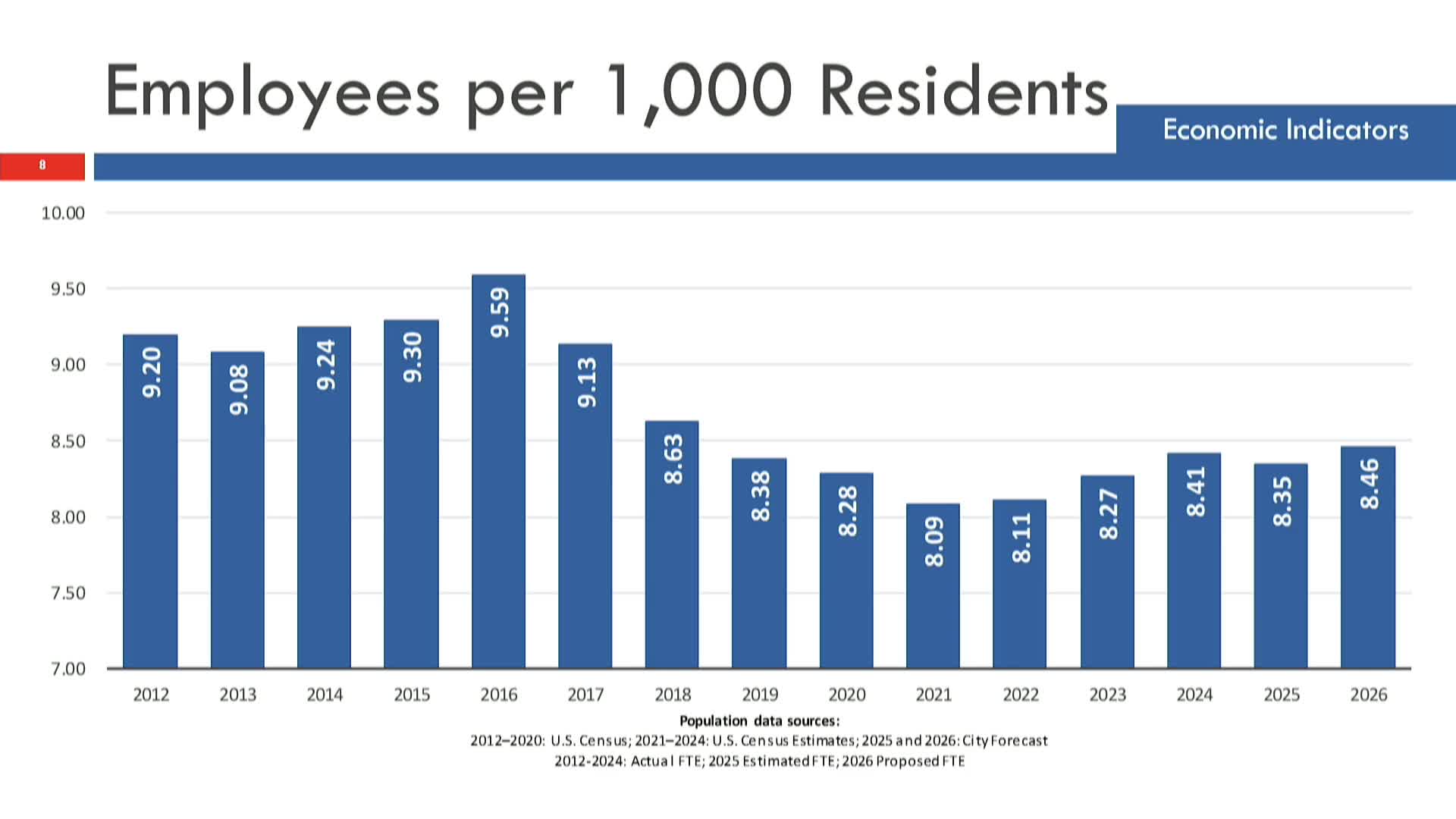
City Manager Mister Cagle presented the City of Killeen’s proposed fiscal year 2026 budget on July 1 and recommended a preliminary tax-rate increase after state changes to the disabled‑veteran property tax exemption reduced local revenue.
Cagle told the council the proposed general fund budget is about $130 million, a 4.1% increase over the prior year, and that the City expects a revenue shortfall because state reimbursement for the expanded disabled‑veteran exemption (House Bill 2894) will not fully cover local losses. “The revenue loss just in this budget year is $15,800,000,” Cagle said, noting the state’s reimbursement historically covered a portion of that loss but will not keep pace with recent changes.
Why it matters: council members pressed that the state‑level change disproportionately affects Killeen because of the city’s large military and veteran population and the city’s role in providing services to Fort Hood. Cagle and staff said the reduced reimbursement is a primary driver behind the recommended tentative tax change and the budget tradeoffs before the council.
The proposal and next steps: the manager proposed a preliminary combined tax rate of 0.6830 (68.30 cents per $100 valuation), showing a 2.57% overall increase driven largely by higher debt service for recent capital projects; Cagle said the final certified roll and state calculations will determine the council’s final options. The council set a public hearing on the FY2026 proposed budget for July 22, 2025, at 3 p.m., and staff will post the proposed budget materials online.
Council reaction and guidance: council members repeatedly asked staff and the manager to continue advocating to state lawmakers for changes to the reimbursement scheme. Several council members said they will contact state representatives to explain Killeen’s fiscal position. At the meeting the council also approved several motions of direction tied to the budget: it instructed staff to attempt to identify $30,000 to preserve a mental‑health co‑responder position (motion passed 5–0), directed staff to pursue up to $50,000 to work with the IBCC on services (motion passed), and asked staff to consider KEDC funding at year‑end if savings are available.
Budget highlights and constraints: the proposed budget includes a 4% cost‑of‑living increase for employees and targeted pay adjustments recommended by the city’s compensation survey (staff said additional adjustments would cost roughly $337,135 if council elects to narrow market gaps). Approved decision packages include replacing ambulance cardiac monitors via vendor financing and a 7‑year limited tax note to replace self‑contained breathing apparatus for the fire department. Staff emphasized that several other personnel and operational requests were not funded because of revenue constraints.
What comes next: staff will post the full proposed budget and CIP documents on the city website and return to council after the July 22 public hearing; final adoption will follow the required notice and public‑hearing process. The manager asked residents to contact state legislators about the fiscal impact of the disabled‑veteran exemption changes.
Ending: The council has not adopted a final tax rate. The budget presentation sets the schedule for adoption and provides council the figures and policy choices it will weigh before final action later this summer.
Cagle told the council the proposed general fund budget is about $130 million, a 4.1% increase over the prior year, and that the City expects a revenue shortfall because state reimbursement for the expanded disabled‑veteran exemption (House Bill 2894) will not fully cover local losses. “The revenue loss just in this budget year is $15,800,000,” Cagle said, noting the state’s reimbursement historically covered a portion of that loss but will not keep pace with recent changes.
Why it matters: council members pressed that the state‑level change disproportionately affects Killeen because of the city’s large military and veteran population and the city’s role in providing services to Fort Hood. Cagle and staff said the reduced reimbursement is a primary driver behind the recommended tentative tax change and the budget tradeoffs before the council.
The proposal and next steps: the manager proposed a preliminary combined tax rate of 0.6830 (68.30 cents per $100 valuation), showing a 2.57% overall increase driven largely by higher debt service for recent capital projects; Cagle said the final certified roll and state calculations will determine the council’s final options. The council set a public hearing on the FY2026 proposed budget for July 22, 2025, at 3 p.m., and staff will post the proposed budget materials online.
Council reaction and guidance: council members repeatedly asked staff and the manager to continue advocating to state lawmakers for changes to the reimbursement scheme. Several council members said they will contact state representatives to explain Killeen’s fiscal position. At the meeting the council also approved several motions of direction tied to the budget: it instructed staff to attempt to identify $30,000 to preserve a mental‑health co‑responder position (motion passed 5–0), directed staff to pursue up to $50,000 to work with the IBCC on services (motion passed), and asked staff to consider KEDC funding at year‑end if savings are available.
Budget highlights and constraints: the proposed budget includes a 4% cost‑of‑living increase for employees and targeted pay adjustments recommended by the city’s compensation survey (staff said additional adjustments would cost roughly $337,135 if council elects to narrow market gaps). Approved decision packages include replacing ambulance cardiac monitors via vendor financing and a 7‑year limited tax note to replace self‑contained breathing apparatus for the fire department. Staff emphasized that several other personnel and operational requests were not funded because of revenue constraints.
What comes next: staff will post the full proposed budget and CIP documents on the city website and return to council after the July 22 public hearing; final adoption will follow the required notice and public‑hearing process. The manager asked residents to contact state legislators about the fiscal impact of the disabled‑veteran exemption changes.
Ending: The council has not adopted a final tax rate. The budget presentation sets the schedule for adoption and provides council the figures and policy choices it will weigh before final action later this summer.
View the Full Meeting & All Its Details
This article offers just a summary. Unlock complete video, transcripts, and insights as a Founder Member.
✓
Watch full, unedited meeting videos
✓
Search every word spoken in unlimited transcripts
✓
AI summaries & real-time alerts (all government levels)
✓
Permanent access to expanding government content
30-day money-back guarantee
