Commissioners press for accounting, workforce data and possible ordinance review amid solar-project concerns
July 07, 2025 | Pulaski County, Indiana
This article was created by AI summarizing key points discussed. AI makes mistakes, so for full details and context, please refer to the video of the full meeting. Please report any errors so we can fix them. Report an error »
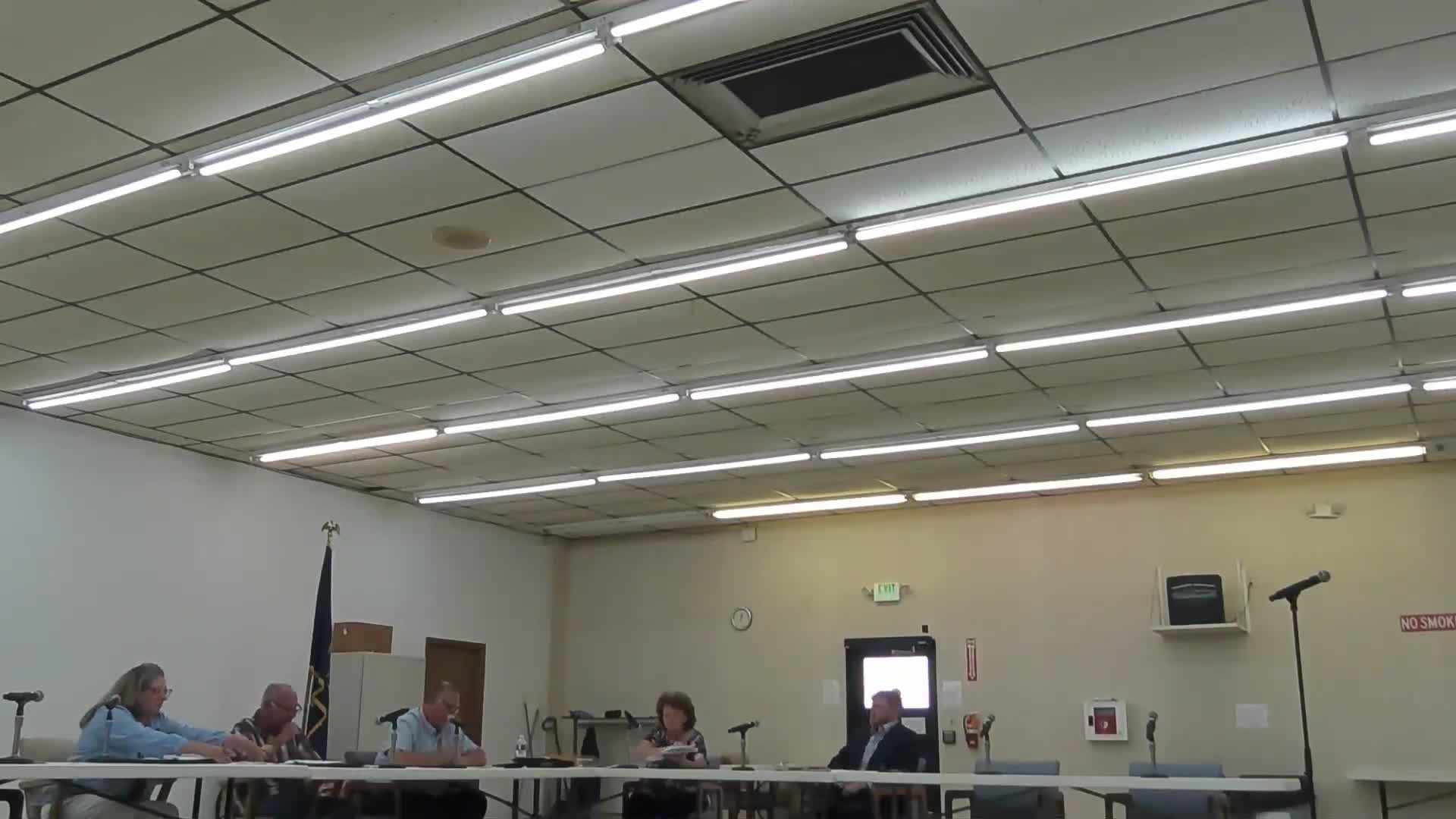
Pulaski County commissioners devoted a lengthy portion of their July 7 meeting to public comments and staff discussion about large commercial solar developments in the county. Speakers raised questions about financial accountability, employment projections used to support tax abatements, enforcement of local development standards, and whether to pause new project approvals while the county’s unified development ordinance (UDO) is reviewed.
Accounting and payments: Commissioner comments and public speakers focused on a $225,000 sum that county materials show was to be provided by solar developers to cover consultant and legal work (items cited included drainage, a model UDO, road-use agreements and decommissioning planning). Commissioners said two vendors — Tankersley Law and Baker Tilly — confirmed they received payment directly from developers; one firm (Barnes & Thornburg) had not yet provided confirmation to the county. Commissioners requested a records review to trace whether county funds were used to pay any of these providers and asked staff to search county and treasurer files for evidence of payments since January 2020; several commissioners called for a formal audit or third-party review if documentation cannot be reconciled.
Workforce numbers: Commissioners and residents discussed a discrepancy between developers’ employment estimates used in impact studies and actual hiring. The economic-impact materials reviewed earlier in the development reports assumed 25% of construction-phase workers would be Pulaski County residents. Commissioners said a company (Grama Solar) reported 360 employees on-site with just 3.8% from Pulaski County — about 13 local hires instead of the 90 that 25% would imply. County staff noted some local hauling and subcontractor labor may not have been included in the primary headcount; commissioners pressed for names, addresses or other supporting data to validate resident-hire claims because the county’s tax-abatement and development agreements relied on projected local employment.
UDO, setbacks, fencing and enforcement: Several speakers complained that developers were combining parcels under continuous fence lines that effectively encase adjacent private property and restrict animal movement and hunting access. Residents urged the county to enforce chapter 7 and chapter 8 setback rules (transcript references: 75- and 150-foot setbacks cited by a speaker referencing the county ordinance) and questioned whether compliance monitoring had been delegated to private compliance firms. County staff confirmed vaccination of compliance-liaison services (VS/Bechtel) acts as a liaison but that enforcement actions such as stop-work orders or official removal of permits remain within county officials’ authority, particularly the building inspector and drainage superintendent. Building-inspector authority and the drainage superintendent’s role were discussed as the primary avenues for enforcement.
Next steps and oversight: Commissioners asked county staff to compile invoices and payment records for the consultants who worked on solar-development agreements and to seek documentation from developers showing who paid those invoices. At least one commissioner urged an internal review immediately rather than waiting for a potential State Board of Accounts audit, which staff said may occur within the next six months. Commissioners discussed collecting worker lists and addresses (to verify residency and local hiring percentages) and requested clearer data on subcontractor involvement.
Public comments at the meeting reiterated the call for a moratorium on new large-scale solar approvals while the UDO and enforcement processes are reviewed; commissioners and staff discussed formal scopes of service to review the ordinance and said they had submitted a scope in June and awaited a fee proposal to begin a UDO update process. No moratorium vote occurred at the July 7 meeting; speakers and some commissioners requested expedited study and a follow-up discussion in coming weeks.
Accounting and payments: Commissioner comments and public speakers focused on a $225,000 sum that county materials show was to be provided by solar developers to cover consultant and legal work (items cited included drainage, a model UDO, road-use agreements and decommissioning planning). Commissioners said two vendors — Tankersley Law and Baker Tilly — confirmed they received payment directly from developers; one firm (Barnes & Thornburg) had not yet provided confirmation to the county. Commissioners requested a records review to trace whether county funds were used to pay any of these providers and asked staff to search county and treasurer files for evidence of payments since January 2020; several commissioners called for a formal audit or third-party review if documentation cannot be reconciled.
Workforce numbers: Commissioners and residents discussed a discrepancy between developers’ employment estimates used in impact studies and actual hiring. The economic-impact materials reviewed earlier in the development reports assumed 25% of construction-phase workers would be Pulaski County residents. Commissioners said a company (Grama Solar) reported 360 employees on-site with just 3.8% from Pulaski County — about 13 local hires instead of the 90 that 25% would imply. County staff noted some local hauling and subcontractor labor may not have been included in the primary headcount; commissioners pressed for names, addresses or other supporting data to validate resident-hire claims because the county’s tax-abatement and development agreements relied on projected local employment.
UDO, setbacks, fencing and enforcement: Several speakers complained that developers were combining parcels under continuous fence lines that effectively encase adjacent private property and restrict animal movement and hunting access. Residents urged the county to enforce chapter 7 and chapter 8 setback rules (transcript references: 75- and 150-foot setbacks cited by a speaker referencing the county ordinance) and questioned whether compliance monitoring had been delegated to private compliance firms. County staff confirmed vaccination of compliance-liaison services (VS/Bechtel) acts as a liaison but that enforcement actions such as stop-work orders or official removal of permits remain within county officials’ authority, particularly the building inspector and drainage superintendent. Building-inspector authority and the drainage superintendent’s role were discussed as the primary avenues for enforcement.
Next steps and oversight: Commissioners asked county staff to compile invoices and payment records for the consultants who worked on solar-development agreements and to seek documentation from developers showing who paid those invoices. At least one commissioner urged an internal review immediately rather than waiting for a potential State Board of Accounts audit, which staff said may occur within the next six months. Commissioners discussed collecting worker lists and addresses (to verify residency and local hiring percentages) and requested clearer data on subcontractor involvement.
Public comments at the meeting reiterated the call for a moratorium on new large-scale solar approvals while the UDO and enforcement processes are reviewed; commissioners and staff discussed formal scopes of service to review the ordinance and said they had submitted a scope in June and awaited a fee proposal to begin a UDO update process. No moratorium vote occurred at the July 7 meeting; speakers and some commissioners requested expedited study and a follow-up discussion in coming weeks.
View the Full Meeting & All Its Details
This article offers just a summary. Unlock complete video, transcripts, and insights as a Founder Member.
✓
Watch full, unedited meeting videos
✓
Search every word spoken in unlimited transcripts
✓
AI summaries & real-time alerts (all government levels)
✓
Permanent access to expanding government content
30-day money-back guarantee
