Owners, appraiser and merchants say City Marketplace parcel price, upkeep hinder downtown recovery
July 07, 2025 | Punta Gorda City, Charlotte County, Florida
This article was created by AI summarizing key points discussed. AI makes mistakes, so for full details and context, please refer to the video of the full meeting. Please report any errors so we can fix them. Report an error »
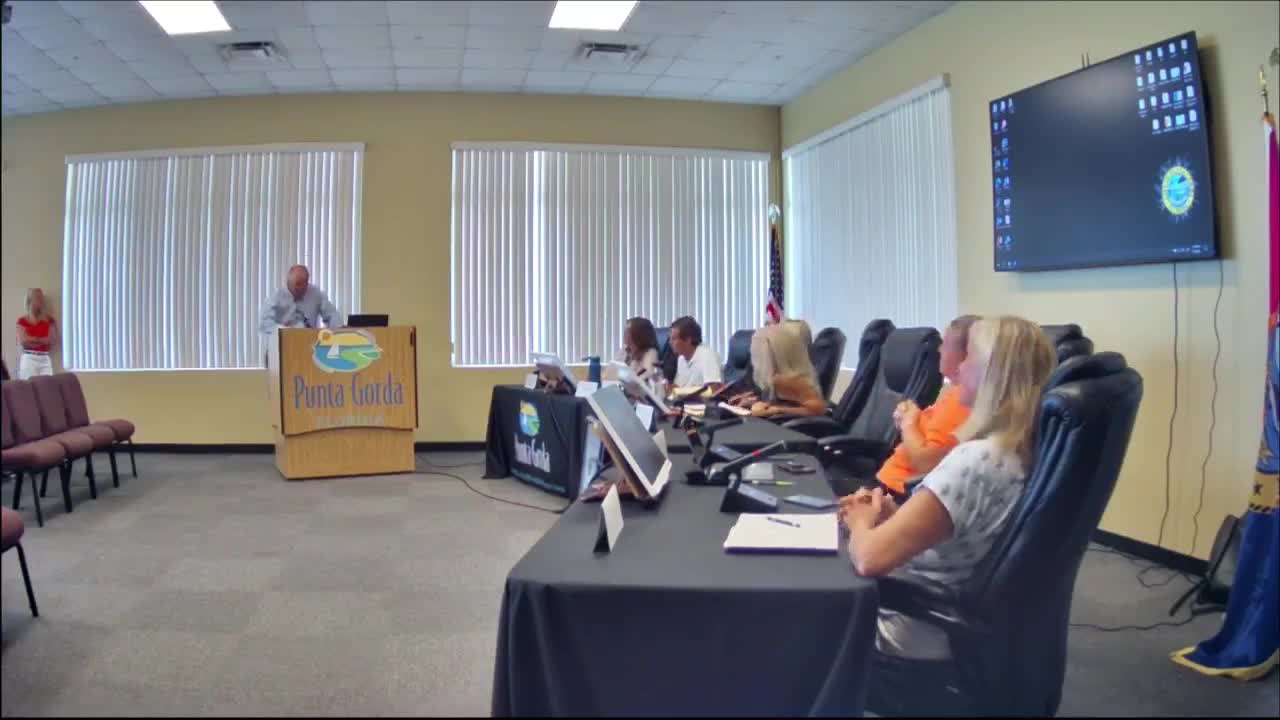
Downtown merchants pressed the City of Punta Gorda on July 7 to address an empty, privately owned parcel known as the City Marketplace, which residents and business owners blamed for a blighted gateway into downtown.
An attendee who identified himself as Michael, a commercial real-estate appraiser, told the workshop the parcel’s current asking price—$12.4 million—equates to roughly $52 per square foot or more than $2.2 million per acre and is unprecedented in Charlotte County for available waterfront parcels. “There’s never been a sale in the history of Charlotte County, including waterfront, that has sold for that higher price point,” he said, and argued the listing price and high current construction, interest and insurance costs make new retail development unlikely at that cost.
Several attendees suggested the city use its tools to force maintenance or consider acquiring part of the parcel to create a park or other publicly useful space. Anne Melnick proposed the city buy a portion of the Marketplace and convert it to a small public park with benches and a place for a Christmas tree, as an interim measure to improve the gateway to town.
Betsy Spagnolo and other merchants asked why code-enforcement penalties or maintenance requirements had not compelled the owner to remove weeds and repair the surface. City staff said there have been multiple code cases over the years for tall grass and weeds and that the city has been working on requiring removal of impervious surfaces from nonconforming sites; staff said Bank of America’s parcel redevelopment will be required to remove impervious area as part of its work.
Staff also cited market realities: rising construction costs, higher interest and insurance rates, and increased property taxes have constrained new development. The appraiser said lenders and developers are focusing on flex and industrial space rather than retail given current returns.
Next steps: City staff and council members said they will continue to press property owners on maintenance and will use LDR provisions on nonconforming impervious areas; council members encouraged continued community pressure and proposals to explore limited public acquisition if feasible. No acquisition or ordinance change was decided at the workshop.
An attendee who identified himself as Michael, a commercial real-estate appraiser, told the workshop the parcel’s current asking price—$12.4 million—equates to roughly $52 per square foot or more than $2.2 million per acre and is unprecedented in Charlotte County for available waterfront parcels. “There’s never been a sale in the history of Charlotte County, including waterfront, that has sold for that higher price point,” he said, and argued the listing price and high current construction, interest and insurance costs make new retail development unlikely at that cost.
Several attendees suggested the city use its tools to force maintenance or consider acquiring part of the parcel to create a park or other publicly useful space. Anne Melnick proposed the city buy a portion of the Marketplace and convert it to a small public park with benches and a place for a Christmas tree, as an interim measure to improve the gateway to town.
Betsy Spagnolo and other merchants asked why code-enforcement penalties or maintenance requirements had not compelled the owner to remove weeds and repair the surface. City staff said there have been multiple code cases over the years for tall grass and weeds and that the city has been working on requiring removal of impervious surfaces from nonconforming sites; staff said Bank of America’s parcel redevelopment will be required to remove impervious area as part of its work.
Staff also cited market realities: rising construction costs, higher interest and insurance rates, and increased property taxes have constrained new development. The appraiser said lenders and developers are focusing on flex and industrial space rather than retail given current returns.
Next steps: City staff and council members said they will continue to press property owners on maintenance and will use LDR provisions on nonconforming impervious areas; council members encouraged continued community pressure and proposals to explore limited public acquisition if feasible. No acquisition or ordinance change was decided at the workshop.
View the Full Meeting & All Its Details
This article offers just a summary. Unlock complete video, transcripts, and insights as a Founder Member.
✓
Watch full, unedited meeting videos
✓
Search every word spoken in unlimited transcripts
✓
AI summaries & real-time alerts (all government levels)
✓
Permanent access to expanding government content
30-day money-back guarantee
