Huron Council reviews e‑scooter and e‑bike rules; staff to draft impoundment code and police to start safety education
July 09, 2025 | Huron City Council, Huron, Erie County, Ohio
This article was created by AI summarizing key points discussed. AI makes mistakes, so for full details and context, please refer to the video of the full meeting. Please report any errors so we can fix them. Report an error »
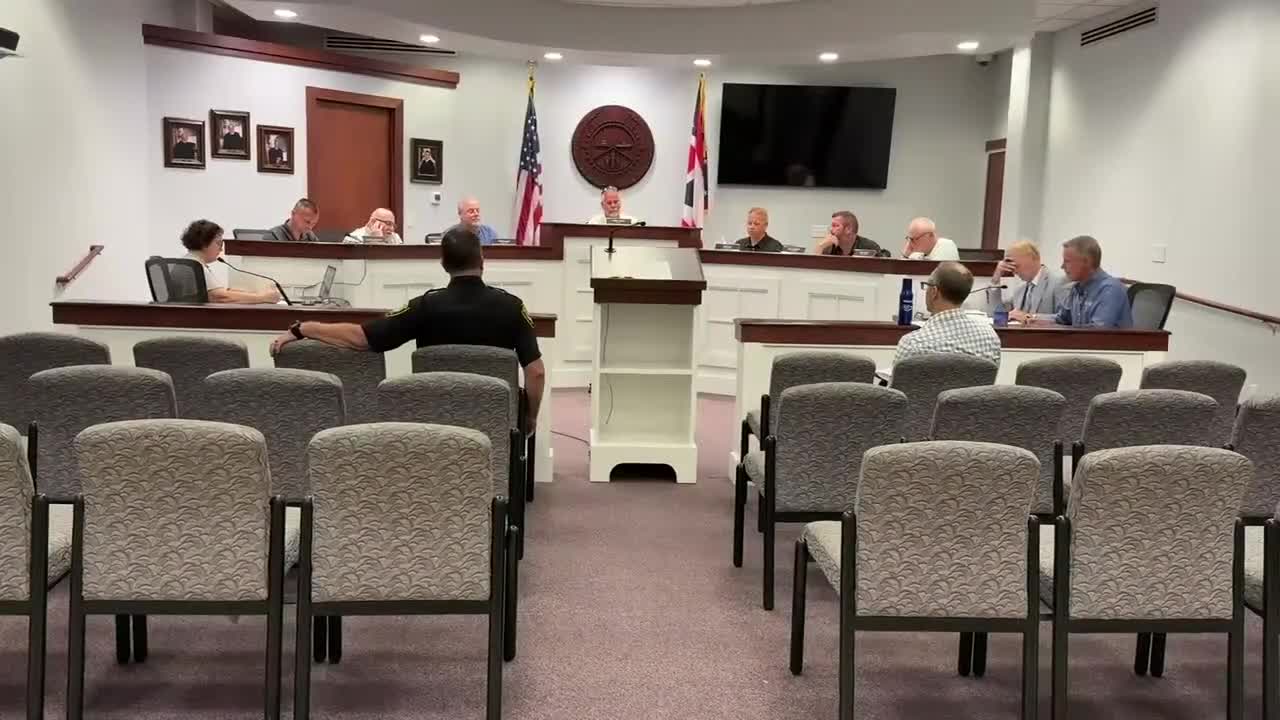
Huron City Council members spent a work session discussing possible updates to local ordinances that govern e‑scooters, electric bicycles and other micromobility devices, focusing on enforcement limits set by the Ohio Revised Code and on plans for police-led education and potential impoundment rules.
The conversation matters because state law constrains what the city can prohibit on sidewalks and multiuse paths, complicating local efforts to curb unsafe riding that residents have complained about. Council members and staff said education and targeted enforcement — rather than sweeping new prohibitions — are the most immediately achievable tools.
City staff emphasized that local rules must conform to the Ohio Revised Code. "I want everyone to remember that we're bound by Ohio revised... We can do things more restrictive than ORC, but we can't do anything more laxative. So 1 perfect example is ORC says that no vehicle is allowed on the sidewalk," said Mr. Hamilton, a city staff member, warning that state definitions limit what the council can change locally.
Matt Bartels, a city staff member who reviewed definitions in the Huron code and the ORC, noted variations in device classifications. He said Huron's local code includes a definition for "e‑scooter" that does not appear in the ORC, and that electric bicycles are split into class 1, 2 and 3 with different speed allowances. "The escooter... is not in the ORC," Bartels said, and he reminded the council that some devices are allowed on sidewalks only when they meet certain low‑speed definitions.
Police leaders described enforcement challenges and urged education. Chief Gary Graham, Huron's police chief, called distinguishing device types by sight difficult and proposed a school‑based and visitor outreach approach. "We think the police department developing a program on rules of the road... and also safety issues recommending a helmet" would reach many riders, Graham said, adding that the department has begun using contact and education with juveniles and has seen some behavioral improvement.
Council members and staff discussed specific legal references the city is following, including ORC 4511.711(A) and local code section 331.37, and considered where class‑3 electric bicycles — the fastest category, sometimes rated up to 28 mph — may be restricted. Staff noted practical enforcement limits: devices that are rated for higher speeds can be ridden slowly, and some vehicles can be modified so appearances can mislead enforcement officers.
Participants proposed several next steps rather than immediate ordinance changes. Those steps include drafting a local impoundment provision for abusive or repeat offenders, directing the police chief to develop an education curriculum (potentially delivered by the school resource officer), and monitoring outcomes over the summer to determine whether further code changes are necessary. City staff also said enforcement on private property is limited: officers may respond to reckless operation on private lots open to the public when a business requests assistance, but they cannot remove devices from private property by force.
No formal ordinance changes or votes were taken at the session; council members voiced general support for education, targeted enforcement and an impoundment ordinance draft to be returned for later consideration.
The city flagged several operational questions that will require clarification before any local law is changed: where a bike path is considered "adjacent" to a roadway under state law, how to verify a rider's age for any age‑based restriction, and how to identify and classify modified e‑bikes in the field. Staff recommended more detailed legal review before drafting enforceable language.
Officials said they will continue to gather public complaints, coordinate patrols in problem areas and seek school cooperation on rider safety education. Council members signaled interest in beginning education in the coming school year and evaluating results the following summer.
The conversation matters because state law constrains what the city can prohibit on sidewalks and multiuse paths, complicating local efforts to curb unsafe riding that residents have complained about. Council members and staff said education and targeted enforcement — rather than sweeping new prohibitions — are the most immediately achievable tools.
City staff emphasized that local rules must conform to the Ohio Revised Code. "I want everyone to remember that we're bound by Ohio revised... We can do things more restrictive than ORC, but we can't do anything more laxative. So 1 perfect example is ORC says that no vehicle is allowed on the sidewalk," said Mr. Hamilton, a city staff member, warning that state definitions limit what the council can change locally.
Matt Bartels, a city staff member who reviewed definitions in the Huron code and the ORC, noted variations in device classifications. He said Huron's local code includes a definition for "e‑scooter" that does not appear in the ORC, and that electric bicycles are split into class 1, 2 and 3 with different speed allowances. "The escooter... is not in the ORC," Bartels said, and he reminded the council that some devices are allowed on sidewalks only when they meet certain low‑speed definitions.
Police leaders described enforcement challenges and urged education. Chief Gary Graham, Huron's police chief, called distinguishing device types by sight difficult and proposed a school‑based and visitor outreach approach. "We think the police department developing a program on rules of the road... and also safety issues recommending a helmet" would reach many riders, Graham said, adding that the department has begun using contact and education with juveniles and has seen some behavioral improvement.
Council members and staff discussed specific legal references the city is following, including ORC 4511.711(A) and local code section 331.37, and considered where class‑3 electric bicycles — the fastest category, sometimes rated up to 28 mph — may be restricted. Staff noted practical enforcement limits: devices that are rated for higher speeds can be ridden slowly, and some vehicles can be modified so appearances can mislead enforcement officers.
Participants proposed several next steps rather than immediate ordinance changes. Those steps include drafting a local impoundment provision for abusive or repeat offenders, directing the police chief to develop an education curriculum (potentially delivered by the school resource officer), and monitoring outcomes over the summer to determine whether further code changes are necessary. City staff also said enforcement on private property is limited: officers may respond to reckless operation on private lots open to the public when a business requests assistance, but they cannot remove devices from private property by force.
No formal ordinance changes or votes were taken at the session; council members voiced general support for education, targeted enforcement and an impoundment ordinance draft to be returned for later consideration.
The city flagged several operational questions that will require clarification before any local law is changed: where a bike path is considered "adjacent" to a roadway under state law, how to verify a rider's age for any age‑based restriction, and how to identify and classify modified e‑bikes in the field. Staff recommended more detailed legal review before drafting enforceable language.
Officials said they will continue to gather public complaints, coordinate patrols in problem areas and seek school cooperation on rider safety education. Council members signaled interest in beginning education in the coming school year and evaluating results the following summer.
View the Full Meeting & All Its Details
This article offers just a summary. Unlock complete video, transcripts, and insights as a Founder Member.
✓
Watch full, unedited meeting videos
✓
Search every word spoken in unlimited transcripts
✓
AI summaries & real-time alerts (all government levels)
✓
Permanent access to expanding government content
30-day money-back guarantee
