Appellate lawyers argue trial court improperly limited cross-examination of witness Octavius Beatty
July 09, 2025 | Judicial, Tennessee
This article was created by AI summarizing key points discussed. AI makes mistakes, so for full details and context, please refer to the video of the full meeting. Please report any errors so we can fix them. Report an error »
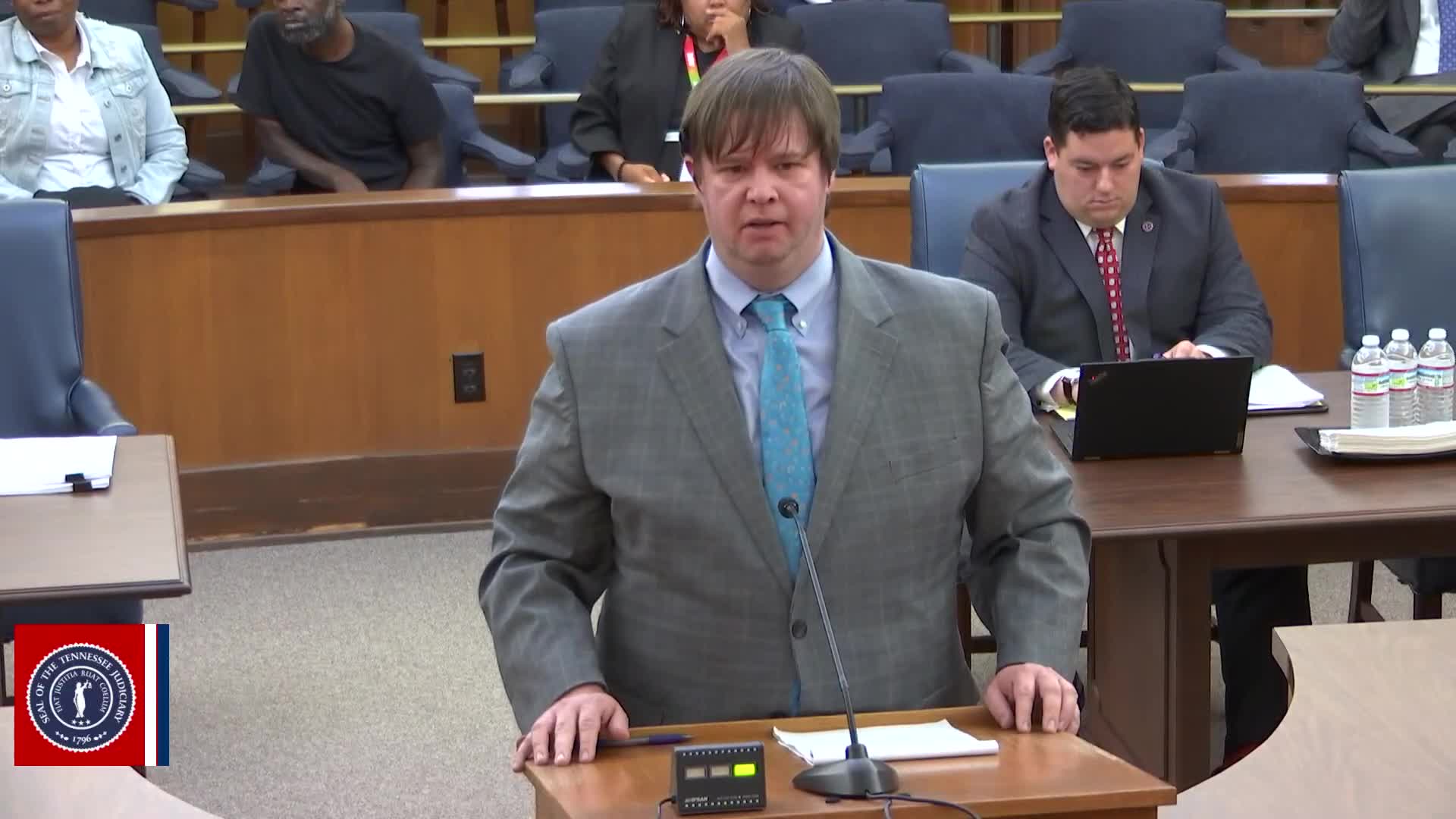
At an appellate oral argument, Seth Seagraves, attorney for appellant Caprice Pete, said the trial court improperly limited cross-examination of witness Octavius Beatty by barring questions about the facts underlying Beatty's later conviction for possessing a firearm. Seagraves told the panel he reserved three minutes for rebuttal and that his briefs raise six issues but he would focus on two: limitations on cross-examination and prosecutorial remarks in closing argument.
Seagraves said Beatty did not speak to police after the shooting, was not on any witness list for three years, and only later was arrested and convicted after being seen throwing a gun from a moving car. “If you were there and he didn’t have a gun, and you were caught throwing a gun out the window six months later … how are we not allowed to cross-examine on that?” Seagraves asked the court. He framed the question as constitutional, invoking the Sixth Amendment right to present a complete defense and citing State v. Glenn Allen Donaldson and Reynolds as governing precedents the defense relied on.
The defense argued the prosecution opened a “conceptual void” by asking Beatty on direct whether the gun from his later conviction had anything to do with this case. Seagraves said the state used Beatty “for the sole purpose of saying that the decedent did not have a weapon” while the defense could not explore why Beatty later disposed of a firearm. That limitation, he said, impaired the defense’s ability to impeach the witness and denied a complete defense.
State appellate counsel Ronald Coleman responded that trial counsel repeatedly told the court at trial the defense sought to introduce the prior conduct to show Beatty was “the type of person that gets rid of guns,” which Coleman said was textbook propensity evidence. Coleman said the trial court properly excluded the detailed underlying facts as propensity evidence and exercised permissible discretion in limiting cross-examination. He also told the panel the defense was able to impeach Beatty on other fronts and that co-defendant testimony supplied similar defensive points at trial.
Both sides acknowledged the trial court had taken testimony and held extended hearings on the point. The state pointed to the trial judge’s finding that Beatty had stipulated to facts in the later plea and that the conviction itself was reliable; the defense emphasized that the state asked whether the later gun was connected to this case and that left an unanswered factual gap for the jury.
No ruling from the appellate panel was recorded at the argument. The dispute centers on whether the trial court’s evidentiary rulings were an abuse of discretion and whether, under the constitutional test cited by the defense, exclusion of the proffered impeachment evidence was structural or harmless error.
Seagraves said Beatty did not speak to police after the shooting, was not on any witness list for three years, and only later was arrested and convicted after being seen throwing a gun from a moving car. “If you were there and he didn’t have a gun, and you were caught throwing a gun out the window six months later … how are we not allowed to cross-examine on that?” Seagraves asked the court. He framed the question as constitutional, invoking the Sixth Amendment right to present a complete defense and citing State v. Glenn Allen Donaldson and Reynolds as governing precedents the defense relied on.
The defense argued the prosecution opened a “conceptual void” by asking Beatty on direct whether the gun from his later conviction had anything to do with this case. Seagraves said the state used Beatty “for the sole purpose of saying that the decedent did not have a weapon” while the defense could not explore why Beatty later disposed of a firearm. That limitation, he said, impaired the defense’s ability to impeach the witness and denied a complete defense.
State appellate counsel Ronald Coleman responded that trial counsel repeatedly told the court at trial the defense sought to introduce the prior conduct to show Beatty was “the type of person that gets rid of guns,” which Coleman said was textbook propensity evidence. Coleman said the trial court properly excluded the detailed underlying facts as propensity evidence and exercised permissible discretion in limiting cross-examination. He also told the panel the defense was able to impeach Beatty on other fronts and that co-defendant testimony supplied similar defensive points at trial.
Both sides acknowledged the trial court had taken testimony and held extended hearings on the point. The state pointed to the trial judge’s finding that Beatty had stipulated to facts in the later plea and that the conviction itself was reliable; the defense emphasized that the state asked whether the later gun was connected to this case and that left an unanswered factual gap for the jury.
No ruling from the appellate panel was recorded at the argument. The dispute centers on whether the trial court’s evidentiary rulings were an abuse of discretion and whether, under the constitutional test cited by the defense, exclusion of the proffered impeachment evidence was structural or harmless error.
View the Full Meeting & All Its Details
This article offers just a summary. Unlock complete video, transcripts, and insights as a Founder Member.
✓
Watch full, unedited meeting videos
✓
Search every word spoken in unlimited transcripts
✓
AI summaries & real-time alerts (all government levels)
✓
Permanent access to expanding government content
30-day money-back guarantee
