Appellate court hears challenge to aggravated-robbery evidence and dual theft convictions
July 09, 2025 | Judicial, Tennessee
This article was created by AI summarizing key points discussed. AI makes mistakes, so for full details and context, please refer to the video of the full meeting. Please report any errors so we can fix them. Report an error »
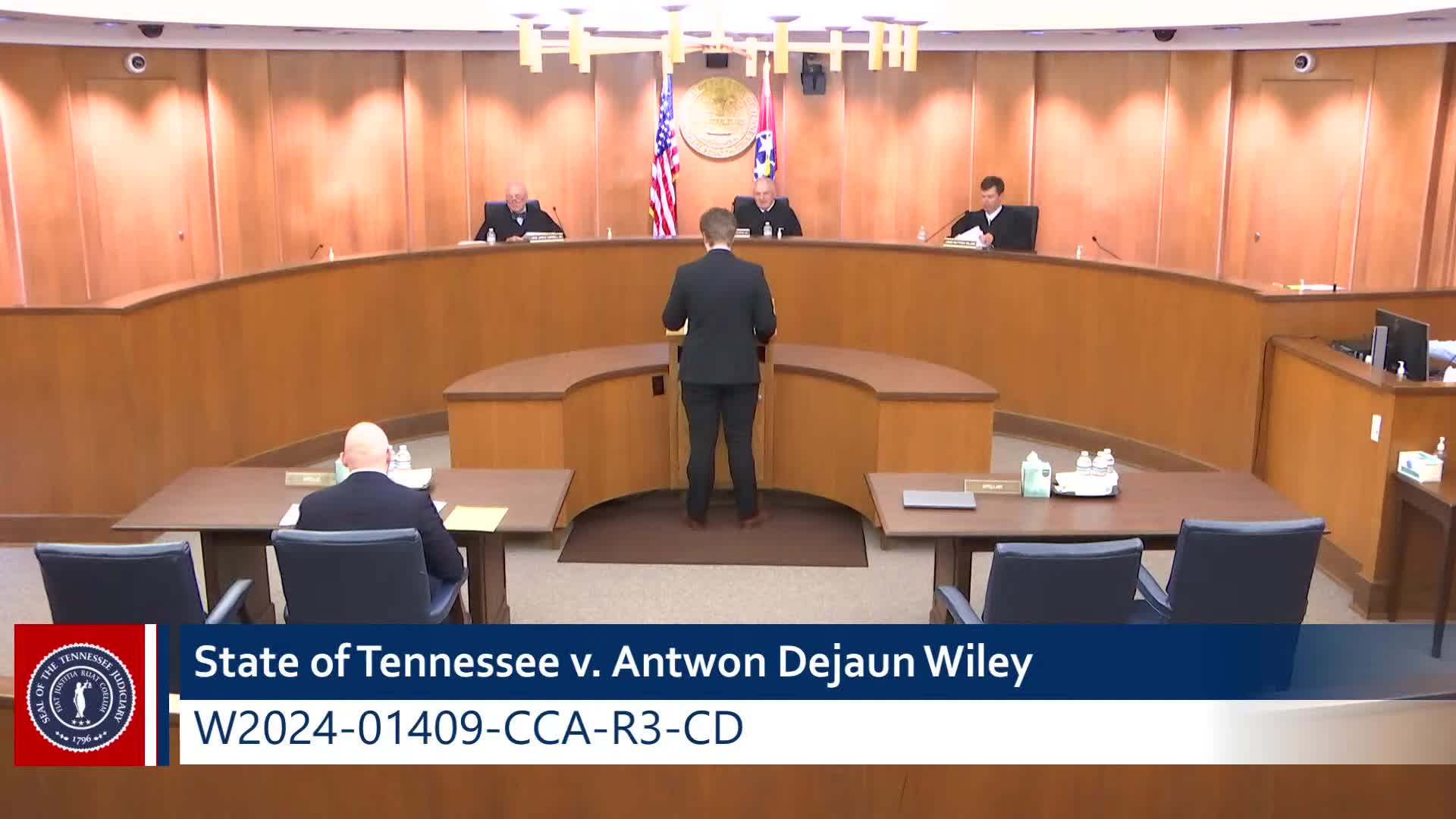
An appellate panel heard oral arguments in the appeal of Antwan Wyly on claims that evidence was insufficient to support an aggravated-robbery conviction and that a separate theft conviction should merge with the aggravated-robbery conviction.
The appeal centers on a Dollar General robbery in which the store clerk, Grace Cheney, testified she feared the robber was armed after he entered wearing a mask, placed a hand near his waistband and demanded money. Appellant's counsel argued there was no direct or sufficient nonverbal threat to support an aggravated-robbery conviction and asked the court to merge the theft conviction into the aggravated-robbery conviction. Ryan Davis, arguing for the state, urged the court to affirm the trial court.
The dispute over the aggravated-robbery charge turned on the two-prong test applied in Tennessee when no direct evidence of a weapon exists: proof of concealed or furtive behavior suggesting a weapon and some verbal or nonverbal conduct amounting to a threat that supports a reasonable inference the defendant had a deadly weapon. Appellant's counsel told the court, “There has to be some sort of statement to that effect, and we don't have that,” and argued the actions cited by the state (masking, demands for money, instructions not to call police) are “all stuff that could happen in any robbery.” Counsel also emphasized that the security camera footage was inconclusive and that Ms. Cheney’s trial testimony did not identify seeing a handle or weapon.
The state countered that the evidence met the two-prong standard. Ryan Davis, on behalf of the state, summarized the facts: Wyly left his workplace, returned about 13 minutes later dressed differently with a hood and clown mask, put his hand on “some type of handle on his waistline,” approached Cheney, demanded the register money and said, “don't call the police.” Davis argued, “This court should affirm the trial court, number 1, because the evidence is sufficient to sustain the defendant's conviction for aggravated robbery.” He told the panel that the video and Cheney’s testimony provided a rational jury enough basis to infer the presence of a weapon and an implied threat.
On the merger issue, appellant's counsel asked the court to apply State v. Franklin and other precedent that define theft convictions by the number of takings rather than the number of victims, noting only $247 was taken from Dollar General’s register. Counsel argued that Ms. Cheney’s fear, while sympathetic, does not create a separate theft offense. The state responded that separate victims existed—the corporate owner (Dollar General) that lost cash and Cheney, who was put in fear—and that the appellate standard here is plain-error review because the merger argument was not raised below. Davis said the defendant had not shown a “clear and unequivocal rule of law” breached at trial and urged the court to reject plain-error relief.
Counsel for the appellant reiterated that Cheney’s testimony did not say she saw a handle and that she had testified she deliberately avoided looking at the robber’s waistband. The panel indicated it would take the matter under advisement; the court recessed until after lunch.
The arguments focused on legal standards rather than factual disputes about identity; both sides told the court they relied on briefs for the identity issue. No decision was announced at the hearing.
The appeal centers on a Dollar General robbery in which the store clerk, Grace Cheney, testified she feared the robber was armed after he entered wearing a mask, placed a hand near his waistband and demanded money. Appellant's counsel argued there was no direct or sufficient nonverbal threat to support an aggravated-robbery conviction and asked the court to merge the theft conviction into the aggravated-robbery conviction. Ryan Davis, arguing for the state, urged the court to affirm the trial court.
The dispute over the aggravated-robbery charge turned on the two-prong test applied in Tennessee when no direct evidence of a weapon exists: proof of concealed or furtive behavior suggesting a weapon and some verbal or nonverbal conduct amounting to a threat that supports a reasonable inference the defendant had a deadly weapon. Appellant's counsel told the court, “There has to be some sort of statement to that effect, and we don't have that,” and argued the actions cited by the state (masking, demands for money, instructions not to call police) are “all stuff that could happen in any robbery.” Counsel also emphasized that the security camera footage was inconclusive and that Ms. Cheney’s trial testimony did not identify seeing a handle or weapon.
The state countered that the evidence met the two-prong standard. Ryan Davis, on behalf of the state, summarized the facts: Wyly left his workplace, returned about 13 minutes later dressed differently with a hood and clown mask, put his hand on “some type of handle on his waistline,” approached Cheney, demanded the register money and said, “don't call the police.” Davis argued, “This court should affirm the trial court, number 1, because the evidence is sufficient to sustain the defendant's conviction for aggravated robbery.” He told the panel that the video and Cheney’s testimony provided a rational jury enough basis to infer the presence of a weapon and an implied threat.
On the merger issue, appellant's counsel asked the court to apply State v. Franklin and other precedent that define theft convictions by the number of takings rather than the number of victims, noting only $247 was taken from Dollar General’s register. Counsel argued that Ms. Cheney’s fear, while sympathetic, does not create a separate theft offense. The state responded that separate victims existed—the corporate owner (Dollar General) that lost cash and Cheney, who was put in fear—and that the appellate standard here is plain-error review because the merger argument was not raised below. Davis said the defendant had not shown a “clear and unequivocal rule of law” breached at trial and urged the court to reject plain-error relief.
Counsel for the appellant reiterated that Cheney’s testimony did not say she saw a handle and that she had testified she deliberately avoided looking at the robber’s waistband. The panel indicated it would take the matter under advisement; the court recessed until after lunch.
The arguments focused on legal standards rather than factual disputes about identity; both sides told the court they relied on briefs for the identity issue. No decision was announced at the hearing.
Don't Miss a Word: See the Full Meeting!
Go beyond summaries. Unlock every video, transcript, and key insight with a Founder Membership.
✓
Get instant access to full meeting videos
✓
Search and clip any phrase from complete transcripts
✓
Receive AI-powered summaries & custom alerts
✓
Enjoy lifetime, unrestricted access to government data
30-day money-back guarantee
