Council agrees to advance revisions to rules and proclamation process after debate on screening
July 08, 2025 | University Place, Pierce County, Washington
This article was created by AI summarizing key points discussed. AI makes mistakes, so for full details and context, please refer to the video of the full meeting. Please report any errors so we can fix them. Report an error »
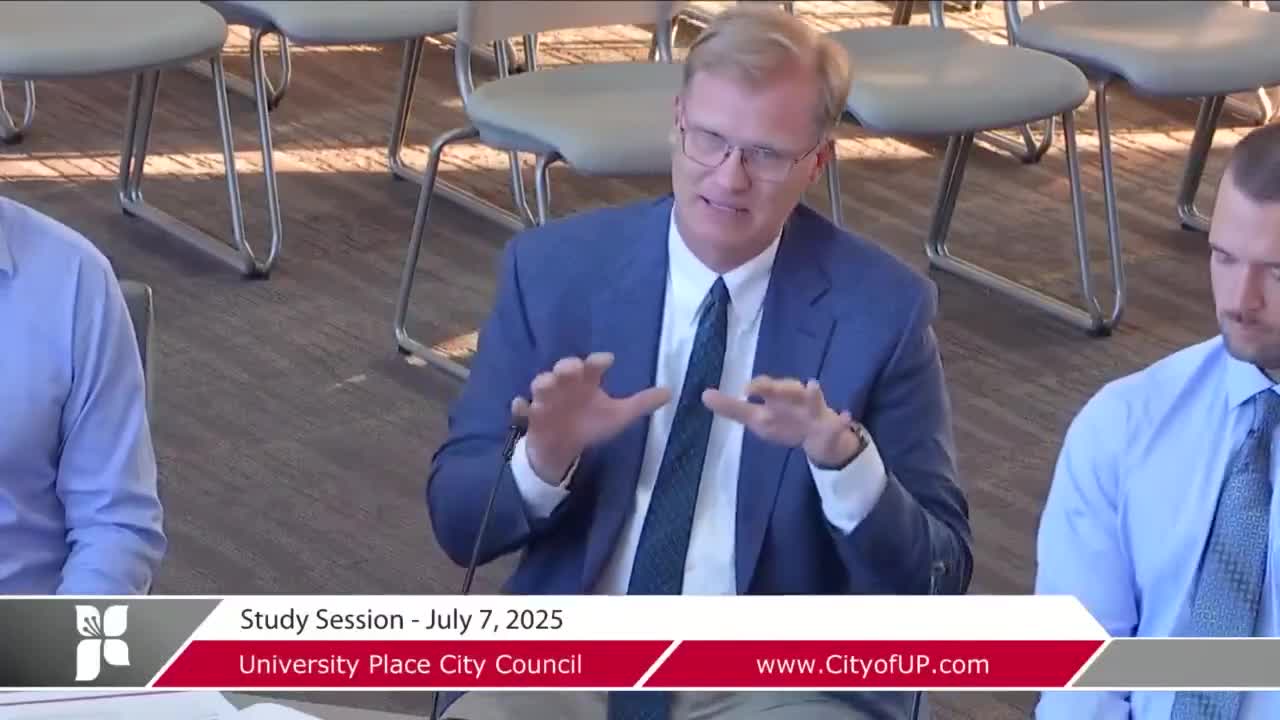
City Attorney Matt Kayser brought draft amendments to the University Place City Council’s rules of procedure and to the city’s proclamation process during the meeting’s later session, and the council agreed to send the proposed changes back to staff for formal consideration.
Kayser told the council the packet contains a rewritten proclamation rule meant to balance timely recognition of community events with a screening step for requests coming from outside groups. Under the draft language, council may identify recurring recognitions at a retreat or through council direction; outside requests would receive an initial review by the mayor, the city manager and the city clerk. If there is doubt about a request, the mayor would bring it to the full council for discussion.
Why it matters: The revisions aim to preserve the council’s ability to recognize community events and achievements quickly while creating a documented process that screens requests and reduces last-minute surprises. Councilmembers debated how to preserve member prerogatives and avoid perceived censorship.
Council discussion and concerns
Several council members said they favored retaining flexibility while creating a predictable pathway for proclamations. Council member Fleming warned that a pre-screen could feel like “a form of censorship” if council members do not have a clear opportunity to bring a request forward; other members proposed that the mayor’s comments or the agenda-setting process would be appropriate places to surface items for the full council.
Kayser said the draft uses permissive language ("may") to preserve council flexibility and that routine recognitions could be placed on the council’s look-ahead schedule; he said the screening step is intended to get quick approvals for straightforward requests and to refer unclear items to council discussion.
Next steps
After a brief debate, councilmembers agreed — without a recorded roll-call vote — to have staff return with a final ordinance or resolution implementing the revised rules. The council chair said the rules could be adjusted after they are tested in practice if issues emerge.
Kayser told the council the packet contains a rewritten proclamation rule meant to balance timely recognition of community events with a screening step for requests coming from outside groups. Under the draft language, council may identify recurring recognitions at a retreat or through council direction; outside requests would receive an initial review by the mayor, the city manager and the city clerk. If there is doubt about a request, the mayor would bring it to the full council for discussion.
Why it matters: The revisions aim to preserve the council’s ability to recognize community events and achievements quickly while creating a documented process that screens requests and reduces last-minute surprises. Councilmembers debated how to preserve member prerogatives and avoid perceived censorship.
Council discussion and concerns
Several council members said they favored retaining flexibility while creating a predictable pathway for proclamations. Council member Fleming warned that a pre-screen could feel like “a form of censorship” if council members do not have a clear opportunity to bring a request forward; other members proposed that the mayor’s comments or the agenda-setting process would be appropriate places to surface items for the full council.
Kayser said the draft uses permissive language ("may") to preserve council flexibility and that routine recognitions could be placed on the council’s look-ahead schedule; he said the screening step is intended to get quick approvals for straightforward requests and to refer unclear items to council discussion.
Next steps
After a brief debate, councilmembers agreed — without a recorded roll-call vote — to have staff return with a final ordinance or resolution implementing the revised rules. The council chair said the rules could be adjusted after they are tested in practice if issues emerge.
View the Full Meeting & All Its Details
This article offers just a summary. Unlock complete video, transcripts, and insights as a Founder Member.
✓
Watch full, unedited meeting videos
✓
Search every word spoken in unlimited transcripts
✓
AI summaries & real-time alerts (all government levels)
✓
Permanent access to expanding government content
30-day money-back guarantee
