Gates Chili reviews code of conduct revisions tied to New York's distraction-free law and restorative practices
July 10, 2025 | GATES CHILI CENTRAL SCHOOL DISTRICT, School Districts, New York
This article was created by AI summarizing key points discussed. AI makes mistakes, so for full details and context, please refer to the video of the full meeting. Please report any errors so we can fix them. Report an error »
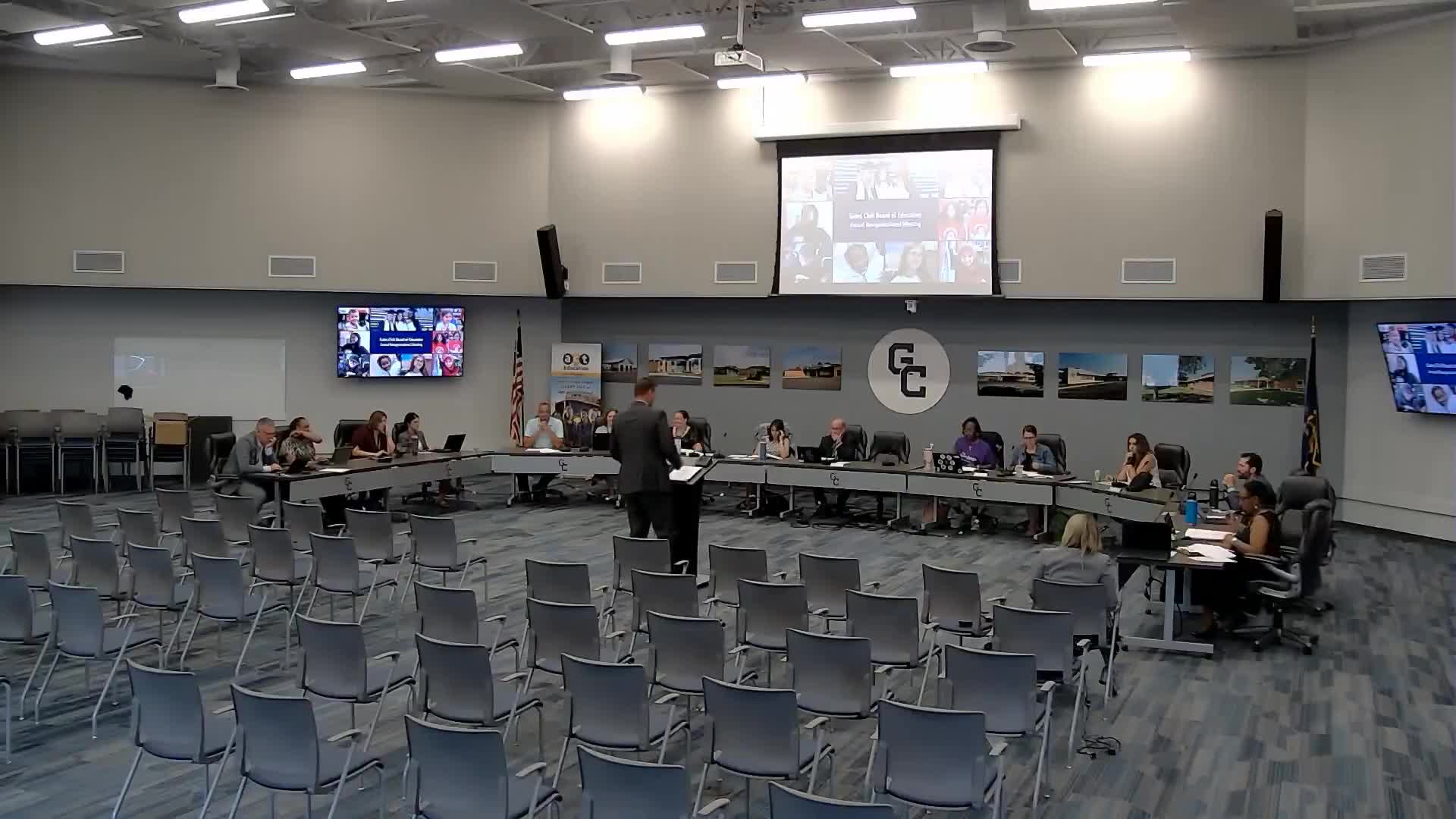
Troy Ohn, assistant superintendent for instruction, told the Gates Chili Board of Education that the district partnered again with The Children's Institute to revise and support implementation of the district's code of conduct and support, and that stakeholder feedback was "overwhelmingly" positive.
Ohn said the revisions were "minimal" overall but highlighted changes driven by New York State's distraction-free school law. He described the addition of a bell-to-bell ban that covers "more than just cell phones" and noted the code now references other internet-enabled devices being off and away during school hours and kept in school-designated locations.
Ohn said the committee adjusted language to be more restorative by changing one phrasing from "reteaching requirements" to "reteaching expectations," strengthened acceptable-use language on digital citizenship, and added Appendix D as a framework for implementing distraction-free schools with proactive teaching and supports. He also said the revisions include clearer language about how attendance factors into grading while maintaining the principle that grades should reflect learning.
During his presentation, Ohn cited district data that he said showed a drop in suspensions at the secondary level after restorative-practices implementation: "41% fewer suspensions overall at the secondary level," he said.
The board opened a public hearing on the code of conduct by unanimous vote; no public comments were offered and the hearing was closed. The transcript records the hearing as informational; no adoption or final-approval vote on the revised code occurred at this meeting.
Discussion-only vs. formal action: the hearing was informational. The transcript shows the revisions were developed with internal stakeholders, returned for administrator feedback and finalized for presentation, but it does not record a board vote to adopt the revised code at this session.
Ohn said the revisions were "minimal" overall but highlighted changes driven by New York State's distraction-free school law. He described the addition of a bell-to-bell ban that covers "more than just cell phones" and noted the code now references other internet-enabled devices being off and away during school hours and kept in school-designated locations.
Ohn said the committee adjusted language to be more restorative by changing one phrasing from "reteaching requirements" to "reteaching expectations," strengthened acceptable-use language on digital citizenship, and added Appendix D as a framework for implementing distraction-free schools with proactive teaching and supports. He also said the revisions include clearer language about how attendance factors into grading while maintaining the principle that grades should reflect learning.
During his presentation, Ohn cited district data that he said showed a drop in suspensions at the secondary level after restorative-practices implementation: "41% fewer suspensions overall at the secondary level," he said.
The board opened a public hearing on the code of conduct by unanimous vote; no public comments were offered and the hearing was closed. The transcript records the hearing as informational; no adoption or final-approval vote on the revised code occurred at this meeting.
Discussion-only vs. formal action: the hearing was informational. The transcript shows the revisions were developed with internal stakeholders, returned for administrator feedback and finalized for presentation, but it does not record a board vote to adopt the revised code at this session.
View the Full Meeting & All Its Details
This article offers just a summary. Unlock complete video, transcripts, and insights as a Founder Member.
✓
Watch full, unedited meeting videos
✓
Search every word spoken in unlimited transcripts
✓
AI summaries & real-time alerts (all government levels)
✓
Permanent access to expanding government content
30-day money-back guarantee
