Staff outlines Parks and Recreation service areas, major facilities and operations
July 10, 2025 | Boulder, Boulder County, Colorado
This article was created by AI summarizing key points discussed. AI makes mistakes, so for full details and context, please refer to the video of the full meeting. Please report any errors so we can fix them. Report an error »
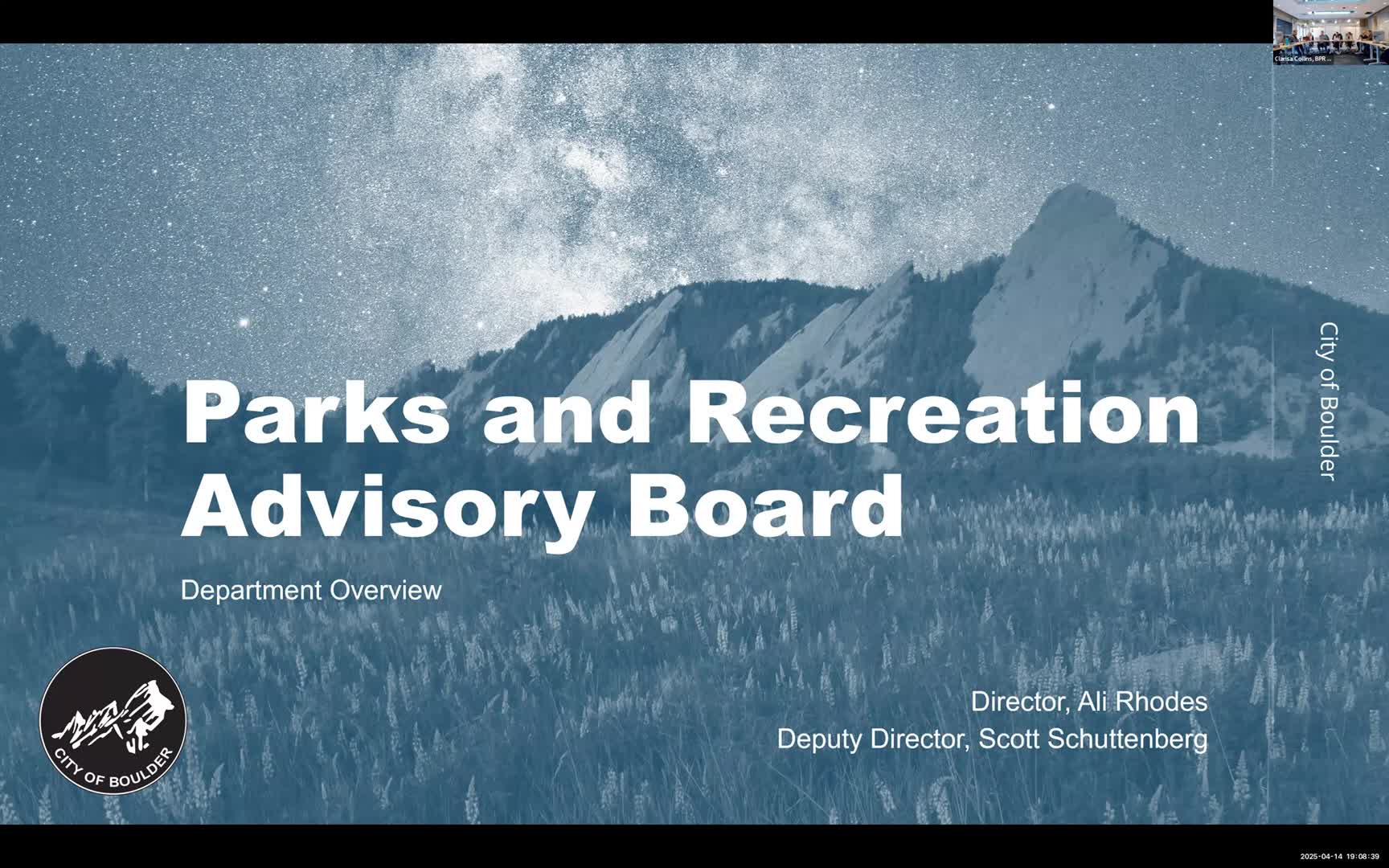
Ali, director of Parks and Recreation, and Scott Schottenberg, deputy director, gave new PRAB members a systems-level tour of the department’s areas of work and facilities.
The department is organized into service areas including park operations (maintenance zones for north, central and south Boulder), irrigation and horticulture, sports turf, planning and asset management, natural resources, urban park rangers and regional facilities. Scott described park classification tiers — regional parks (destination sites), community parks (larger neighborhood-serving parks with parking and restrooms) and neighborhood parks (smaller local sites with fewer amenities) — noting service levels and maintenance differ by classification.
Department teams maintain an asset inventory that staff said includes more than 50,000 public trees, all mapped in the city’s GIS system with condition and diameter data. The natural-resources group and the urban park rangers manage undesigned natural areas in the urban system and provide on-site presence to address off‑leash dogs, unpermitted events and illegal camping.
Staff reviewed major facilities: Boulder Reservoir (where staff monitor aquatic invasive species and have a new concession agreement for summer operations), Flatirons Golf Course (new clubhouse/restaurant and a recently hired director of golf) and Valmont Bike Park, which staff described as a high-profile, free-to-public regional facility. Megan Loban summarized recreation services and said the department operates three community recreation centers and seasonal pool facilities and provides health, wellness and youth programs.
Why it matters: The orientation framed how the department divides work, applies different maintenance and programming standards across park types, and manages both high-use destinations and neighborhood green space. That structure determines what PRAB is asked to review (for example, long leases or capital projects) and what remains staff-level operations.
Ending: Staff encouraged members to use the monthly packet to identify consent‑agenda items they want to discuss and to request subject‑matter experts in advance of meetings.
The department is organized into service areas including park operations (maintenance zones for north, central and south Boulder), irrigation and horticulture, sports turf, planning and asset management, natural resources, urban park rangers and regional facilities. Scott described park classification tiers — regional parks (destination sites), community parks (larger neighborhood-serving parks with parking and restrooms) and neighborhood parks (smaller local sites with fewer amenities) — noting service levels and maintenance differ by classification.
Department teams maintain an asset inventory that staff said includes more than 50,000 public trees, all mapped in the city’s GIS system with condition and diameter data. The natural-resources group and the urban park rangers manage undesigned natural areas in the urban system and provide on-site presence to address off‑leash dogs, unpermitted events and illegal camping.
Staff reviewed major facilities: Boulder Reservoir (where staff monitor aquatic invasive species and have a new concession agreement for summer operations), Flatirons Golf Course (new clubhouse/restaurant and a recently hired director of golf) and Valmont Bike Park, which staff described as a high-profile, free-to-public regional facility. Megan Loban summarized recreation services and said the department operates three community recreation centers and seasonal pool facilities and provides health, wellness and youth programs.
Why it matters: The orientation framed how the department divides work, applies different maintenance and programming standards across park types, and manages both high-use destinations and neighborhood green space. That structure determines what PRAB is asked to review (for example, long leases or capital projects) and what remains staff-level operations.
Ending: Staff encouraged members to use the monthly packet to identify consent‑agenda items they want to discuss and to request subject‑matter experts in advance of meetings.
View the Full Meeting & All Its Details
This article offers just a summary. Unlock complete video, transcripts, and insights as a Founder Member.
✓
Watch full, unedited meeting videos
✓
Search every word spoken in unlimited transcripts
✓
AI summaries & real-time alerts (all government levels)
✓
Permanent access to expanding government content
30-day money-back guarantee
