Crowley begins DEQ‑required smoke testing; crews to repair leaks in South Crowley next week
July 10, 2025 | Crowley, Acadia Parish, Louisiana
This article was created by AI summarizing key points discussed. AI makes mistakes, so for full details and context, please refer to the video of the full meeting. Please report any errors so we can fix them. Report an error »
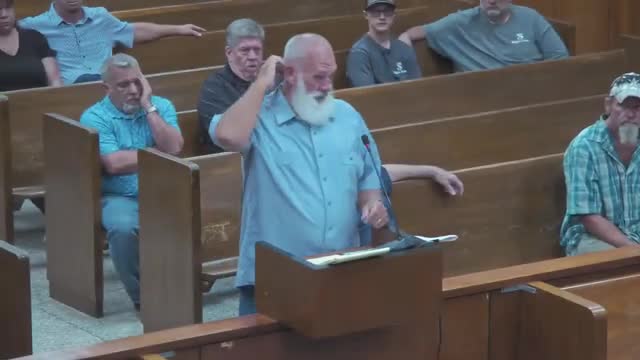
City wastewater crews have completed smoke testing required by the state environmental regulator and will move to the South Crowley area next week, Wastewater Superintendent Tim Crater told the committee.
"We started a smoke testing that is required by DEQ," Crater said, noting crews have already tested from Odd Fellows Road to I‑10 and along the city limits east and west. He said the initial sections showed relatively few leaks; the next area to be tested runs between Standard Mill and East Park, south to Elm and east of Eastern Avenue, where crews expect to set up on "15 to 20 manholes" to cover the work.
Crater said the department has purchased handheld GIS equipment to pinpoint leaks and to upload photos and diagnostic data to the system. He told the committee that most private‑side defects found so far were damaged caps that "were hit by lawn mowers" and flipped or broken clean‑outs; those are scheduled for repair starting Monday after locates were filed.
On procedure for resident‑side leaks, Crater said crews will coordinate with code enforcement and knock on doors to notify homeowners when testing shows a private leak; staff will ask the resident to open and repair the connection and will involve an inspector as needed.
Engineers and contractors flagged site coordination issues at intersections where multiple utilities run (Crater named AT&T and LUS fiber and said state traffic‑signal wiring may not participate in the same locate program). He cautioned contractors to follow utility marks as lines shift nearer medians and intersections.
The report to the committee was informational and directional; no formal council vote was required. Crater and street staff noted the work schedule is weather‑dependent because rain increases inflow and infiltration into the sewer system, reducing the time crews can work while a sewer main is plugged.
"We started a smoke testing that is required by DEQ," Crater said, noting crews have already tested from Odd Fellows Road to I‑10 and along the city limits east and west. He said the initial sections showed relatively few leaks; the next area to be tested runs between Standard Mill and East Park, south to Elm and east of Eastern Avenue, where crews expect to set up on "15 to 20 manholes" to cover the work.
Crater said the department has purchased handheld GIS equipment to pinpoint leaks and to upload photos and diagnostic data to the system. He told the committee that most private‑side defects found so far were damaged caps that "were hit by lawn mowers" and flipped or broken clean‑outs; those are scheduled for repair starting Monday after locates were filed.
On procedure for resident‑side leaks, Crater said crews will coordinate with code enforcement and knock on doors to notify homeowners when testing shows a private leak; staff will ask the resident to open and repair the connection and will involve an inspector as needed.
Engineers and contractors flagged site coordination issues at intersections where multiple utilities run (Crater named AT&T and LUS fiber and said state traffic‑signal wiring may not participate in the same locate program). He cautioned contractors to follow utility marks as lines shift nearer medians and intersections.
The report to the committee was informational and directional; no formal council vote was required. Crater and street staff noted the work schedule is weather‑dependent because rain increases inflow and infiltration into the sewer system, reducing the time crews can work while a sewer main is plugged.
View the Full Meeting & All Its Details
This article offers just a summary. Unlock complete video, transcripts, and insights as a Founder Member.
✓
Watch full, unedited meeting videos
✓
Search every word spoken in unlimited transcripts
✓
AI summaries & real-time alerts (all government levels)
✓
Permanent access to expanding government content
30-day money-back guarantee
