City Council approves public works on-call policy to cover 24/7 utilities response
July 11, 2025 | Corcoran City, Hennepin County, Minnesota
This article was created by AI summarizing key points discussed. AI makes mistakes, so for full details and context, please refer to the video of the full meeting. Please report any errors so we can fix them. Report an error »
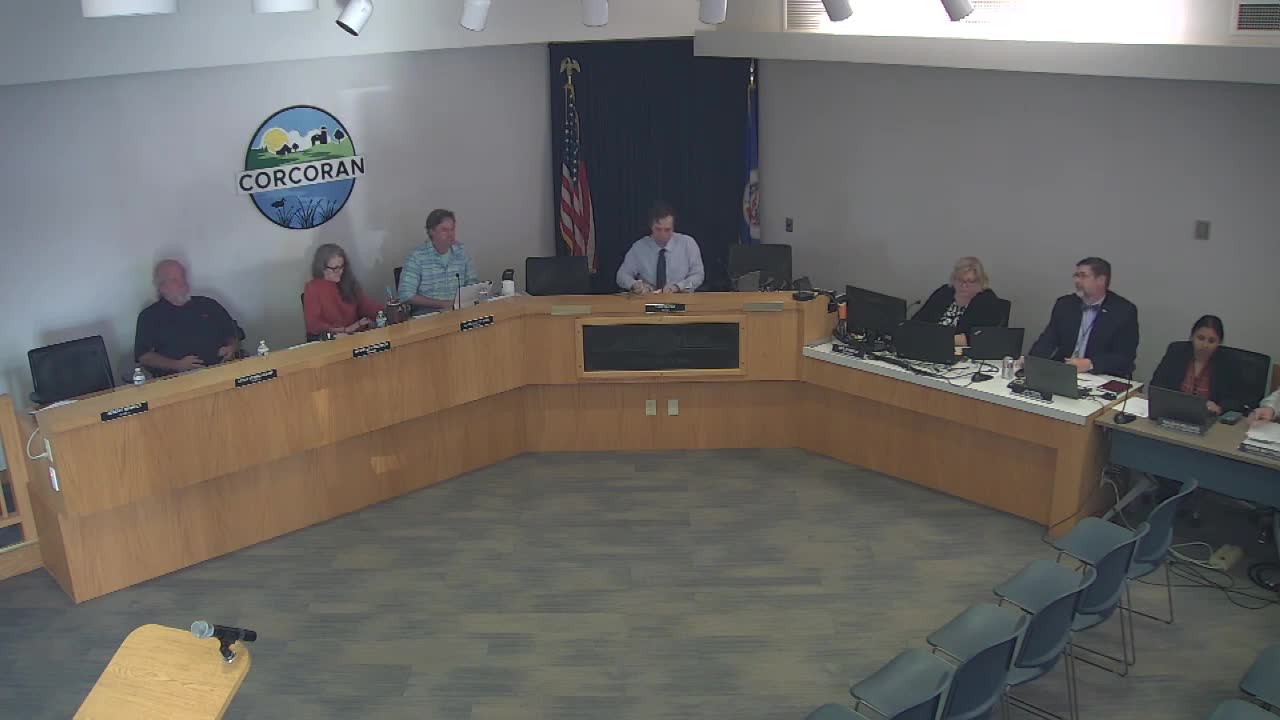
The City Council approved a new public works on-call policy designed to provide 24-hour coverage for utilities and other critical infrastructure, addressing a gap between the city and peer municipalities. Staff presented a draft policy that establishes standby pay and callback pay for public works employees and recommended immediate adoption.
Public works staff explained the policy’s structure: standby (holding the phone) is paid as a per-period minimum based on an employee’s base pay (weekday standby shown as one hour, weekend standby as three hours), while callback pay applies when employees are required to respond and includes a two-hour minimum paid at time-and-a-half for callbacks. Holidays remain at double pay; scheduled weekend rounds are compensated at time-and-a-half but are not treated as callback. Staff proposed an effective date in the next pay period (presented as July 19) and said the program would be tracked and adjusted as needs grow.
Staff estimated the direct cost to utilities divisions at about $25,000 per division per year, to be paid from the sewer and water funds for those divisions; operations (streets, parks) costs would be prorated and tracked to appropriate funds. Staff said the city had added three public-works employees since the previous year and that needed vehicles were already planned and budgeted.
Council members asked for clarifications on standby versus callback, whether callback time would “eat into” standby time and how overtime and scheduled work interact with the new policy. Staff provided examples: weekend standby is a set minimum; if an employee is called back they enter the callback window and receive the callback minimum; if the employee is already working a callback and must respond to additional alarms, the additional time is treated as part of the existing callback. Staff also described a diagnosis period to determine false alarms or the need to escalate response.
The council moved, seconded and approved the policy by voice vote. Staff said they would monitor the program and revisit compensation as actual call volumes and costs are tracked.
Quotes (from meeting):
"In the on call policy, there's stand by pay, which is essentially what we call holding the phone" — Public works staff
"We anticipate approximately $25,000 to cover each of those divisions per year" — Public works staff
Ending: The council approved the on-call policy and directed staff to implement the program, charge appropriate funds (sewer/water for utilities), and report back with tracked costs and any recommended adjustments.
Public works staff explained the policy’s structure: standby (holding the phone) is paid as a per-period minimum based on an employee’s base pay (weekday standby shown as one hour, weekend standby as three hours), while callback pay applies when employees are required to respond and includes a two-hour minimum paid at time-and-a-half for callbacks. Holidays remain at double pay; scheduled weekend rounds are compensated at time-and-a-half but are not treated as callback. Staff proposed an effective date in the next pay period (presented as July 19) and said the program would be tracked and adjusted as needs grow.
Staff estimated the direct cost to utilities divisions at about $25,000 per division per year, to be paid from the sewer and water funds for those divisions; operations (streets, parks) costs would be prorated and tracked to appropriate funds. Staff said the city had added three public-works employees since the previous year and that needed vehicles were already planned and budgeted.
Council members asked for clarifications on standby versus callback, whether callback time would “eat into” standby time and how overtime and scheduled work interact with the new policy. Staff provided examples: weekend standby is a set minimum; if an employee is called back they enter the callback window and receive the callback minimum; if the employee is already working a callback and must respond to additional alarms, the additional time is treated as part of the existing callback. Staff also described a diagnosis period to determine false alarms or the need to escalate response.
The council moved, seconded and approved the policy by voice vote. Staff said they would monitor the program and revisit compensation as actual call volumes and costs are tracked.
Quotes (from meeting):
"In the on call policy, there's stand by pay, which is essentially what we call holding the phone" — Public works staff
"We anticipate approximately $25,000 to cover each of those divisions per year" — Public works staff
Ending: The council approved the on-call policy and directed staff to implement the program, charge appropriate funds (sewer/water for utilities), and report back with tracked costs and any recommended adjustments.
View the Full Meeting & All Its Details
This article offers just a summary. Unlock complete video, transcripts, and insights as a Founder Member.
✓
Watch full, unedited meeting videos
✓
Search every word spoken in unlimited transcripts
✓
AI summaries & real-time alerts (all government levels)
✓
Permanent access to expanding government content
30-day money-back guarantee
