Committee reviews recent changes to oil and gas tax allocation flowcharts
June 25, 2025 | Legislative, North Dakota
This article was created by AI summarizing key points discussed. AI makes mistakes, so for full details and context, please refer to the video of the full meeting. Please report any errors so we can fix them. Report an error »
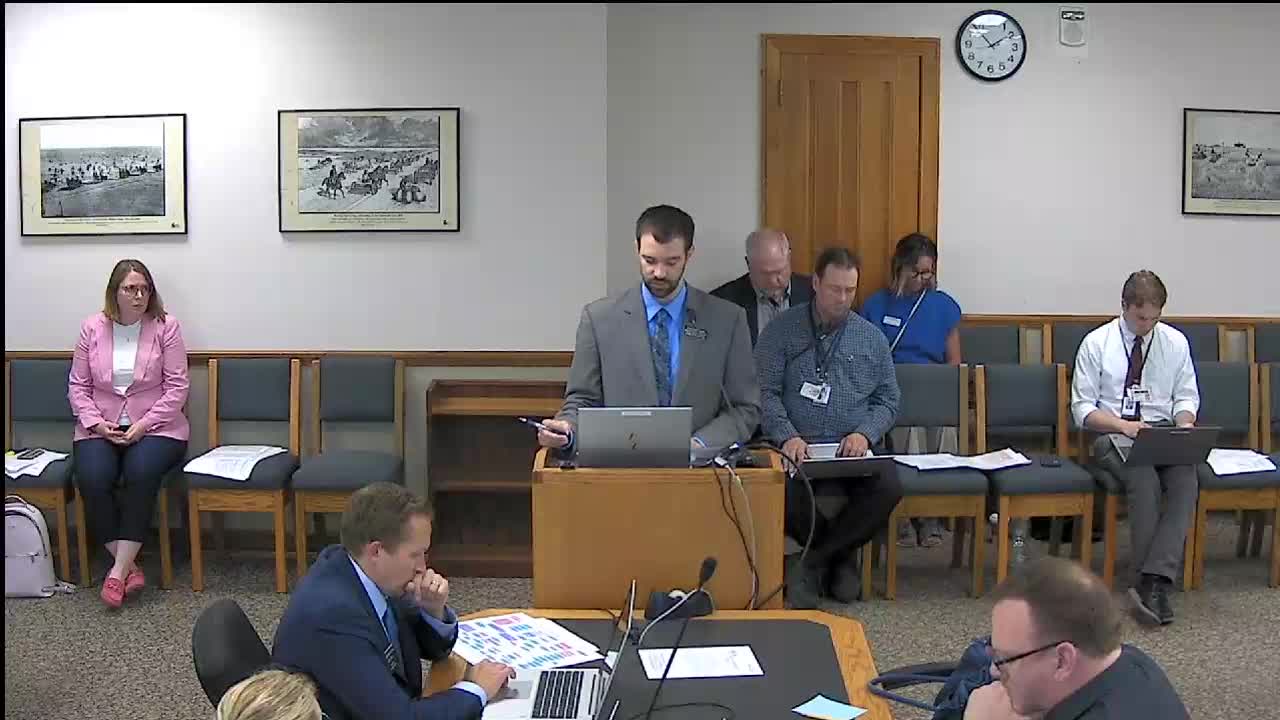
Adam Mateuk, a Legislative Council fiscal analyst, presented flowcharts that map oil and gas gross production and extraction tax collections and statutory allocations to funds and political subdivisions.
Mateuk said two general‑fund buckets (previously $230 million each) were increased by $20 million apiece to $250 million each, boosting the total state general‑fund share from those buckets to $500 million. He also described reductions to two non‑oil‑producing political‑subdivision buckets (the so‑called prairie‑dog buckets) from $115 million each to $80 million each, and the addition of a Hub City Debt Relief Funding Pool intended to address oil‑impacted municipal debt.
On tax law changes, Mateuk cited Senate Bill 2397 (clarifications for gas used at the wellsite and related provisions), a 250,000‑barrel exemption for early production in development‑incentive wells on the oil extraction tax, and House Bill 1483 (expanding extraction tax exemptions for wells outside certain formations). He said the tax department could not determine the fiscal impact of some exemptions; staff described those impacts as likely modest in the overall allocation picture.
Members asked about interaction between federal tax policy and state receipts. Senator Hogue asked whether a federal change that would remove production tax credits for renewables could trigger a return of an earlier tax allocation; Mateuk said he would monitor federal developments and adjust estimates as needed.
Mateuk also noted a structural change to the coal conversion tax: $2.14 million that previously went to the general fund will flow to the legacy fund beginning in the second year of the biennium, reflecting House Bill 1279. He urged the committee to consult the flowchart and the bolded bill references on the chart for line‑by‑line descriptions of each bucket and its statutory citation.
The committee did not adopt statutory changes at the meeting; Mateuk’s presentation summarized enacted changes and identified items for continued monitoring.
Mateuk said two general‑fund buckets (previously $230 million each) were increased by $20 million apiece to $250 million each, boosting the total state general‑fund share from those buckets to $500 million. He also described reductions to two non‑oil‑producing political‑subdivision buckets (the so‑called prairie‑dog buckets) from $115 million each to $80 million each, and the addition of a Hub City Debt Relief Funding Pool intended to address oil‑impacted municipal debt.
On tax law changes, Mateuk cited Senate Bill 2397 (clarifications for gas used at the wellsite and related provisions), a 250,000‑barrel exemption for early production in development‑incentive wells on the oil extraction tax, and House Bill 1483 (expanding extraction tax exemptions for wells outside certain formations). He said the tax department could not determine the fiscal impact of some exemptions; staff described those impacts as likely modest in the overall allocation picture.
Members asked about interaction between federal tax policy and state receipts. Senator Hogue asked whether a federal change that would remove production tax credits for renewables could trigger a return of an earlier tax allocation; Mateuk said he would monitor federal developments and adjust estimates as needed.
Mateuk also noted a structural change to the coal conversion tax: $2.14 million that previously went to the general fund will flow to the legacy fund beginning in the second year of the biennium, reflecting House Bill 1279. He urged the committee to consult the flowchart and the bolded bill references on the chart for line‑by‑line descriptions of each bucket and its statutory citation.
The committee did not adopt statutory changes at the meeting; Mateuk’s presentation summarized enacted changes and identified items for continued monitoring.
View the Full Meeting & All Its Details
This article offers just a summary. Unlock complete video, transcripts, and insights as a Founder Member.
✓
Watch full, unedited meeting videos
✓
Search every word spoken in unlimited transcripts
✓
AI summaries & real-time alerts (all government levels)
✓
Permanent access to expanding government content
30-day money-back guarantee
