Legislative staff brief lawmakers on state budget trends: oil revenue, Medicaid and education funding highlighted
June 25, 2025 | Budget Section, Interim, Legislative, North Dakota
This article was created by AI summarizing key points discussed. AI makes mistakes, so for full details and context, please refer to the video of the full meeting. Please report any errors so we can fix them. Report an error »
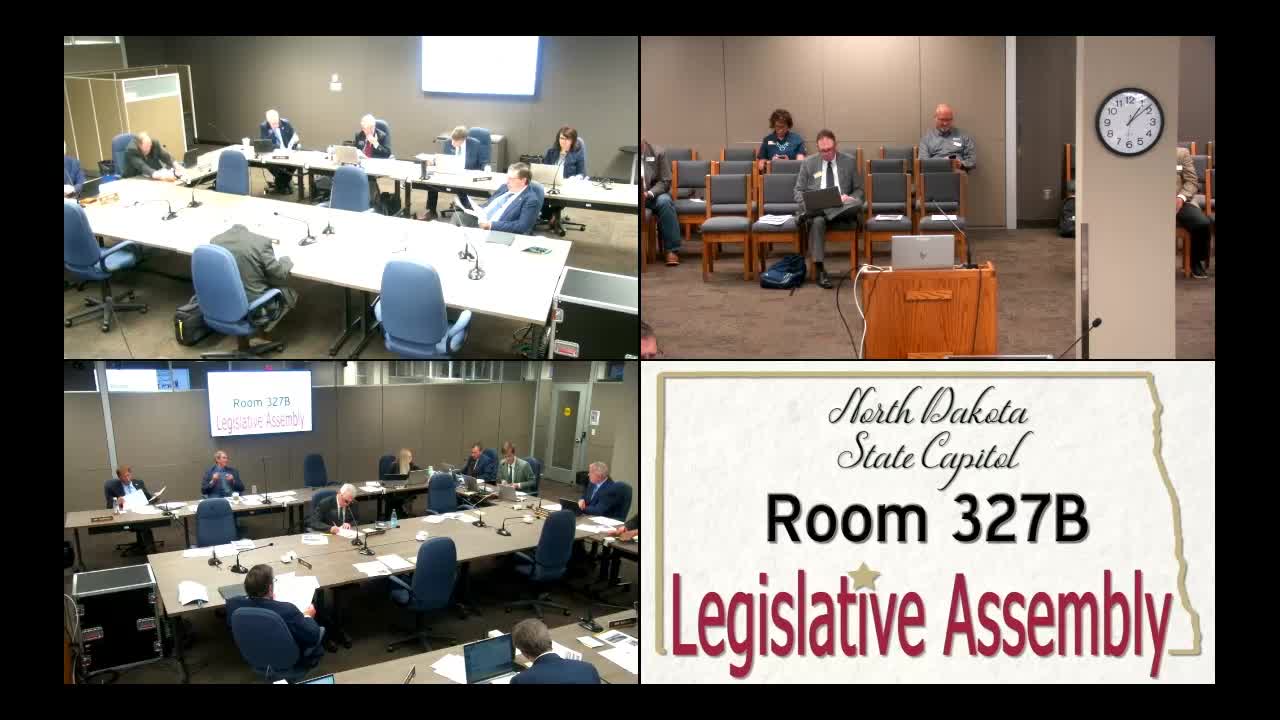
Brady, a legislative staff presenter, told the Budget Section that the office’s post‑session PowerPoint on budget and fiscal trends summarizes changes in state revenues and appropriations and provides historical context. “This is the presentation that we put together after every session that provides just general information regarding different trends in state budget revenues and expenditures and it kind of provides a historical context of where the state budget has been going,” Brady said.
Brady highlighted several items: total general fund revenues are shown by beginning balance, tax and fee revenues (income and sales taxes) and transfers and other sources. He said oil and gas tax collections were forecast at about $4,270,000,000 for the 2025–27 biennium, of which roughly $1,300,000,000 is the state share that is allocated among several “buckets.” He told members the state’s share entering the general fund for 2025–27 is $500,000,000.
The presentation noted that general fund appropriations increased by about 2% between the 2023–25 and 2025–27 bienniums, less growth than in prior periods; the Department of Health and Human Services remains the largest general‑fund recipient (approximately $2.2 billion). Brady also summarized that the state used larger amounts of federal funds during 2021–23 (about $6.8 billion) because of COVID‑era federal funding, which declined to about $5.7 billion in the following biennium.
On Medicaid, Brady described components of medical services grants, saying federal and special funds totaled just over $2 billion and were matched by about $1.28 billion in general funds for services including traditional Medicaid, long‑term care, developmental disabilities, and home‑and‑community‑based services. He noted the state’s Federal Medical Assistance Percentage (FMAP) was estimated around 52.52 percent for federal fiscal 2027 and described an enhanced FMAP of 6.2 percent that had been provided during the federal COVID emergency.
Brady walked through education funding, noting the state tuition fund and the Foundation Aid Stabilization Fund supplement general fund school aid and that higher education receives more of its funding from tuition and fees at research campuses while state appropriations play a larger role at two‑year campuses. On corrections, he said general fund appropriations for the Department of Corrections rose by roughly 26.5 percent for 2025–27 and that the inmate population estimate increased by about 14.3 percent.
After the presentation Brady invited questions; Senator Dwyer asked about the state tuition fund calculation and Brady replied that it is “10% of the 5 year average value of the common schools trust fund,” plus fines for violations of state law.
Brady highlighted several items: total general fund revenues are shown by beginning balance, tax and fee revenues (income and sales taxes) and transfers and other sources. He said oil and gas tax collections were forecast at about $4,270,000,000 for the 2025–27 biennium, of which roughly $1,300,000,000 is the state share that is allocated among several “buckets.” He told members the state’s share entering the general fund for 2025–27 is $500,000,000.
The presentation noted that general fund appropriations increased by about 2% between the 2023–25 and 2025–27 bienniums, less growth than in prior periods; the Department of Health and Human Services remains the largest general‑fund recipient (approximately $2.2 billion). Brady also summarized that the state used larger amounts of federal funds during 2021–23 (about $6.8 billion) because of COVID‑era federal funding, which declined to about $5.7 billion in the following biennium.
On Medicaid, Brady described components of medical services grants, saying federal and special funds totaled just over $2 billion and were matched by about $1.28 billion in general funds for services including traditional Medicaid, long‑term care, developmental disabilities, and home‑and‑community‑based services. He noted the state’s Federal Medical Assistance Percentage (FMAP) was estimated around 52.52 percent for federal fiscal 2027 and described an enhanced FMAP of 6.2 percent that had been provided during the federal COVID emergency.
Brady walked through education funding, noting the state tuition fund and the Foundation Aid Stabilization Fund supplement general fund school aid and that higher education receives more of its funding from tuition and fees at research campuses while state appropriations play a larger role at two‑year campuses. On corrections, he said general fund appropriations for the Department of Corrections rose by roughly 26.5 percent for 2025–27 and that the inmate population estimate increased by about 14.3 percent.
After the presentation Brady invited questions; Senator Dwyer asked about the state tuition fund calculation and Brady replied that it is “10% of the 5 year average value of the common schools trust fund,” plus fines for violations of state law.
View the Full Meeting & All Its Details
This article offers just a summary. Unlock complete video, transcripts, and insights as a Founder Member.
✓
Watch full, unedited meeting videos
✓
Search every word spoken in unlimited transcripts
✓
AI summaries & real-time alerts (all government levels)
✓
Permanent access to expanding government content
30-day money-back guarantee
