Town counsel: CPC cannot use grant agreements to bind town departments; use town‑meeting conditions and letters of expectation
July 17, 2025 | Town of Southborough, Worcester County, Massachusetts
This article was created by AI summarizing key points discussed. AI makes mistakes, so for full details and context, please refer to the video of the full meeting. Please report any errors so we can fix them. Report an error »
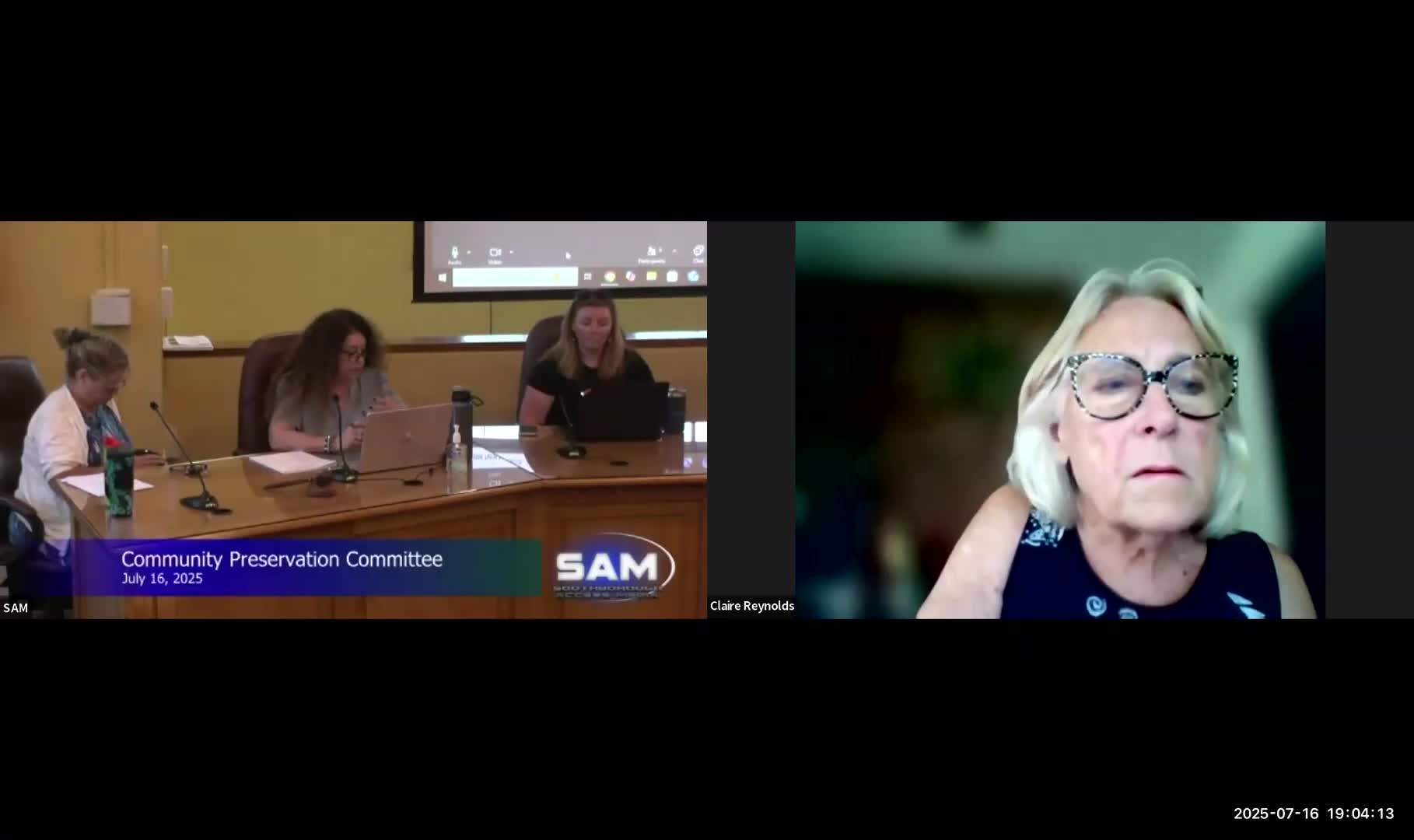
Town Counsel Jay Talaman told the Community Preservation Committee that the committee and town cannot lawfully use grant agreements to contract with the town itself and advised the CPC to rely on town‑meeting votes, letters of expectation and administrative “gatekeepers” when it needs enforceable conditions.
Talaman said the legal problem was simple: “You can't sign a contract with yourself.” He explained that many municipal actors are parts of the same legal entity, so a town cannot enter into a binding contract with itself and a contract purporting to do that would be a legal nullity.
Why this matters: CPC funds are often spent on town assets — historic buildings, playgrounds, conservation land — and CPC members want assurances that conditions attached to a warrant article will be fulfilled and, where required, that preservation restrictions are recorded.
Talaman urged the CPC to put important conditions into the warrant article itself so town meeting can legally lock in deadlines, scopes and caps. He recommended letters of expectation and, where appropriate, grant agreements for private recipients, but warned that for municipal projects the committee should instead use town‑meeting motions, require proof (for example, that a preservation restriction is recorded before funds are released), or make a town department a gatekeeper for disbursement.
Talaman also discussed affordable housing trusts and property conveyances. He noted that Chapter 44, Section 55C makes housing trusts entities of the town “subject to the rules and requirements of the town,” which limits their ability to execute enforceable agreements with the town on transfers of care, custody and control of town property. “It would be much easier if we could have it go direct,” he said, referring to statutory limits on how property or funds move between town and trust.
Committee members asked for practical fixes: phased warrant articles, withholding disbursement until a preservation restriction is recorded, and using departmental gatekeepers (DPW, schools, treasurer) to verify that agreed conditions are met. Talaman said those approaches are permissible and often sensible; he cautioned the committee against becoming a permanent line‑item approver that slows municipal work.
The committee did not adopt a formal policy at the meeting. Members asked staff and counsel to draft a standard letter of expectations and to propose language the CPC could attach to future warrant articles to require evidence (for example, recording of a preservation restriction) before funds are released.
Talaman said the legal problem was simple: “You can't sign a contract with yourself.” He explained that many municipal actors are parts of the same legal entity, so a town cannot enter into a binding contract with itself and a contract purporting to do that would be a legal nullity.
Why this matters: CPC funds are often spent on town assets — historic buildings, playgrounds, conservation land — and CPC members want assurances that conditions attached to a warrant article will be fulfilled and, where required, that preservation restrictions are recorded.
Talaman urged the CPC to put important conditions into the warrant article itself so town meeting can legally lock in deadlines, scopes and caps. He recommended letters of expectation and, where appropriate, grant agreements for private recipients, but warned that for municipal projects the committee should instead use town‑meeting motions, require proof (for example, that a preservation restriction is recorded before funds are released), or make a town department a gatekeeper for disbursement.
Talaman also discussed affordable housing trusts and property conveyances. He noted that Chapter 44, Section 55C makes housing trusts entities of the town “subject to the rules and requirements of the town,” which limits their ability to execute enforceable agreements with the town on transfers of care, custody and control of town property. “It would be much easier if we could have it go direct,” he said, referring to statutory limits on how property or funds move between town and trust.
Committee members asked for practical fixes: phased warrant articles, withholding disbursement until a preservation restriction is recorded, and using departmental gatekeepers (DPW, schools, treasurer) to verify that agreed conditions are met. Talaman said those approaches are permissible and often sensible; he cautioned the committee against becoming a permanent line‑item approver that slows municipal work.
The committee did not adopt a formal policy at the meeting. Members asked staff and counsel to draft a standard letter of expectations and to propose language the CPC could attach to future warrant articles to require evidence (for example, recording of a preservation restriction) before funds are released.
View the Full Meeting & All Its Details
This article offers just a summary. Unlock complete video, transcripts, and insights as a Founder Member.
✓
Watch full, unedited meeting videos
✓
Search every word spoken in unlimited transcripts
✓
AI summaries & real-time alerts (all government levels)
✓
Permanent access to expanding government content
30-day money-back guarantee
