Magistrate orders owner of 2300 South Atlantic to correct code and permit violations within 90 days or face $250-a-day fines
July 18, 2025 | Daytona Beach Shores, Volusia County, Florida
This article was created by AI summarizing key points discussed. AI makes mistakes, so for full details and context, please refer to the video of the full meeting. Please report any errors so we can fix them. Report an error »
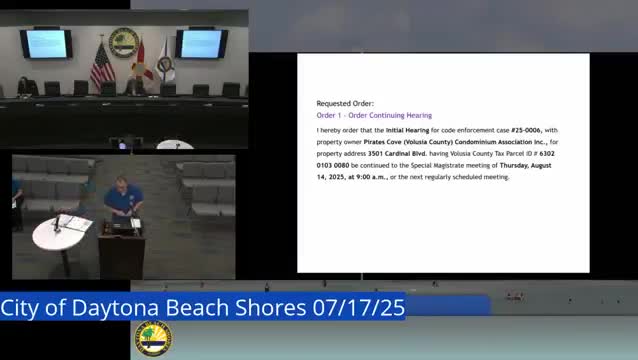
Special Code Enforcement Magistrate Steve Delaroche ordered owners of 2300 South Atlantic Avenue — the former SunTrust Bank building — to correct multiple exterior code violations within 90 days or face fines of $250 per day and assessed an administrative fee of $149.09, following testimony and photographic evidence presented at a Daytona Beach Shores code enforcement hearing.
The city presented photographs and inspection notes showing high weeds (previously trimmed), building debris in the drive-through and dumpster area, a gaping hole in a drive-through ceiling, exposed wiring and a loose light fixture, a broken hurricane shutter and damaged drip edge, and rusted handrails on the east and south sides of the building. City staff asked the magistrate to find violations for items B, C, D, F, G and H and to remove item A (weeds) from the order because property maintenance crews had addressed that issue.
Why it matters: The magistrate’s order starts a 90‑day compliance clock for the owner and creates a financial penalty if work is not completed; the city’s presentation also triggered a second case in the same hearing over unpermitted interior construction that the building official said created safety concerns.
City representative Ronde introduced the city’s packet of photographs and inspection records and asked that the documents be admitted into evidence; the magistrate said he had read the submissions in advance and received the packet into evidence. Ronde summarized the exterior violations and noted some corrections the owner had already made.
Kobe Bezalel, who identified himself as one of the property partners, told the magistrate he had received the city’s packets and said repairs were underway. Asked how long he would need to complete the work, Bezalel said, “I would say, I don't know, 60 days.” Magistrate Delaroche granted 90 days and said he preferred owners invest the money in the building rather than paying fines.
Separately, in case 25-0005 the city said interior construction and electrical work had been performed without building permits and introduced a stop-work order dated 06/04/2024. Steve Edmonds, the city’s building official, testified that after the stop-work order was issued public safety reported someone at the site in the early morning and that city staff later found workers staying in the building. Edmonds said the unpermitted interior framing created inaccessible areas, hid doors, added combustible material and changed the internal layout so that the department no longer had an accurate floor plan for emergency response.
Edmonds told the magistrate the building had been closed for about five to seven years and that the unpermitted work included added framed walls and electrical work. He confirmed a vault remains in the structure. He also said the framing and new walls were not constructed to code and could pose safety hazards in the event of a fire.
Bezalel told the magistrate the property owner had opened a permit for an ADA restroom and a lift and had hired a general contractor for that work, but that the tenant later brought different contractors who performed additional interior work without permits. Bezalel said the owner planned to remove the unpermitted work and was discussing next steps with the tenant.
The magistrate said he would order the owner to correct unpermitted construction and any unsafe conditions identified by the building official. For violations related to the unpermitted building and electrical work, the magistrate issued an order finding the owner in violation and set a compliance deadline 90 days out (the magistrate referenced a date of 10/15/2025 in the hearing). He again warned that failure to comply would expose the owner to $250 per day in fines and a second administrative fee of $149.09; he asked whether the owner could pay the fee within 30 days and instructed the owner to stay in touch with the code enforcement department.
The magistrate and city staff reiterated that some corrective work — such as repairs to the drive-through overhang or other structural fixes — would require building permits and encouraged the owner to consult the building department before beginning repairs to avoid further violations.
The record shows the city will monitor the property and may impose fines if the owner does not meet the compliance deadlines.
The city presented photographs and inspection notes showing high weeds (previously trimmed), building debris in the drive-through and dumpster area, a gaping hole in a drive-through ceiling, exposed wiring and a loose light fixture, a broken hurricane shutter and damaged drip edge, and rusted handrails on the east and south sides of the building. City staff asked the magistrate to find violations for items B, C, D, F, G and H and to remove item A (weeds) from the order because property maintenance crews had addressed that issue.
Why it matters: The magistrate’s order starts a 90‑day compliance clock for the owner and creates a financial penalty if work is not completed; the city’s presentation also triggered a second case in the same hearing over unpermitted interior construction that the building official said created safety concerns.
City representative Ronde introduced the city’s packet of photographs and inspection records and asked that the documents be admitted into evidence; the magistrate said he had read the submissions in advance and received the packet into evidence. Ronde summarized the exterior violations and noted some corrections the owner had already made.
Kobe Bezalel, who identified himself as one of the property partners, told the magistrate he had received the city’s packets and said repairs were underway. Asked how long he would need to complete the work, Bezalel said, “I would say, I don't know, 60 days.” Magistrate Delaroche granted 90 days and said he preferred owners invest the money in the building rather than paying fines.
Separately, in case 25-0005 the city said interior construction and electrical work had been performed without building permits and introduced a stop-work order dated 06/04/2024. Steve Edmonds, the city’s building official, testified that after the stop-work order was issued public safety reported someone at the site in the early morning and that city staff later found workers staying in the building. Edmonds said the unpermitted interior framing created inaccessible areas, hid doors, added combustible material and changed the internal layout so that the department no longer had an accurate floor plan for emergency response.
Edmonds told the magistrate the building had been closed for about five to seven years and that the unpermitted work included added framed walls and electrical work. He confirmed a vault remains in the structure. He also said the framing and new walls were not constructed to code and could pose safety hazards in the event of a fire.
Bezalel told the magistrate the property owner had opened a permit for an ADA restroom and a lift and had hired a general contractor for that work, but that the tenant later brought different contractors who performed additional interior work without permits. Bezalel said the owner planned to remove the unpermitted work and was discussing next steps with the tenant.
The magistrate said he would order the owner to correct unpermitted construction and any unsafe conditions identified by the building official. For violations related to the unpermitted building and electrical work, the magistrate issued an order finding the owner in violation and set a compliance deadline 90 days out (the magistrate referenced a date of 10/15/2025 in the hearing). He again warned that failure to comply would expose the owner to $250 per day in fines and a second administrative fee of $149.09; he asked whether the owner could pay the fee within 30 days and instructed the owner to stay in touch with the code enforcement department.
The magistrate and city staff reiterated that some corrective work — such as repairs to the drive-through overhang or other structural fixes — would require building permits and encouraged the owner to consult the building department before beginning repairs to avoid further violations.
The record shows the city will monitor the property and may impose fines if the owner does not meet the compliance deadlines.
Don't Miss a Word: See the Full Meeting!
Go beyond summaries. Unlock every video, transcript, and key insight with a Founder Membership.
✓
Get instant access to full meeting videos
✓
Search and clip any phrase from complete transcripts
✓
Receive AI-powered summaries & custom alerts
✓
Enjoy lifetime, unrestricted access to government data
30-day money-back guarantee
