Interim superintendent presents preliminary SOL data showing mixed progress on reading and math achievement gaps
July 18, 2025 | NORFOLK CITY PBLC SCHS, School Districts, Virginia
This article was created by AI summarizing key points discussed. AI makes mistakes, so for full details and context, please refer to the video of the full meeting. Please report any errors so we can fix them. Report an error »
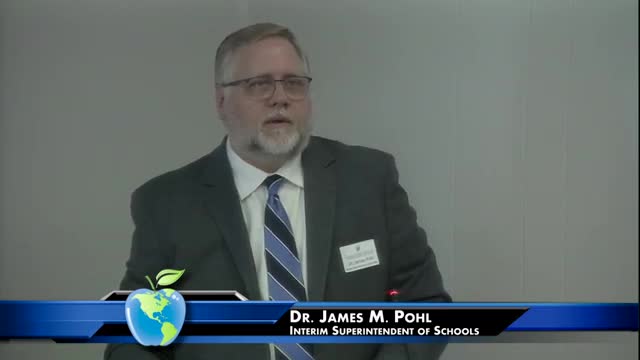
Interim Superintendent Dr. James Pohl on Tuesday presented the school division's preliminary, internal results for reading and mathematics Standards of Learning (SOL) tests and a status update on Board Goal 4: narrowing achievement gaps. He cautioned the board that the data are district-internal and not yet state-released. "The data in here is still'... it's our data. It's not state released data yet," he said.
Why it matters: the board set multi-year targets intended to reduce subgroup gaps to no more than 10 percentage points while maintaining overall growth. Pohl said the preliminary results show reading growth across most subgroups and declines in several gap measures, and that mathematics showed decreases in gaps with pass-rate gains for most groups. But he warned that the preestablished targets are not being met and most subgroup gaps remain above the 10-point threshold.
Pohl summarized the numbers for the board: three of five noted reading subgroups showed decreases in gap size compared with the comparison group, and the non-Socioeconomic Status (non-SES) pass rate fell from 75% to 73.4%. For mathematics, he reported that all noted groups demonstrated decreases in performance gaps and increases in pass rates compared with the 2022-23 baseline, except for the gap between students with disabilities (SWD) and non-SWD students. "Gains have been realized in pass rates for SWD and non SWD students," he said.
Board members asked for school-level detail. One asked whether specific schools are outliers where gaps are widening or narrowing; Pohl said the distribution is generally consistent and that there are not many extreme outliers. He said school-by-school analysis will continue: "We don't really have many outliers in our gap groups... it's really a consistent'if you looked at it as a dot chart, it's pretty consistent with a scatter plot."
On strategies, Pohl told the board the division has evaluated instructional software and supports. He said the division contracted Hanover to evaluate platforms such as Edmentum and Lexia and found higher usage correlated with higher growth; by contrast, IXL was phased out after it did not show comparable results. "We saw the higher use is matching with growth in those software platforms," he said.
Pohl described steps the division will take: continue monthly collaborative data meetings across departments and schools; analyze pass rates and standard-level data down to specific standards; refine curriculum documents and tier-1 instruction; and develop a professional learning plan for English and math offices focused on strengthening core instruction. He also said the division is reexamining interim assessments (Star and a student growth assessment) to select the best comparison tool for next year.
Board members pressed on whether current strategic-plan targets remain realistic, noting the division's strategic goals and board targets run through the 2025-26 school year. Pohl said the board and administration will need to revisit goal-setting during the next strategic-planning cycle. "Our goals are starting to expire'the measures in the strategic plan go through '26. So it's about where's that discussion on starting a new strategic planning process," he said.
The board requested follow-up school-level breakdowns by subgroup and continued monitoring of program implementation, usage rates for instructional tools, and adjustments to interim assessments. Pohl said monthly data meetings and school support plans will be the vehicle for targeted assistance and that professional development priorities and curriculum clarifications will be refined.
Looking ahead: Pohl recommended the board engage in renewed target-setting during the next strategic-plan cycle so administration and the board share benchmarks and expectations for accelerated progress.
Why it matters: the board set multi-year targets intended to reduce subgroup gaps to no more than 10 percentage points while maintaining overall growth. Pohl said the preliminary results show reading growth across most subgroups and declines in several gap measures, and that mathematics showed decreases in gaps with pass-rate gains for most groups. But he warned that the preestablished targets are not being met and most subgroup gaps remain above the 10-point threshold.
Pohl summarized the numbers for the board: three of five noted reading subgroups showed decreases in gap size compared with the comparison group, and the non-Socioeconomic Status (non-SES) pass rate fell from 75% to 73.4%. For mathematics, he reported that all noted groups demonstrated decreases in performance gaps and increases in pass rates compared with the 2022-23 baseline, except for the gap between students with disabilities (SWD) and non-SWD students. "Gains have been realized in pass rates for SWD and non SWD students," he said.
Board members asked for school-level detail. One asked whether specific schools are outliers where gaps are widening or narrowing; Pohl said the distribution is generally consistent and that there are not many extreme outliers. He said school-by-school analysis will continue: "We don't really have many outliers in our gap groups... it's really a consistent'if you looked at it as a dot chart, it's pretty consistent with a scatter plot."
On strategies, Pohl told the board the division has evaluated instructional software and supports. He said the division contracted Hanover to evaluate platforms such as Edmentum and Lexia and found higher usage correlated with higher growth; by contrast, IXL was phased out after it did not show comparable results. "We saw the higher use is matching with growth in those software platforms," he said.
Pohl described steps the division will take: continue monthly collaborative data meetings across departments and schools; analyze pass rates and standard-level data down to specific standards; refine curriculum documents and tier-1 instruction; and develop a professional learning plan for English and math offices focused on strengthening core instruction. He also said the division is reexamining interim assessments (Star and a student growth assessment) to select the best comparison tool for next year.
Board members pressed on whether current strategic-plan targets remain realistic, noting the division's strategic goals and board targets run through the 2025-26 school year. Pohl said the board and administration will need to revisit goal-setting during the next strategic-planning cycle. "Our goals are starting to expire'the measures in the strategic plan go through '26. So it's about where's that discussion on starting a new strategic planning process," he said.
The board requested follow-up school-level breakdowns by subgroup and continued monitoring of program implementation, usage rates for instructional tools, and adjustments to interim assessments. Pohl said monthly data meetings and school support plans will be the vehicle for targeted assistance and that professional development priorities and curriculum clarifications will be refined.
Looking ahead: Pohl recommended the board engage in renewed target-setting during the next strategic-plan cycle so administration and the board share benchmarks and expectations for accelerated progress.
View the Full Meeting & All Its Details
This article offers just a summary. Unlock complete video, transcripts, and insights as a Founder Member.
✓
Watch full, unedited meeting videos
✓
Search every word spoken in unlimited transcripts
✓
AI summaries & real-time alerts (all government levels)
✓
Permanent access to expanding government content
30-day money-back guarantee
