Interim superintendent: preliminary SOL data show mixed progress toward math and reading gap goal
July 18, 2025 | NORFOLK CITY PBLC SCHS, School Districts, Virginia
This article was created by AI summarizing key points discussed. AI makes mistakes, so for full details and context, please refer to the video of the full meeting. Please report any errors so we can fix them. Report an error »
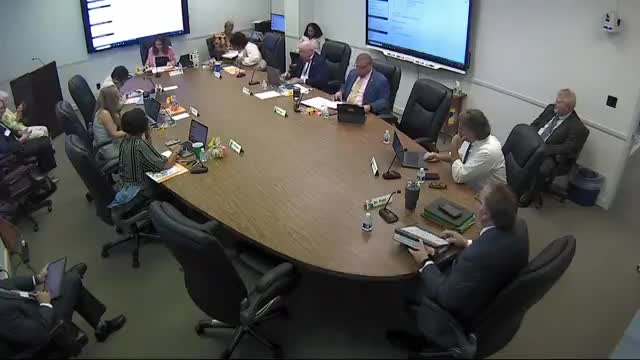
Interim Superintendent James Pohl told the Norfolk School Board on July 9 that preliminary, division-held SOL results show improvement in pass rates across most student groups but that performance gaps in reading and mathematics remain larger than the board’s 10% target.
Pohl, presenting the board’s Goal 4 update on reading and math achievement gaps, said the data are internal and subject to small changes when the state publishes final results. “The goal is to make sure that no gap is greater than 10% by the end,” Pohl told the board, and he emphasized the board’s dual aim of narrowing gaps while maintaining growth for all students.
The administration’s slides and Pohl’s briefing said reading pass rates rose in the “all students” cohort and in subgroups including Black, White, students with disabilities (SWD), economically disadvantaged (SES), English learners (EL) and Hispanic students; mathematics showed pass-rate gains and smaller gaps compared with the baseline year (2022–23) for most subgroups. Pohl noted one exception: the gap between SWD and non‑SWD did not shrink to the desired level even though both groups’ pass rates improved.
Board members asked for school-level detail. Pohl replied that the district does not have many outliers: some schools show widening gaps while others show strong narrowing, and the overall pattern is “pretty consistent” across schools. He said the division will continue monthly collaborative data meetings that drill from divisionwide pass rates to standard‑level results and that the English and math offices will develop professional learning focused on strengthening Tier 1 instruction.
Pohl described recent program evaluations with a third party (Hanover) on software products: higher usage of Lexia and Edmentum correlated with student gains, particularly in elementary grades, while IXL was phased out because it did not show similar results. He said middle school implementation fidelity for Lexia is a specific target; the division is also evaluating interim assessment tools such as STAR and a student growth assessment to select a better interim measure for next year.
The administration listed next steps: continued subgroup and school‑level analysis, targeted professional development, refinement of curriculum documents to clarify instructional priorities, and expanded tutoring and university partnerships to support middle‑grade reading blocks. Pohl told the board the division will use the summer leadership institute and school comprehensive support plan (CSSP) structures to strengthen implementation.
Board members pressed whether current five‑year targets should be adjusted or whether the district needs accelerated strategies to meet them; Pohl said goal‑setting and target‑setting were established with the board, and he recommended a strategic‑planning refresh before the 2025–26 cycle ends so the board and administration share benchmarks and implementation priorities.
The discussion was framed as analysis and planning; the board did not take a formal vote. The administration emphasized data refinement and implementation fidelity as the primary levers for narrowing gaps while sustaining overall growth.
Pohl, presenting the board’s Goal 4 update on reading and math achievement gaps, said the data are internal and subject to small changes when the state publishes final results. “The goal is to make sure that no gap is greater than 10% by the end,” Pohl told the board, and he emphasized the board’s dual aim of narrowing gaps while maintaining growth for all students.
The administration’s slides and Pohl’s briefing said reading pass rates rose in the “all students” cohort and in subgroups including Black, White, students with disabilities (SWD), economically disadvantaged (SES), English learners (EL) and Hispanic students; mathematics showed pass-rate gains and smaller gaps compared with the baseline year (2022–23) for most subgroups. Pohl noted one exception: the gap between SWD and non‑SWD did not shrink to the desired level even though both groups’ pass rates improved.
Board members asked for school-level detail. Pohl replied that the district does not have many outliers: some schools show widening gaps while others show strong narrowing, and the overall pattern is “pretty consistent” across schools. He said the division will continue monthly collaborative data meetings that drill from divisionwide pass rates to standard‑level results and that the English and math offices will develop professional learning focused on strengthening Tier 1 instruction.
Pohl described recent program evaluations with a third party (Hanover) on software products: higher usage of Lexia and Edmentum correlated with student gains, particularly in elementary grades, while IXL was phased out because it did not show similar results. He said middle school implementation fidelity for Lexia is a specific target; the division is also evaluating interim assessment tools such as STAR and a student growth assessment to select a better interim measure for next year.
The administration listed next steps: continued subgroup and school‑level analysis, targeted professional development, refinement of curriculum documents to clarify instructional priorities, and expanded tutoring and university partnerships to support middle‑grade reading blocks. Pohl told the board the division will use the summer leadership institute and school comprehensive support plan (CSSP) structures to strengthen implementation.
Board members pressed whether current five‑year targets should be adjusted or whether the district needs accelerated strategies to meet them; Pohl said goal‑setting and target‑setting were established with the board, and he recommended a strategic‑planning refresh before the 2025–26 cycle ends so the board and administration share benchmarks and implementation priorities.
The discussion was framed as analysis and planning; the board did not take a formal vote. The administration emphasized data refinement and implementation fidelity as the primary levers for narrowing gaps while sustaining overall growth.
Don't Miss a Word: See the Full Meeting!
Go beyond summaries. Unlock every video, transcript, and key insight with a Founder Membership.
✓
Get instant access to full meeting videos
✓
Search and clip any phrase from complete transcripts
✓
Receive AI-powered summaries & custom alerts
✓
Enjoy lifetime, unrestricted access to government data
30-day money-back guarantee
