Public raises $41 million question as North Penn board details high school project costs
July 18, 2025 | North Penn SD, School Districts, Pennsylvania
This article was created by AI summarizing key points discussed. AI makes mistakes, so for full details and context, please refer to the video of the full meeting. Please report any errors so we can fix them. Report an error »
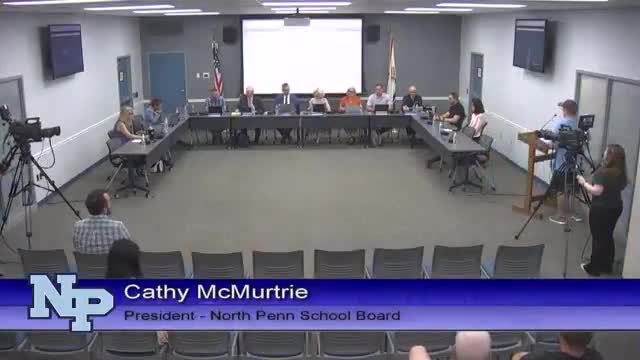
Jason Lanier, a resident of Lansdale, asked the North Penn School District Board of School Directors on July 17 why recent project estimates for the high school showed roughly $41 million more than the $236 million figure he said voters approved. “Why are we $41,000,000 higher?” Lanier asked during the public-comment portion.
The question prompted extended explanation from Superintendent Dr. John Bauer and comments from board members. Dr. Bauer said the $237 million figure discussed previously represented a “basic renovation cost,” while a separate $400 million figure reflected an “all-in” cost that included adding ninth grade. He reiterated that the special election asked whether voters would allow the district to borrow $97 million outside Act 1 specifically to add ninth grade, and that voters rejected that borrowing.
Why this matters: the figures cited at different points — a $237 million baseline, $400 million all-in cost, and other line items identified by commenters — affect public expectations about how much local borrowing and tax impact the project could produce.
Board context and clarifications
Dr. Bauer told the board he had previously emailed Lanier on June 30 to address similar questions and read excerpts summarizing the differences between the numbers: the $237 million number described a basic renovation plan; the $400 million number included additional scope such as the ninth-grade addition. He also said the district’s borrowing capacity was roughly $300 million but that the board had chosen not to use the full amount because of other capital needs.
During public comment Lanier pointed to specific line items he said were included in the $236 million figure: $15 million for temporary modular classrooms and $3 million to buy off-site land for the transportation building. He argued that, if those two items are excluded, the starting figure should be about $218 million and questioned the district’s path to a roughly $259 million estimate cited at a recent Facilities & Operations meeting.
Resident Yanni Lambros echoed concerns about tax pressure on renters, seniors and other residents and asked the district to consider maintaining existing buildings rather than concentrating funds on new construction.
District response and next steps
Dr. Bauer and President McMurtry (board president) said the district is pursuing cost-saving steps such as not purchasing separate property for the transportation center; the transportation building will still be rebuilt on site using a substantial amount of prefabricated construction. Board staffer Ryan said he would add a follow-up item about the condition of PennDell to the Facilities & Operations agenda.
No final board vote on the high school’s scope or financing occurred at the July 17 meeting. Dr. Bauer said the administration would continue to provide clarifying documents and pointed to the June 30 F&O meeting and posted FAQs for further detail.
Public-record authorities and limits
Dr. Bauer emphasized that the special election question was whether voters would approve borrowing $97 million outside Act 1 to add ninth grade; that referendum was not a vote on a final project budget. The board noted the Pennsylvania Sunshine Law applies to public-comment recording and that borrowing decisions are constrained by state law (Act 1) and by the district’s internal capital-planning choices.
Ending
Board members asked administration to produce follow-up materials that trace how the district moved from the previously discussed figures to the current estimates and to post or distribute those materials publicly. Residents who raised concerns said they expect a written, itemized explanation of scope changes and cost drivers.
The question prompted extended explanation from Superintendent Dr. John Bauer and comments from board members. Dr. Bauer said the $237 million figure discussed previously represented a “basic renovation cost,” while a separate $400 million figure reflected an “all-in” cost that included adding ninth grade. He reiterated that the special election asked whether voters would allow the district to borrow $97 million outside Act 1 specifically to add ninth grade, and that voters rejected that borrowing.
Why this matters: the figures cited at different points — a $237 million baseline, $400 million all-in cost, and other line items identified by commenters — affect public expectations about how much local borrowing and tax impact the project could produce.
Board context and clarifications
Dr. Bauer told the board he had previously emailed Lanier on June 30 to address similar questions and read excerpts summarizing the differences between the numbers: the $237 million number described a basic renovation plan; the $400 million number included additional scope such as the ninth-grade addition. He also said the district’s borrowing capacity was roughly $300 million but that the board had chosen not to use the full amount because of other capital needs.
During public comment Lanier pointed to specific line items he said were included in the $236 million figure: $15 million for temporary modular classrooms and $3 million to buy off-site land for the transportation building. He argued that, if those two items are excluded, the starting figure should be about $218 million and questioned the district’s path to a roughly $259 million estimate cited at a recent Facilities & Operations meeting.
Resident Yanni Lambros echoed concerns about tax pressure on renters, seniors and other residents and asked the district to consider maintaining existing buildings rather than concentrating funds on new construction.
District response and next steps
Dr. Bauer and President McMurtry (board president) said the district is pursuing cost-saving steps such as not purchasing separate property for the transportation center; the transportation building will still be rebuilt on site using a substantial amount of prefabricated construction. Board staffer Ryan said he would add a follow-up item about the condition of PennDell to the Facilities & Operations agenda.
No final board vote on the high school’s scope or financing occurred at the July 17 meeting. Dr. Bauer said the administration would continue to provide clarifying documents and pointed to the June 30 F&O meeting and posted FAQs for further detail.
Public-record authorities and limits
Dr. Bauer emphasized that the special election question was whether voters would approve borrowing $97 million outside Act 1 to add ninth grade; that referendum was not a vote on a final project budget. The board noted the Pennsylvania Sunshine Law applies to public-comment recording and that borrowing decisions are constrained by state law (Act 1) and by the district’s internal capital-planning choices.
Ending
Board members asked administration to produce follow-up materials that trace how the district moved from the previously discussed figures to the current estimates and to post or distribute those materials publicly. Residents who raised concerns said they expect a written, itemized explanation of scope changes and cost drivers.
Don't Miss a Word: See the Full Meeting!
Go beyond summaries. Unlock every video, transcript, and key insight with a Founder Membership.
✓
Get instant access to full meeting videos
✓
Search and clip any phrase from complete transcripts
✓
Receive AI-powered summaries & custom alerts
✓
Enjoy lifetime, unrestricted access to government data
30-day money-back guarantee
