Norwalk zoning board denies variance for 6 Lane Road, asks for redesigned site plan
July 18, 2025 | Norwalk City, Fairfield, Connecticut
This article was created by AI summarizing key points discussed. AI makes mistakes, so for full details and context, please refer to the video of the full meeting. Please report any errors so we can fix them. Report an error »
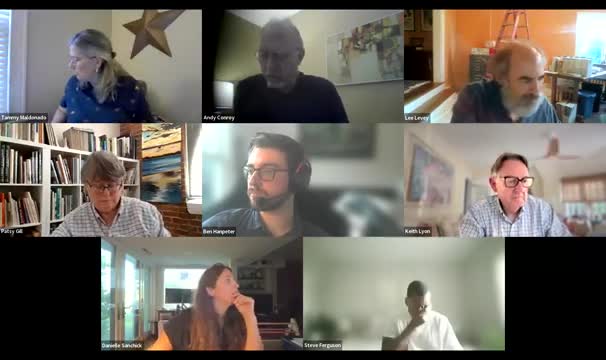
NORWALK, Conn. — The Norwalk Zoning Board of Appeals on July 17 voted 4-1 to deny without prejudice a variance request to build a new single-family residence at 6 Lane Road, concluding that the application lacked sufficient site development detail, landscaping and architectural context for the neighborhood.
The applicant, represented by Patricia Gill of Gill and Gill Architects, sought multiple variances for a new single-family house in a CD-1M zone: reduced front-yard setbacks (30 feet required at Lane Road; 13 feet proposed; 30 feet required at East Rocks Road; 18.5 feet proposed), a 13-foot roofed entry into the Lane Road setback, and parking within the front setback (required 30 feet; proposals of 18 feet at Lane Road and 20 feet at East Rocks Road were cited in the application). The property is identified as District 1, Block 83, Lot 33 and the parcel traces to a subdivision recorded in 1928.
“The hardship is that it was cut as a buildable lot, and then the zoning regulations imposed all of the setbacks and restrictions on the lot after it was already subdivided,” Patricia Gill told the board, describing efforts to reduce the footprint and keep as many existing trees as possible.
Neighbors who spoke during public comment urged the board to reject or require changes to the plan. Amy Cool, a longtime resident who submitted a written comment, said the proposed house is “being shoehorned into a tiny space” and would not fit the architectural character of the area. “Lane is incredibly narrow… I think our neighborhood character is in jeopardy,” she said. Serena Catuno, who lives at 6 East Rocks Road, said the additional home “is going to add way too much congestion” on the narrow lane. Other nearby residents, including Roger Bruard of 1 Lane Road and Gail (last name not provided), also told the board they opposed the plan, citing traffic and neighborhood impacts.
Board members pressed the applicant for site details during the hearing: how many trees would be removed (the surveyor did not mark tree locations), whether blasting for ledge was anticipated (the applicant said they did not anticipate ledge but would adjust if rock was encountered), and where outdoor living space would be provided (the applicant said the house would have a front porch but no decks or terraces were shown). The application included interior square-footage figures supplied by the architect but did not show a detailed landscaping plan.
During deliberations, board members said the lot’s small size and the recent zoning rewrite—which established larger front setbacks in some zones—have left a much smaller buildable envelope than existed when the parcel was subdivided in 1928. Several commissioners said they were sympathetic to that constraint but were not satisfied with the materials presented, particularly the lack of a full site-development concept and the absence of landscaping and context-sensitive architecture.
Lee Levy moved to deny the variance application without prejudice and asked the applicant to return with a revised submittal that includes a full site-development plan, proposed landscaping and architectural changes that better relate to the neighborhood; the motion was seconded by Danielle (board secretary). The motion passed 4-1. One member said they would have voted to approve the application as submitted.
The board did not impose conditions beyond the request for a resubmission. Under the board’s procedural rules a denial without prejudice allows the applicant to reapply; the applicant indicated they would revise plans and return to a future meeting.
Why it matters: The decision highlights tension between Norwalk’s updated zoning standards — which aim to shape building placement and neighborhood character — and owners of small, preexisting parcels created before modern setback rules. The board’s request for more detailed site planning and contextual architecture signals expectations applicants must meet to gain approval on constrained lots.
What’s next: The applicant was instructed to revise and refile; the board suggested the applicant consider smaller footprints, improved screening and a layout that preserves existing trees where feasible. The case will return to the board if and when the applicant submits a revised application.
Sources: Norwalk Zoning Board of Appeals meeting transcript, July 17, 2025; application materials submitted for Item 25-0515-01.
The applicant, represented by Patricia Gill of Gill and Gill Architects, sought multiple variances for a new single-family house in a CD-1M zone: reduced front-yard setbacks (30 feet required at Lane Road; 13 feet proposed; 30 feet required at East Rocks Road; 18.5 feet proposed), a 13-foot roofed entry into the Lane Road setback, and parking within the front setback (required 30 feet; proposals of 18 feet at Lane Road and 20 feet at East Rocks Road were cited in the application). The property is identified as District 1, Block 83, Lot 33 and the parcel traces to a subdivision recorded in 1928.
“The hardship is that it was cut as a buildable lot, and then the zoning regulations imposed all of the setbacks and restrictions on the lot after it was already subdivided,” Patricia Gill told the board, describing efforts to reduce the footprint and keep as many existing trees as possible.
Neighbors who spoke during public comment urged the board to reject or require changes to the plan. Amy Cool, a longtime resident who submitted a written comment, said the proposed house is “being shoehorned into a tiny space” and would not fit the architectural character of the area. “Lane is incredibly narrow… I think our neighborhood character is in jeopardy,” she said. Serena Catuno, who lives at 6 East Rocks Road, said the additional home “is going to add way too much congestion” on the narrow lane. Other nearby residents, including Roger Bruard of 1 Lane Road and Gail (last name not provided), also told the board they opposed the plan, citing traffic and neighborhood impacts.
Board members pressed the applicant for site details during the hearing: how many trees would be removed (the surveyor did not mark tree locations), whether blasting for ledge was anticipated (the applicant said they did not anticipate ledge but would adjust if rock was encountered), and where outdoor living space would be provided (the applicant said the house would have a front porch but no decks or terraces were shown). The application included interior square-footage figures supplied by the architect but did not show a detailed landscaping plan.
During deliberations, board members said the lot’s small size and the recent zoning rewrite—which established larger front setbacks in some zones—have left a much smaller buildable envelope than existed when the parcel was subdivided in 1928. Several commissioners said they were sympathetic to that constraint but were not satisfied with the materials presented, particularly the lack of a full site-development concept and the absence of landscaping and context-sensitive architecture.
Lee Levy moved to deny the variance application without prejudice and asked the applicant to return with a revised submittal that includes a full site-development plan, proposed landscaping and architectural changes that better relate to the neighborhood; the motion was seconded by Danielle (board secretary). The motion passed 4-1. One member said they would have voted to approve the application as submitted.
The board did not impose conditions beyond the request for a resubmission. Under the board’s procedural rules a denial without prejudice allows the applicant to reapply; the applicant indicated they would revise plans and return to a future meeting.
Why it matters: The decision highlights tension between Norwalk’s updated zoning standards — which aim to shape building placement and neighborhood character — and owners of small, preexisting parcels created before modern setback rules. The board’s request for more detailed site planning and contextual architecture signals expectations applicants must meet to gain approval on constrained lots.
What’s next: The applicant was instructed to revise and refile; the board suggested the applicant consider smaller footprints, improved screening and a layout that preserves existing trees where feasible. The case will return to the board if and when the applicant submits a revised application.
Sources: Norwalk Zoning Board of Appeals meeting transcript, July 17, 2025; application materials submitted for Item 25-0515-01.
View the Full Meeting & All Its Details
This article offers just a summary. Unlock complete video, transcripts, and insights as a Founder Member.
✓
Watch full, unedited meeting videos
✓
Search every word spoken in unlimited transcripts
✓
AI summaries & real-time alerts (all government levels)
✓
Permanent access to expanding government content
30-day money-back guarantee
