Phoenix Water training emphasizes '3 Ps' and warns against flushing wipes and medications
July 18, 2025 | Events, Phoenix, Maricopa County, Arizona
This article was created by AI summarizing key points discussed. AI makes mistakes, so for full details and context, please refer to the video of the full meeting. Please report any errors so we can fix them. Report an error »
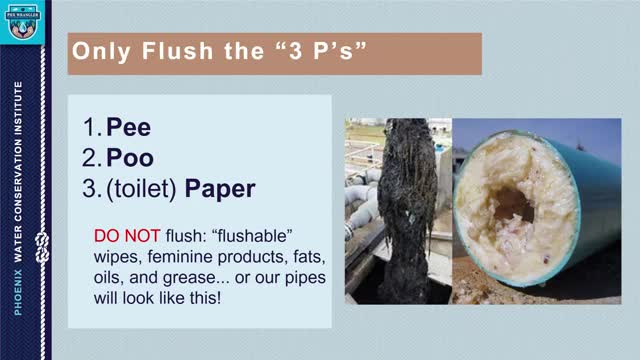
An unnamed volunteer coordinator with the City of Phoenix Water Department told trainees that household flushing should be limited to "only flush pee, poo, and paper," and cautioned that tampons, sanitary napkins, wipes and excess medication should not be flushed because they cause clogs and treatment problems.
"Basically, the only thing that should ever go down your toilet should be water, toilet paper, or something from your body," the coordinator said during Lesson 4 of Phoenix Water Wrangler training. The trainer added: "Prescription drugs that are flushed are going to our treatment plant... please don't flush those. Instead, excess medication can be dropped off at local Phoenix police stations or local drugstores and pharmacies."
The session explained basic wastewater treatment steps in simple terms: removal of solids and rags, biological processes in which microorganisms reduce nutrients such as nitrates, and light (disinfection) treatment to reduce viruses. The coordinator said that items outside the "3 Ps" can cause sanitary sewer overflows that harm the environment and household plumbing.
The training also criticized labeling of so‑called flushable wipes: "They're lying to you. These wipes are not flushable. They clog our drains and lead to more issues, so please don't flush them. Do not flush feminine products either," the coordinator said.
The coordinator framed the guidance as both environmental protection and operational necessity: preventing clogs prevents sanitary sewer overflows and reduces maintenance burdens on the collection and treatment system. For disposal of unused medication, the trainer pointed trainees to police station take‑back programs and local pharmacies.
"Basically, the only thing that should ever go down your toilet should be water, toilet paper, or something from your body," the coordinator said during Lesson 4 of Phoenix Water Wrangler training. The trainer added: "Prescription drugs that are flushed are going to our treatment plant... please don't flush those. Instead, excess medication can be dropped off at local Phoenix police stations or local drugstores and pharmacies."
The session explained basic wastewater treatment steps in simple terms: removal of solids and rags, biological processes in which microorganisms reduce nutrients such as nitrates, and light (disinfection) treatment to reduce viruses. The coordinator said that items outside the "3 Ps" can cause sanitary sewer overflows that harm the environment and household plumbing.
The training also criticized labeling of so‑called flushable wipes: "They're lying to you. These wipes are not flushable. They clog our drains and lead to more issues, so please don't flush them. Do not flush feminine products either," the coordinator said.
The coordinator framed the guidance as both environmental protection and operational necessity: preventing clogs prevents sanitary sewer overflows and reduces maintenance burdens on the collection and treatment system. For disposal of unused medication, the trainer pointed trainees to police station take‑back programs and local pharmacies.
View the Full Meeting & All Its Details
This article offers just a summary. Unlock complete video, transcripts, and insights as a Founder Member.
✓
Watch full, unedited meeting videos
✓
Search every word spoken in unlimited transcripts
✓
AI summaries & real-time alerts (all government levels)
✓
Permanent access to expanding government content
30-day money-back guarantee
