Dunn County weighs taking on annual inspections of manufactured home communities
July 18, 2025 | Dunn County, Wisconsin
This article was created by AI summarizing key points discussed. AI makes mistakes, so for full details and context, please refer to the video of the full meeting. Please report any errors so we can fix them. Report an error »
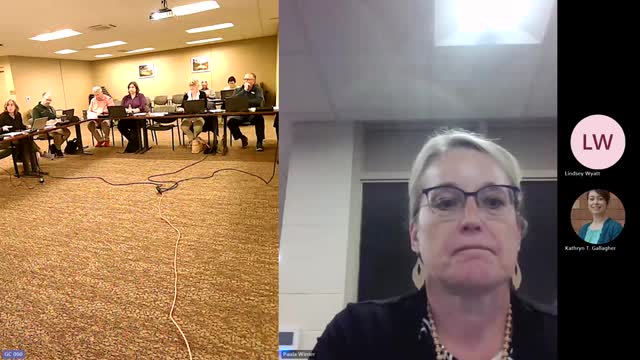
Dunn County Health and Human Services members on June 26 discussed whether the county should seek delegated authority from the Wisconsin Department of Safety and Professional Services to inspect manufactured home communities annually, after public commenters and staff raised concerns about dilapidated homes, sewer failures and expired licenses.
The issue matters because manufactured home communities often house low-income and vulnerable residents and county inspections could identify health and safety hazards earlier than the current complaint-driven state process, speakers said.
Public commenter Steve Carlson, board president of the Wisconsin Manufactured Homeowners Alliance, told the board he had reviewed state lists and found multiple communities with expired licenses and said residents report sewage backups, sand in tap water and abandoned, dilapidated homes. “Proactive annual inspections by the Dunn County Health Department would relieve MHC residents of shouldering the burden and risk of having to confront community owners individually,” Carlson said during his written statement read to the committee.
Residents who spoke at the meeting described visible trash, long-term neglect and uncertainty about where to make complaints. “They don't know where or how to make a complaint and express a fear of retaliation, real or imagined, from community owners,” Carlson said in the packet letter the board received.
Katie (KT), public health staff with environmental health experience, briefed the board on statutory and operational issues. She said state rules (SPS 326 and related DSPS guidance) require specific inspection forms and enforcement steps and allow counties to seek delegated authority but do not require DSPS to perform proactive annual inspections unless a complaint is filed. KT warned the board that lists of licensed communities vary across DSPS, municipal clerks and county zoning records—making it time consuming to determine which communities are licensable or currently licensed. She also detailed startup costs and implementation challenges, including substantial staff time, complex enforcement work when parks are out of compliance, and the risk that bringing sites up to code can result in removal of unrepairable homes and a loss of home sites.
Board members expressed concern about unintended consequences. Supervisor Steen and Dr. Hall asked whether inspections would trigger evictions or leave residents without alternative housing; Dr. Hall said the timing could be problematic given regional housing shortages. KT confirmed that making a park compliant can mean removing unusable units and that moving older manufactured homes is often infeasible or can cause them to break apart. Supervisor Bishan asked whether an owner could simply close a park after inspections; KT and others said such closures can and do occur and create difficult displacement and case‑management needs.
Cost and revenue questions also shaped the discussion. KT said DSPS fees are set on a two‑year schedule and that local health departments can set fees only for direct inspection costs; he noted DSPS requires a 37% reimbursement and that overhead costs (departmental administrative time, computers, utilities) are not reimbursable under DSPS rules. KT and board members noted that municipalities and county planning and zoning must be involved, and that ordinance updates would likely be required to collect local fees. Several attendees suggested looking to neighboring counties that have delegated authority as models for staffing, cost and ordinance language.
The committee did not vote to pursue delegated authority at the meeting. Instead, the chair and staff directed Katie and Human Services Director Paula to work with county planning and zoning and to return to the committee with more detailed financial estimates, an implementation plan, and options to reduce displacement risk. KT said she and Paula would prepare a more detailed package for future discussion.
The discussion combined public comment, staff briefing and a general direction for further study rather than a formal action. Board members emphasized protecting residents from both unsafe living conditions and unintended displacement while accounting for the county’s staffing and budget limits.
The issue matters because manufactured home communities often house low-income and vulnerable residents and county inspections could identify health and safety hazards earlier than the current complaint-driven state process, speakers said.
Public commenter Steve Carlson, board president of the Wisconsin Manufactured Homeowners Alliance, told the board he had reviewed state lists and found multiple communities with expired licenses and said residents report sewage backups, sand in tap water and abandoned, dilapidated homes. “Proactive annual inspections by the Dunn County Health Department would relieve MHC residents of shouldering the burden and risk of having to confront community owners individually,” Carlson said during his written statement read to the committee.
Residents who spoke at the meeting described visible trash, long-term neglect and uncertainty about where to make complaints. “They don't know where or how to make a complaint and express a fear of retaliation, real or imagined, from community owners,” Carlson said in the packet letter the board received.
Katie (KT), public health staff with environmental health experience, briefed the board on statutory and operational issues. She said state rules (SPS 326 and related DSPS guidance) require specific inspection forms and enforcement steps and allow counties to seek delegated authority but do not require DSPS to perform proactive annual inspections unless a complaint is filed. KT warned the board that lists of licensed communities vary across DSPS, municipal clerks and county zoning records—making it time consuming to determine which communities are licensable or currently licensed. She also detailed startup costs and implementation challenges, including substantial staff time, complex enforcement work when parks are out of compliance, and the risk that bringing sites up to code can result in removal of unrepairable homes and a loss of home sites.
Board members expressed concern about unintended consequences. Supervisor Steen and Dr. Hall asked whether inspections would trigger evictions or leave residents without alternative housing; Dr. Hall said the timing could be problematic given regional housing shortages. KT confirmed that making a park compliant can mean removing unusable units and that moving older manufactured homes is often infeasible or can cause them to break apart. Supervisor Bishan asked whether an owner could simply close a park after inspections; KT and others said such closures can and do occur and create difficult displacement and case‑management needs.
Cost and revenue questions also shaped the discussion. KT said DSPS fees are set on a two‑year schedule and that local health departments can set fees only for direct inspection costs; he noted DSPS requires a 37% reimbursement and that overhead costs (departmental administrative time, computers, utilities) are not reimbursable under DSPS rules. KT and board members noted that municipalities and county planning and zoning must be involved, and that ordinance updates would likely be required to collect local fees. Several attendees suggested looking to neighboring counties that have delegated authority as models for staffing, cost and ordinance language.
The committee did not vote to pursue delegated authority at the meeting. Instead, the chair and staff directed Katie and Human Services Director Paula to work with county planning and zoning and to return to the committee with more detailed financial estimates, an implementation plan, and options to reduce displacement risk. KT said she and Paula would prepare a more detailed package for future discussion.
The discussion combined public comment, staff briefing and a general direction for further study rather than a formal action. Board members emphasized protecting residents from both unsafe living conditions and unintended displacement while accounting for the county’s staffing and budget limits.
Don't Miss a Word: See the Full Meeting!
Go beyond summaries. Unlock every video, transcript, and key insight with a Founder Membership.
✓
Get instant access to full meeting videos
✓
Search and clip any phrase from complete transcripts
✓
Receive AI-powered summaries & custom alerts
✓
Enjoy lifetime, unrestricted access to government data
30-day money-back guarantee
