Dunn County proposes tying 2026 raises to quarterly performance check‑ins, drops step system
July 18, 2025 | Dunn County, Wisconsin
This article was created by AI summarizing key points discussed. AI makes mistakes, so for full details and context, please refer to the video of the full meeting. Please report any errors so we can fix them. Report an error »
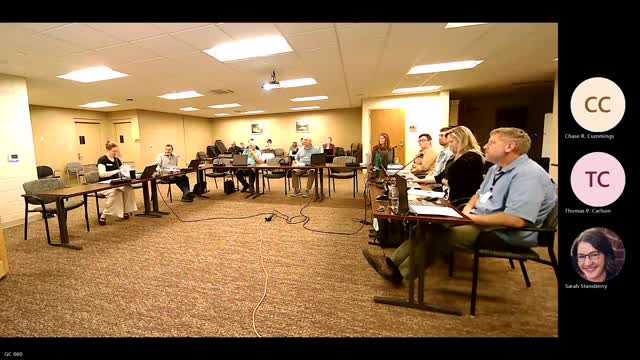
Dunn County human resources staff outlined the 2026 wage proposal at the Planning, Resource and Development Committee meeting on July 16, presenting a shift from the traditional step system to performance‑based pay adjustments tied to quarterly manager check‑ins.
Talent Development Manager Sarah Stansberry told the committee the county plans to replace the internal step increments (11 steps per grade) with a grades‑only pay grid and use documented quarterly check‑ins to determine annual increases. The proposal would set a baseline pay adjustment for employees who “meet expectations” and a larger adjustment for those who “exceed expectations.” Employees rated “needs improvement” would not receive a raise and would not receive cost‑of‑living adjustments under the 2026 recommendation.
Why it matters: The county reported that historically only about 20% of employees received formal annual evaluations. HR said the change aims to increase consistent feedback, tie pay to documented performance, and give the county flexibility in annual budget planning rather than the rigid step or no‑step choice currently embedded in the personnel ordinance.
Key elements of the proposal: Sarah Stansberry said the recommended 2026 increases are illustrative and could be adjusted when the county finalizes budget numbers. For 2026 the staff recommended:
- Employees with “meets expectations” would receive a 2.75% pay adjustment (presented as roughly 2.25% market/cost‑of‑living plus a 0.5% performance component).
- Employees with “exceeds expectations” would receive a 3.25% adjustment (an additional 0.5% above the meet level).
- Employees with “needs improvement” would not receive an increase; cost‑of‑living adjustments would not be applied to that rating in 2026 under the current proposal.
Staff also proposed that employees already at the top of a pay grade who exceed expectations would receive the additional percentage in the form of a taxable lump‑sum payment so base pay does not exceed the pay grade maximum.
Performance system and safeguards: The HR team described a simplified, quarterly check‑in using the NeoGov software. Managers document a short narrative and a three‑tier rating (exceeds, meets, needs improvement). The county will continue manager training, audit a sample of check‑ins for consistency and provide employees an opportunity to review and append commentary to their performance record. Sarah Stansberry said managers received training in May and the check‑in system launched July 1.
Budget context and timing: County staff said a full 4.75% across‑the‑board increase (previous step + COLA practice) would cost roughly $2 million in salary and fringe annually and that a 4.75% raise is at the high end of the local market. The personnel ordinance changes and the draft pay plan will go to the Committee on Administration next week for a recommendation and are scheduled for a first reading at the July county board meeting and a potential adoption in September.
Concerns raised in the meeting: Supervisors and attendees asked how managers would handle multiple direct reports, new managers evaluating inherited staff, the audit process for consistency between departments, whether employees can append rebuttal statements, and how managers will be trained to have difficult conversations. HR staff acknowledged the added workload for managers and said training, peer networks and auditing would be used to reduce inconsistency.
Next steps: The committee received the presentation; staff will take the ordinance and pay plan changes to the Committee on Administration and the full county board for consideration. If adopted, HR plans department‑level rollout, individual compensation statements after the October check‑ins and employee follow‑up sessions in January.
Talent Development Manager Sarah Stansberry told the committee the county plans to replace the internal step increments (11 steps per grade) with a grades‑only pay grid and use documented quarterly check‑ins to determine annual increases. The proposal would set a baseline pay adjustment for employees who “meet expectations” and a larger adjustment for those who “exceed expectations.” Employees rated “needs improvement” would not receive a raise and would not receive cost‑of‑living adjustments under the 2026 recommendation.
Why it matters: The county reported that historically only about 20% of employees received formal annual evaluations. HR said the change aims to increase consistent feedback, tie pay to documented performance, and give the county flexibility in annual budget planning rather than the rigid step or no‑step choice currently embedded in the personnel ordinance.
Key elements of the proposal: Sarah Stansberry said the recommended 2026 increases are illustrative and could be adjusted when the county finalizes budget numbers. For 2026 the staff recommended:
- Employees with “meets expectations” would receive a 2.75% pay adjustment (presented as roughly 2.25% market/cost‑of‑living plus a 0.5% performance component).
- Employees with “exceeds expectations” would receive a 3.25% adjustment (an additional 0.5% above the meet level).
- Employees with “needs improvement” would not receive an increase; cost‑of‑living adjustments would not be applied to that rating in 2026 under the current proposal.
Staff also proposed that employees already at the top of a pay grade who exceed expectations would receive the additional percentage in the form of a taxable lump‑sum payment so base pay does not exceed the pay grade maximum.
Performance system and safeguards: The HR team described a simplified, quarterly check‑in using the NeoGov software. Managers document a short narrative and a three‑tier rating (exceeds, meets, needs improvement). The county will continue manager training, audit a sample of check‑ins for consistency and provide employees an opportunity to review and append commentary to their performance record. Sarah Stansberry said managers received training in May and the check‑in system launched July 1.
Budget context and timing: County staff said a full 4.75% across‑the‑board increase (previous step + COLA practice) would cost roughly $2 million in salary and fringe annually and that a 4.75% raise is at the high end of the local market. The personnel ordinance changes and the draft pay plan will go to the Committee on Administration next week for a recommendation and are scheduled for a first reading at the July county board meeting and a potential adoption in September.
Concerns raised in the meeting: Supervisors and attendees asked how managers would handle multiple direct reports, new managers evaluating inherited staff, the audit process for consistency between departments, whether employees can append rebuttal statements, and how managers will be trained to have difficult conversations. HR staff acknowledged the added workload for managers and said training, peer networks and auditing would be used to reduce inconsistency.
Next steps: The committee received the presentation; staff will take the ordinance and pay plan changes to the Committee on Administration and the full county board for consideration. If adopted, HR plans department‑level rollout, individual compensation statements after the October check‑ins and employee follow‑up sessions in January.
Don't Miss a Word: See the Full Meeting!
Go beyond summaries. Unlock every video, transcript, and key insight with a Founder Membership.
✓
Get instant access to full meeting videos
✓
Search and clip any phrase from complete transcripts
✓
Receive AI-powered summaries & custom alerts
✓
Enjoy lifetime, unrestricted access to government data
30-day money-back guarantee
