Lake Community Action Agency presents residential rehab results; program runs out of funds, commission authorizes emergency completion
July 18, 2025 | City of Eustis, Lake County, Florida
This article was created by AI summarizing key points discussed. AI makes mistakes, so for full details and context, please refer to the video of the full meeting. Please report any errors so we can fix them. Report an error »
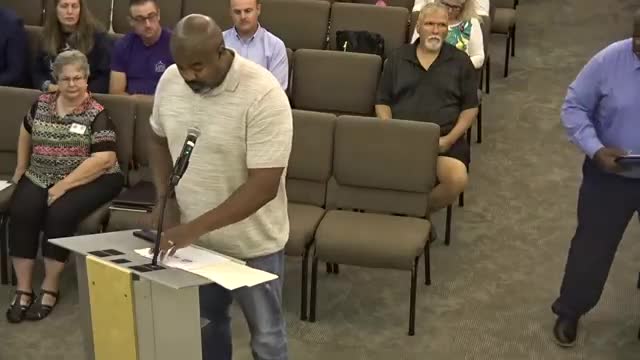
Lake Community Action Agency (LCA) staff presented a progress report on the city’s residential rehabilitation program and asked the City Commission and CRA board how to proceed after program funds were exhausted for the fiscal year.
Derek Blue, LCA project staff, described work completed under the program in the community redevelopment area (CRA), including mold remediation, bathroom and kitchen replacements, structural repairs and energy-efficiency measures such as new HVAC units and insulation. He said the program prioritizes health and safety items, documents each project with pre‑ and post‑inspections and leaves educational materials and manufacturer or contractor warranties with homeowners.
Tim Bridges, director of program operations at LCA, reviewed outcomes and finances. He said the CRA contributed roughly $302,000 over a five‑year period, of which $272,000 covered materials and labor. Using other federal and weatherization funds, the agency has completed 31 homes within the city (13 in the CRA and 18 outside), plus additional projects countywide. Bridges said LCA’s administrative model funnels about 85% of funds directly into client assistance and that contractors are local and licensed.
LCA described a program support fee ($4,000) that covers outreach, eligibility verification, development of a work scope, permit management and quality control. Bridges and Blue said typical project costs average about $12,000 per home and that the agency leverages multiple funding sources (weatherization, federal grants and CRA dollars) to cover larger needs.
Homeowners who attended described the program’s impact. Sandra Purdue, an Eustis resident, told commissioners the work — including grab bars and bathroom repairs after a fall — “really helped me because by me being a single parent… now I'm a senior citizen.” Another homeowner, Louis Armstrong, said LCA stepped in when he could no longer complete repairs due to health problems.
Program shortfall and commission direction: LCA said it had spent about $125,000 of the current fiscal year allocation and was out of funds until the next budget year on Oct. 1. Commissioners discussed adding money from CRA reserves to finish pending projects. The commission approved an immediate, emergency authorization to proceed with a qualified homeowner’s project estimated at $12,050, using purchasing procedures that allow emergency work with later CRA board notification. Commissioners also expressed support for increasing next fiscal year funding to keep the program operating without interruption.
Why it matters: The residential rehab program addresses unsafe housing conditions for low‑income and senior residents by prioritizing health, safety and energy efficiency. LCA said the program’s model emphasizes local contractors, client education and leveraging federal weatherization funds; commissioners weighed short‑term emergency funding to complete an in‑progress project and discussed larger budget adjustments ahead of the October budget cycle.
Derek Blue, LCA project staff, described work completed under the program in the community redevelopment area (CRA), including mold remediation, bathroom and kitchen replacements, structural repairs and energy-efficiency measures such as new HVAC units and insulation. He said the program prioritizes health and safety items, documents each project with pre‑ and post‑inspections and leaves educational materials and manufacturer or contractor warranties with homeowners.
Tim Bridges, director of program operations at LCA, reviewed outcomes and finances. He said the CRA contributed roughly $302,000 over a five‑year period, of which $272,000 covered materials and labor. Using other federal and weatherization funds, the agency has completed 31 homes within the city (13 in the CRA and 18 outside), plus additional projects countywide. Bridges said LCA’s administrative model funnels about 85% of funds directly into client assistance and that contractors are local and licensed.
LCA described a program support fee ($4,000) that covers outreach, eligibility verification, development of a work scope, permit management and quality control. Bridges and Blue said typical project costs average about $12,000 per home and that the agency leverages multiple funding sources (weatherization, federal grants and CRA dollars) to cover larger needs.
Homeowners who attended described the program’s impact. Sandra Purdue, an Eustis resident, told commissioners the work — including grab bars and bathroom repairs after a fall — “really helped me because by me being a single parent… now I'm a senior citizen.” Another homeowner, Louis Armstrong, said LCA stepped in when he could no longer complete repairs due to health problems.
Program shortfall and commission direction: LCA said it had spent about $125,000 of the current fiscal year allocation and was out of funds until the next budget year on Oct. 1. Commissioners discussed adding money from CRA reserves to finish pending projects. The commission approved an immediate, emergency authorization to proceed with a qualified homeowner’s project estimated at $12,050, using purchasing procedures that allow emergency work with later CRA board notification. Commissioners also expressed support for increasing next fiscal year funding to keep the program operating without interruption.
Why it matters: The residential rehab program addresses unsafe housing conditions for low‑income and senior residents by prioritizing health, safety and energy efficiency. LCA said the program’s model emphasizes local contractors, client education and leveraging federal weatherization funds; commissioners weighed short‑term emergency funding to complete an in‑progress project and discussed larger budget adjustments ahead of the October budget cycle.
Don't Miss a Word: See the Full Meeting!
Go beyond summaries. Unlock every video, transcript, and key insight with a Founder Membership.
✓
Get instant access to full meeting videos
✓
Search and clip any phrase from complete transcripts
✓
Receive AI-powered summaries & custom alerts
✓
Enjoy lifetime, unrestricted access to government data
30-day money-back guarantee
