Hutchinson City Manager proposes 2-mill levy increase and city sales tax to close budget gap
June 17, 2025 | Hutchinson City, Reno County, Kansas
This article was created by AI summarizing key points discussed. AI makes mistakes, so for full details and context, please refer to the video of the full meeting. Please report any errors so we can fix them. Report an error »
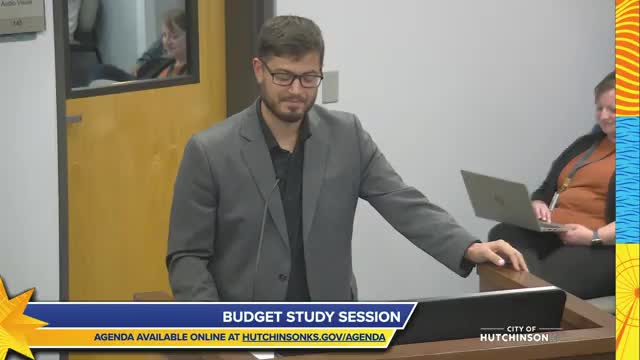
City Manager Enrico Viegas urged the Hutchinson City Council Thursday to consider a combined approach — a 2-mill increase to the city’s property tax and a city-specific sales tax — to close a projected $873,000 shortfall in the 2026 operating budget and protect the city’s bond rating.
“This is truly one of the most important policy documents that the city puts together,” Viegas told the council, summarizing staff’s budget outlook and the trade-offs behind several scenarios being considered.
Viegas and Finance staff presented three core scenarios: (1) a revenue-neutral path that keeps taxes aligned to prior-year revenue, (2) keeping the mill levy flat, and (3) the proposed 2-mill increase paired with a dedicated sales tax for streets, parks and stormwater. Viegas said the combined 2-mill and sales-tax scenario is the only one in staff modeling that turns the forecast positive in the out years — producing an estimated $3 million improvement in later years — while the revenue-neutral and flat-mill paths leave the city tens of millions short by 2029 under current assumptions.
The presentation explained the difference between “revenue neutral” and a “flat mill levy” and why flat levies can still increase a homeowner’s tax bill when assessed valuations rise. Viegas gave an example using simplified numbers: if assessed value rises while the mill levy is unchanged, total property-tax collections grow even though the city did not change the mill rate.
Finance staff presented the city’s current fiscal picture: a current mill levy near 40.33 and an ending fund balance projected to be negative $873,000 for the 2026 budget as modeled. Angela Richard of the finance team traced the recent mill-levy history, noting the levy was 44.462 in 2021, reduced in later years to provide tax relief, and that those reductions, combined with lower vacancy savings as positions are filled, contributed to the structural gap between revenues and expenditures. “Back in 2021, our mill levy was 44.462,” Richard said.
Council members and staff discussed practical impacts for residents. Viegas provided example impacts used in staff materials: a $100,000 assessed home would pay about $23 more annually under the 2-mill proposal, a $400,000 home about $92, and a commercial property roughly $500 a year. Staff also noted the city’s reliance on property tax revenue for capital projects and described the sales tax as a way to diversify revenue so capital work (streets, parks, stormwater) would not be subsidized from the general fund.
The council and staff debated the stormwater utility fee, which currently charges a residential Equivalent Residential Unit (ERU) of $4.75 per month and is limited by the 2015 ordinance that created it. Staff explained the fee’s statutory and ordinance constraints mean stormwater funds cannot be used in every instance for surface road repair after underground work, a limitation proponents say a sales-tax structure would avoid.
Staff noted several related budget drivers: the city has added park acreage (about 91 acres since 2014), roughly 73,000 square feet of building space, nearly 11,000 linear feet of multiuse trails and other amenities that increase ongoing maintenance obligations; the organization has reduced vacancy savings (there were 54 total vacancies in 2023, with public works down 21 positions and police down 13 sworn officers); and inflation and insurance cost increases have strained expenses. Viegas said staff trimmed roughly $5 million in initial gap estimates down to the current $873,000 by reprioritizing projects and delaying some capital purchases, but that further cuts would begin to remove tools and equipment employees need to deliver services.
Council members pressed for clarity on alternate approaches and consequences. Several members suggested postponing or removing certain park projects from the CIP — specifically Green Street Park, Grace Arbor (also referenced as Grace Harbor in the meeting) and Harsha Park improvements — while keeping water, sewer and core public-safety and utility projects prioritized. Staff said the Cow Creek stormwater project remains large (roughly $7 million in current estimates) and cannot be fully funded from the existing stormwater reserve; FEMA Hazard Mitigation Assistance grants and other external funding sources were discussed as necessary pieces of financing larger stormwater work.
Viegas and Richard recommended that if the council prefers not to pursue tax changes, staff needs that direction soon so it can prepare specific service-level cuts for the July budget deadline. Viegas asked the council to tell staff whether an increase is off the table so staff can prepare alternatives: “If you know in your heart right now, not happening, just we need to know that it's not happening,” he said. No formal motion or vote was taken during the study session.
Council members also raised ancillary budget items: the city is evaluating a senior property-tax abatement policy still under development; the city’s insurers for property/casualty and some coverages include Travelers and Chubb, and health benefits currently use Aetna administered by Meritain; and staff continue a compensation review and a benefits procurement process to control personnel costs. The council asked staff to return with refined fiscal scenarios, clearer comparisons to peer cities that use dedicated sales taxes, and public communications materials that explain “revenue neutral” and “flat mill levy” in plain language.
The meeting closed with no decision and direction for staff to refine the model and present options for council action at future budget hearings. Any change to the mill levy or a city sales-tax measure would require separate formal actions; the sales tax would require voter approval.
“This is truly one of the most important policy documents that the city puts together,” Viegas told the council, summarizing staff’s budget outlook and the trade-offs behind several scenarios being considered.
Viegas and Finance staff presented three core scenarios: (1) a revenue-neutral path that keeps taxes aligned to prior-year revenue, (2) keeping the mill levy flat, and (3) the proposed 2-mill increase paired with a dedicated sales tax for streets, parks and stormwater. Viegas said the combined 2-mill and sales-tax scenario is the only one in staff modeling that turns the forecast positive in the out years — producing an estimated $3 million improvement in later years — while the revenue-neutral and flat-mill paths leave the city tens of millions short by 2029 under current assumptions.
The presentation explained the difference between “revenue neutral” and a “flat mill levy” and why flat levies can still increase a homeowner’s tax bill when assessed valuations rise. Viegas gave an example using simplified numbers: if assessed value rises while the mill levy is unchanged, total property-tax collections grow even though the city did not change the mill rate.
Finance staff presented the city’s current fiscal picture: a current mill levy near 40.33 and an ending fund balance projected to be negative $873,000 for the 2026 budget as modeled. Angela Richard of the finance team traced the recent mill-levy history, noting the levy was 44.462 in 2021, reduced in later years to provide tax relief, and that those reductions, combined with lower vacancy savings as positions are filled, contributed to the structural gap between revenues and expenditures. “Back in 2021, our mill levy was 44.462,” Richard said.
Council members and staff discussed practical impacts for residents. Viegas provided example impacts used in staff materials: a $100,000 assessed home would pay about $23 more annually under the 2-mill proposal, a $400,000 home about $92, and a commercial property roughly $500 a year. Staff also noted the city’s reliance on property tax revenue for capital projects and described the sales tax as a way to diversify revenue so capital work (streets, parks, stormwater) would not be subsidized from the general fund.
The council and staff debated the stormwater utility fee, which currently charges a residential Equivalent Residential Unit (ERU) of $4.75 per month and is limited by the 2015 ordinance that created it. Staff explained the fee’s statutory and ordinance constraints mean stormwater funds cannot be used in every instance for surface road repair after underground work, a limitation proponents say a sales-tax structure would avoid.
Staff noted several related budget drivers: the city has added park acreage (about 91 acres since 2014), roughly 73,000 square feet of building space, nearly 11,000 linear feet of multiuse trails and other amenities that increase ongoing maintenance obligations; the organization has reduced vacancy savings (there were 54 total vacancies in 2023, with public works down 21 positions and police down 13 sworn officers); and inflation and insurance cost increases have strained expenses. Viegas said staff trimmed roughly $5 million in initial gap estimates down to the current $873,000 by reprioritizing projects and delaying some capital purchases, but that further cuts would begin to remove tools and equipment employees need to deliver services.
Council members pressed for clarity on alternate approaches and consequences. Several members suggested postponing or removing certain park projects from the CIP — specifically Green Street Park, Grace Arbor (also referenced as Grace Harbor in the meeting) and Harsha Park improvements — while keeping water, sewer and core public-safety and utility projects prioritized. Staff said the Cow Creek stormwater project remains large (roughly $7 million in current estimates) and cannot be fully funded from the existing stormwater reserve; FEMA Hazard Mitigation Assistance grants and other external funding sources were discussed as necessary pieces of financing larger stormwater work.
Viegas and Richard recommended that if the council prefers not to pursue tax changes, staff needs that direction soon so it can prepare specific service-level cuts for the July budget deadline. Viegas asked the council to tell staff whether an increase is off the table so staff can prepare alternatives: “If you know in your heart right now, not happening, just we need to know that it's not happening,” he said. No formal motion or vote was taken during the study session.
Council members also raised ancillary budget items: the city is evaluating a senior property-tax abatement policy still under development; the city’s insurers for property/casualty and some coverages include Travelers and Chubb, and health benefits currently use Aetna administered by Meritain; and staff continue a compensation review and a benefits procurement process to control personnel costs. The council asked staff to return with refined fiscal scenarios, clearer comparisons to peer cities that use dedicated sales taxes, and public communications materials that explain “revenue neutral” and “flat mill levy” in plain language.
The meeting closed with no decision and direction for staff to refine the model and present options for council action at future budget hearings. Any change to the mill levy or a city sales-tax measure would require separate formal actions; the sales tax would require voter approval.
View the Full Meeting & All Its Details
This article offers just a summary. Unlock complete video, transcripts, and insights as a Founder Member.
✓
Watch full, unedited meeting videos
✓
Search every word spoken in unlimited transcripts
✓
AI summaries & real-time alerts (all government levels)
✓
Permanent access to expanding government content
30-day money-back guarantee
