Council delays source-of-income provision in human relations ordinance after solicitor warns of court risk
July 23, 2025 | Narberth, Montgomery County, Pennsylvania
This article was created by AI summarizing key points discussed. AI makes mistakes, so for full details and context, please refer to the video of the full meeting. Please report any errors so we can fix them. Report an error »
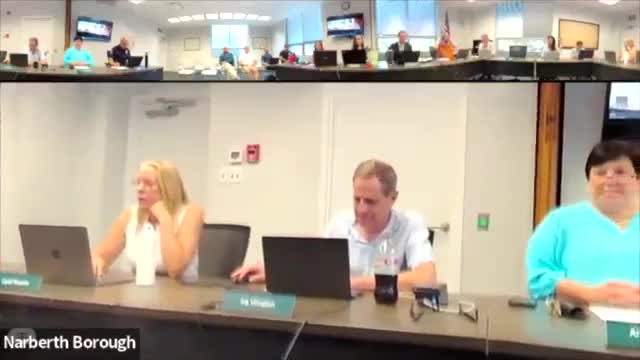
Norworth Borough Council members on July 15 agreed to remove a proposed source-of-income protection from revisions to the borough's Human Relations Commission (HRC) ordinance and to add a paragraph explicitly authorizing the commission to provide public education. The council directed staff to return a revised ordinance for consideration next month.
The change followed a presentation from staff about three suggested revisions to the HRC ordinance. The council’s solicitor told the group that a Pennsylvania Supreme Court decision has been used to challenge similar source-of-income protections in other municipalities, and that including such a provision could lead to litigation that would likely invalidate only that portion of the ordinance but expose the borough to legal costs. The solicitor recommended either adding a broad exception to prevent requiring landlords to participate in federal or state housing programs or omitting the provision.
Council members debated options. One councilmember said the intent was to protect people who rely on housing vouchers, but several members and the solicitor cautioned that a carve-out needed to be narrowly drafted and that an exception could “swallow the rule.” The solicitor described how prior cases challenged local rules that would effectively require landlords to participate in federal programs and were found vulnerable in court.
After discussion, council members expressed reluctance to adopt a provision they believed would be unenforceable and that could mislead residents about protections. The mayor and a majority of council signaled consensus to remove the source-of-income language, have staff add an explicit education authority for the HRC (for seminars, outreach and similar activities), and bring a revised ordinance back at the next meeting.
The council did not take a roll-call vote on the ordinance changes during the meeting; the action was recorded as direction to staff for revision and return. Council members also discussed the scope of any exception and the practical effect on housing discrimination enforcement options.
The discussion included references to the Philadelphia commission’s broader education function as an example and repeatedly emphasized that existing enforcement mechanisms in the draft ordinance would remain in place. The solicitor said that if a court were to invalidate the source-of-income provision, the rest of the local HRC ordinance would remain authorized under state statute.
The change followed a presentation from staff about three suggested revisions to the HRC ordinance. The council’s solicitor told the group that a Pennsylvania Supreme Court decision has been used to challenge similar source-of-income protections in other municipalities, and that including such a provision could lead to litigation that would likely invalidate only that portion of the ordinance but expose the borough to legal costs. The solicitor recommended either adding a broad exception to prevent requiring landlords to participate in federal or state housing programs or omitting the provision.
Council members debated options. One councilmember said the intent was to protect people who rely on housing vouchers, but several members and the solicitor cautioned that a carve-out needed to be narrowly drafted and that an exception could “swallow the rule.” The solicitor described how prior cases challenged local rules that would effectively require landlords to participate in federal programs and were found vulnerable in court.
After discussion, council members expressed reluctance to adopt a provision they believed would be unenforceable and that could mislead residents about protections. The mayor and a majority of council signaled consensus to remove the source-of-income language, have staff add an explicit education authority for the HRC (for seminars, outreach and similar activities), and bring a revised ordinance back at the next meeting.
The council did not take a roll-call vote on the ordinance changes during the meeting; the action was recorded as direction to staff for revision and return. Council members also discussed the scope of any exception and the practical effect on housing discrimination enforcement options.
The discussion included references to the Philadelphia commission’s broader education function as an example and repeatedly emphasized that existing enforcement mechanisms in the draft ordinance would remain in place. The solicitor said that if a court were to invalidate the source-of-income provision, the rest of the local HRC ordinance would remain authorized under state statute.
Don't Miss a Word: See the Full Meeting!
Go beyond summaries. Unlock every video, transcript, and key insight with a Founder Membership.
✓
Get instant access to full meeting videos
✓
Search and clip any phrase from complete transcripts
✓
Receive AI-powered summaries & custom alerts
✓
Enjoy lifetime, unrestricted access to government data
30-day money-back guarantee
