Council considers advisory question on election districts; residents raise equity and parochialism concerns
July 24, 2025 | Greenbelt, Prince George's County, Maryland
This article was created by AI summarizing key points discussed. AI makes mistakes, so for full details and context, please refer to the video of the full meeting. Please report any errors so we can fix them. Report an error »
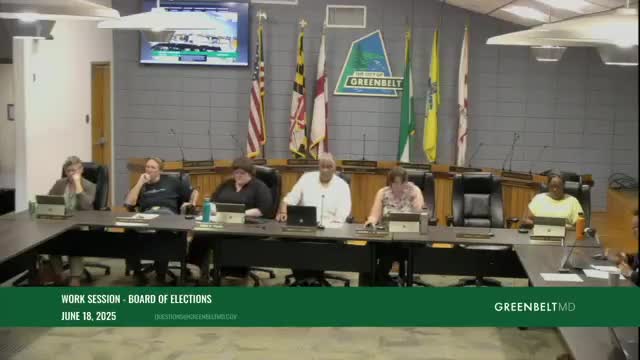
The Board of Elections presented several ways the city could add election districts — from two to five — and explained two main models: district‑resident representation (only district residents vote for the district seat) or at‑large elections with residency requirements (candidates must live in a district but all voters elect them).
Why it matters: creating districts would change who chooses particular council members and could address concerns that some neighborhoods feel underrepresented. Council members and residents debated whether districts would improve equity or instead create parochialism.
Options and questions raised: Board Chair Steve Gilbert explained the possible formats: fully districted seats or hybrid at‑large/district residency with citywide voting. Councilmember Apopee said the board’s phrasing — asking residents whether they want districts before detailed plans — was appropriate and would allow the city time to develop implementation details if voters support the idea.
Resident comments: Joan Estinson said she was accustomed to wards in a larger city and found at‑large systems confusing for residents; Jay Davis and other residents warned that districts can lead to territorial behavior and disparate voter power if precinct sizes vary. One council member noted that if a district needs far fewer votes to elect a council member than another district, that could raise equity concerns.
Outcome: the board recommended the question go to voters as a first step rather than adopting a detailed district map immediately. Council did not adopt a district plan; members requested additional analysis on different districting models, vote parity and whether to pair any district change with staggered terms or at‑large elements.
Ending: Council asked staff and the Board of Elections to research district options, equity implications and sample ballot language for future meetings; no ordinance or map was adopted.
Why it matters: creating districts would change who chooses particular council members and could address concerns that some neighborhoods feel underrepresented. Council members and residents debated whether districts would improve equity or instead create parochialism.
Options and questions raised: Board Chair Steve Gilbert explained the possible formats: fully districted seats or hybrid at‑large/district residency with citywide voting. Councilmember Apopee said the board’s phrasing — asking residents whether they want districts before detailed plans — was appropriate and would allow the city time to develop implementation details if voters support the idea.
Resident comments: Joan Estinson said she was accustomed to wards in a larger city and found at‑large systems confusing for residents; Jay Davis and other residents warned that districts can lead to territorial behavior and disparate voter power if precinct sizes vary. One council member noted that if a district needs far fewer votes to elect a council member than another district, that could raise equity concerns.
Outcome: the board recommended the question go to voters as a first step rather than adopting a detailed district map immediately. Council did not adopt a district plan; members requested additional analysis on different districting models, vote parity and whether to pair any district change with staggered terms or at‑large elements.
Ending: Council asked staff and the Board of Elections to research district options, equity implications and sample ballot language for future meetings; no ordinance or map was adopted.
View the Full Meeting & All Its Details
This article offers just a summary. Unlock complete video, transcripts, and insights as a Founder Member.
✓
Watch full, unedited meeting videos
✓
Search every word spoken in unlimited transcripts
✓
AI summaries & real-time alerts (all government levels)
✓
Permanent access to expanding government content
30-day money-back guarantee
