Selectmen approve conceptual clearing, seek bids for Hidden Springs DPW site with 100-foot brook buffer
July 24, 2025 | Alton Town, Belknap County, New Hampshire
This article was created by AI summarizing key points discussed. AI makes mistakes, so for full details and context, please refer to the video of the full meeting. Please report any errors so we can fix them. Report an error »
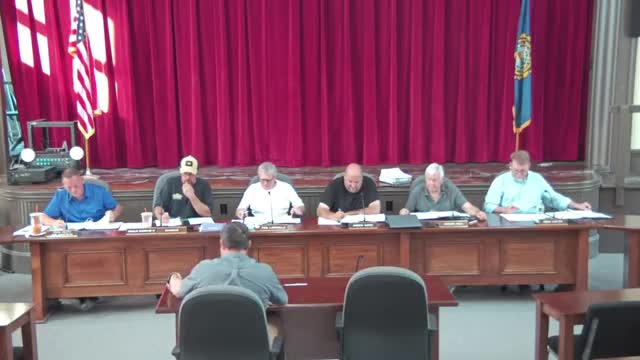
The Alton Board of Selectmen on July 22 reviewed a conceptual design and authorized solicitation of bids to clear and prepare a building envelope at the Hidden Springs property to accommodate a future Department of Public Works facility, while adopting a 100-foot setback from Hurd Brook for the permitting package.
Board members say the item matters because clearing and permitting the parcel would establish a visible building envelope voters can understand before the town decides whether to seek bonding for construction. The board and staff repeatedly described the current work as conceptual and said any actual construction would require further approvals, funding votes and compliance with state Alteration of Terrain (AOT) permitting requirements.
Andre, a town presenter, told the board the conceptual plan was prepared to support an AOT permit and to show a potential footprint for a DPW building, storage areas and future recreational possibilities. He said the conservation commission requested a 100-foot buffer from Hurd Brook "which we accommodated," and that the town asked the engineering consultant to map that buffer on both sides of the brook. Andre said the buffer largely removed a previously proposed 10-acre selective-cut area along the brook. He told the board that, "before any earth moving activities go in there, we can cut, we can log. We cannot remove any stumps or grade any land or earth moving activities without alteration of terrain."
Public Works Director Seth described operational needs that drove the site choice: lower-sided open storage for culverts and pipe, easier equipment staging adjacent to the solid-waste center, and consolidated storage to reduce off-site trips. Seth also described options discussed with a vendor and explained why the town asked the engineering consultant and conservation commission to map buffers before bidding.
Board members and members of the public pressed for specifics. Andre and staff said the town has already contracted Ty and Bond (the engineering consultant) to produce permit-level documents and that the contract work was funded from prior capital planning allocations. Andre said roughly $60,000–$70,000 had been set aside for early permitting work and that additional capital reserve funds in the highway building account were expected to cover initial clearing and stumping bids. He warned that full building costs would be a separate vote and described the funding ask as substantial; board members and commenters used a variety of large-sum estimates, and some members urged the town to look for value-engineering to reduce ultimate construction cost.
The board agreed to proceed with bid solicitation and to review bids when they are returned. Several board members directed staff to ensure bid packages and the advertised limit of work reflect the agreed 100-foot buffer along Hurd Brook so contractors do not assume a larger clear-cut. Andre said the bid submission period was open and that bids would be returned to the board for award decisions.
Members of the public urged restraint in clearing. Kelly Sullivan and Jill Hauser, during public input, said the town should minimize clearing and conserve wetlands where possible; both urged that the town consider long-term maintenance costs and the potential for future recreational use if less land were removed now. Donald Richardson asked staff to ensure preconstruction signage and direct notices to seasonal-water customers as other infrastructure work proceeds.
No construction contract was awarded at the July 22 meeting. Staff will bring returned bids and any recommended awards back to the Board of Selectmen for explicit action.
Planning and permitting context: staff said the AOT permit and current DES rules permit planning flexibility but cautioned that regulatory standards may change, and that an approved AOT permit lasts five years with possible extensions. The board asked staff to confirm quantities used in bid documents (several board members noted a discrepancy between a 28.5-acre clearing figure on one drawing and their own 18–19 acre estimate once the 100-foot brook buffer is applied).
The board also discussed phasing alternatives, potential reuse of the current DPW site (including parking and possible community or recreation uses), and the importance of showing a clear, visual footprint for voters if the town later places a bond question on the ballot.
Board members say the item matters because clearing and permitting the parcel would establish a visible building envelope voters can understand before the town decides whether to seek bonding for construction. The board and staff repeatedly described the current work as conceptual and said any actual construction would require further approvals, funding votes and compliance with state Alteration of Terrain (AOT) permitting requirements.
Andre, a town presenter, told the board the conceptual plan was prepared to support an AOT permit and to show a potential footprint for a DPW building, storage areas and future recreational possibilities. He said the conservation commission requested a 100-foot buffer from Hurd Brook "which we accommodated," and that the town asked the engineering consultant to map that buffer on both sides of the brook. Andre said the buffer largely removed a previously proposed 10-acre selective-cut area along the brook. He told the board that, "before any earth moving activities go in there, we can cut, we can log. We cannot remove any stumps or grade any land or earth moving activities without alteration of terrain."
Public Works Director Seth described operational needs that drove the site choice: lower-sided open storage for culverts and pipe, easier equipment staging adjacent to the solid-waste center, and consolidated storage to reduce off-site trips. Seth also described options discussed with a vendor and explained why the town asked the engineering consultant and conservation commission to map buffers before bidding.
Board members and members of the public pressed for specifics. Andre and staff said the town has already contracted Ty and Bond (the engineering consultant) to produce permit-level documents and that the contract work was funded from prior capital planning allocations. Andre said roughly $60,000–$70,000 had been set aside for early permitting work and that additional capital reserve funds in the highway building account were expected to cover initial clearing and stumping bids. He warned that full building costs would be a separate vote and described the funding ask as substantial; board members and commenters used a variety of large-sum estimates, and some members urged the town to look for value-engineering to reduce ultimate construction cost.
The board agreed to proceed with bid solicitation and to review bids when they are returned. Several board members directed staff to ensure bid packages and the advertised limit of work reflect the agreed 100-foot buffer along Hurd Brook so contractors do not assume a larger clear-cut. Andre said the bid submission period was open and that bids would be returned to the board for award decisions.
Members of the public urged restraint in clearing. Kelly Sullivan and Jill Hauser, during public input, said the town should minimize clearing and conserve wetlands where possible; both urged that the town consider long-term maintenance costs and the potential for future recreational use if less land were removed now. Donald Richardson asked staff to ensure preconstruction signage and direct notices to seasonal-water customers as other infrastructure work proceeds.
No construction contract was awarded at the July 22 meeting. Staff will bring returned bids and any recommended awards back to the Board of Selectmen for explicit action.
Planning and permitting context: staff said the AOT permit and current DES rules permit planning flexibility but cautioned that regulatory standards may change, and that an approved AOT permit lasts five years with possible extensions. The board asked staff to confirm quantities used in bid documents (several board members noted a discrepancy between a 28.5-acre clearing figure on one drawing and their own 18–19 acre estimate once the 100-foot brook buffer is applied).
The board also discussed phasing alternatives, potential reuse of the current DPW site (including parking and possible community or recreation uses), and the importance of showing a clear, visual footprint for voters if the town later places a bond question on the ballot.
Don't Miss a Word: See the Full Meeting!
Go beyond summaries. Unlock every video, transcript, and key insight with a Founder Membership.
✓
Get instant access to full meeting videos
✓
Search and clip any phrase from complete transcripts
✓
Receive AI-powered summaries & custom alerts
✓
Enjoy lifetime, unrestricted access to government data
30-day money-back guarantee
