Conservation groups and towns press lawmakers to restore local control over siting of large solar projects
July 22, 2025 | 2025 Legislature MA, Massachusetts
This article was created by AI summarizing key points discussed. AI makes mistakes, so for full details and context, please refer to the video of the full meeting. Please report any errors so we can fix them. Report an error »
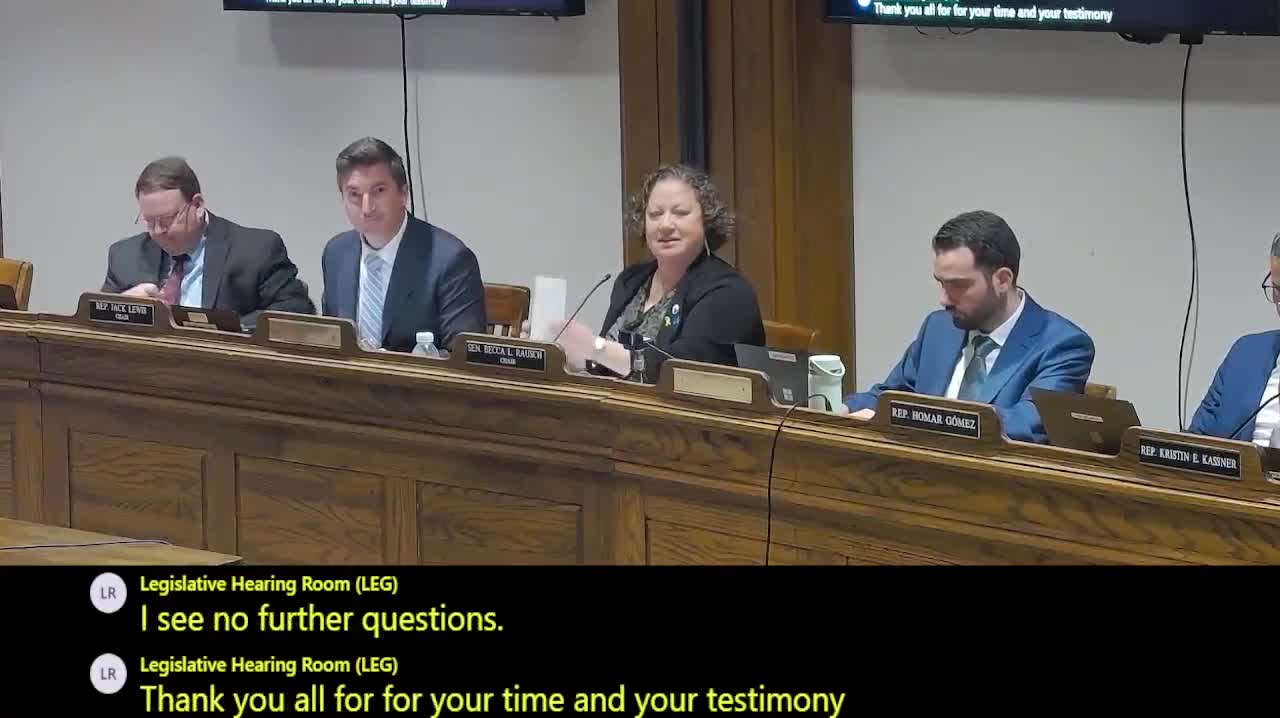
A cross-section of municipal officials, conservation groups and scientists told the joint committee Thursday they support House Bill 2312, which would amend the statutory exception commonly called the Dover Amendment so municipalities could reasonably regulate the siting of ground‑mounted solar installations under 25 megawatts.
Speakers said the 1985 statutory language was written for small rooftop systems and cannot be interpreted to foreclose local zoning review of modern, industrial-scale ground-mounted solar and battery-storage projects. "This provision was written in 1985 during an energy crisis to protect rooftop solar," James McCaffrey of Partnership for Policy Integrity said. "It was never designed to apply to industrial-scale solar and battery storage."
Nut graf: Witnesses described cases where developers proposed large arrays that required clear-cutting hundreds of acres or siting in forested or agricultural land; they urged the committee to restore municipal authority to protect wetlands, forests, farmland and public water resources while allowing low-impact solar on rooftops and disturbed sites.
Town officials and conservation advocates cited examples from North Adams and other communities in which projects were revised during permitting or resulted in unexpected visual and environmental impacts. Community Land and Water Coalition director Catherine Harrelson told the committee that clear‑cutting 50–100 acres for solar has harmed local hydrology and water protection. Several speakers noted the state's climate plan calls for siting on built environments where feasible and preserving natural and working lands to support carbon sequestration.
Ending: Supporters asked the committee to report the bill favorably and noted companion DOER siting guidelines and the SMART incentive program; they urged a legislative fix they said would balance renewable deployment with land‑use protections. The committee did not take a vote during the hearing.
Speakers said the 1985 statutory language was written for small rooftop systems and cannot be interpreted to foreclose local zoning review of modern, industrial-scale ground-mounted solar and battery-storage projects. "This provision was written in 1985 during an energy crisis to protect rooftop solar," James McCaffrey of Partnership for Policy Integrity said. "It was never designed to apply to industrial-scale solar and battery storage."
Nut graf: Witnesses described cases where developers proposed large arrays that required clear-cutting hundreds of acres or siting in forested or agricultural land; they urged the committee to restore municipal authority to protect wetlands, forests, farmland and public water resources while allowing low-impact solar on rooftops and disturbed sites.
Town officials and conservation advocates cited examples from North Adams and other communities in which projects were revised during permitting or resulted in unexpected visual and environmental impacts. Community Land and Water Coalition director Catherine Harrelson told the committee that clear‑cutting 50–100 acres for solar has harmed local hydrology and water protection. Several speakers noted the state's climate plan calls for siting on built environments where feasible and preserving natural and working lands to support carbon sequestration.
Ending: Supporters asked the committee to report the bill favorably and noted companion DOER siting guidelines and the SMART incentive program; they urged a legislative fix they said would balance renewable deployment with land‑use protections. The committee did not take a vote during the hearing.
View the Full Meeting & All Its Details
This article offers just a summary. Unlock complete video, transcripts, and insights as a Founder Member.
✓
Watch full, unedited meeting videos
✓
Search every word spoken in unlimited transcripts
✓
AI summaries & real-time alerts (all government levels)
✓
Permanent access to expanding government content
30-day money-back guarantee
