Committee Hears Bills to Expand Office of the Veterans Advocate to Serve Active-Duty and Transitioning Service Members
July 22, 2025 | 2025 Legislature MA, Massachusetts
This article was created by AI summarizing key points discussed. AI makes mistakes, so for full details and context, please refer to the video of the full meeting. Please report any errors so we can fix them. Report an error »
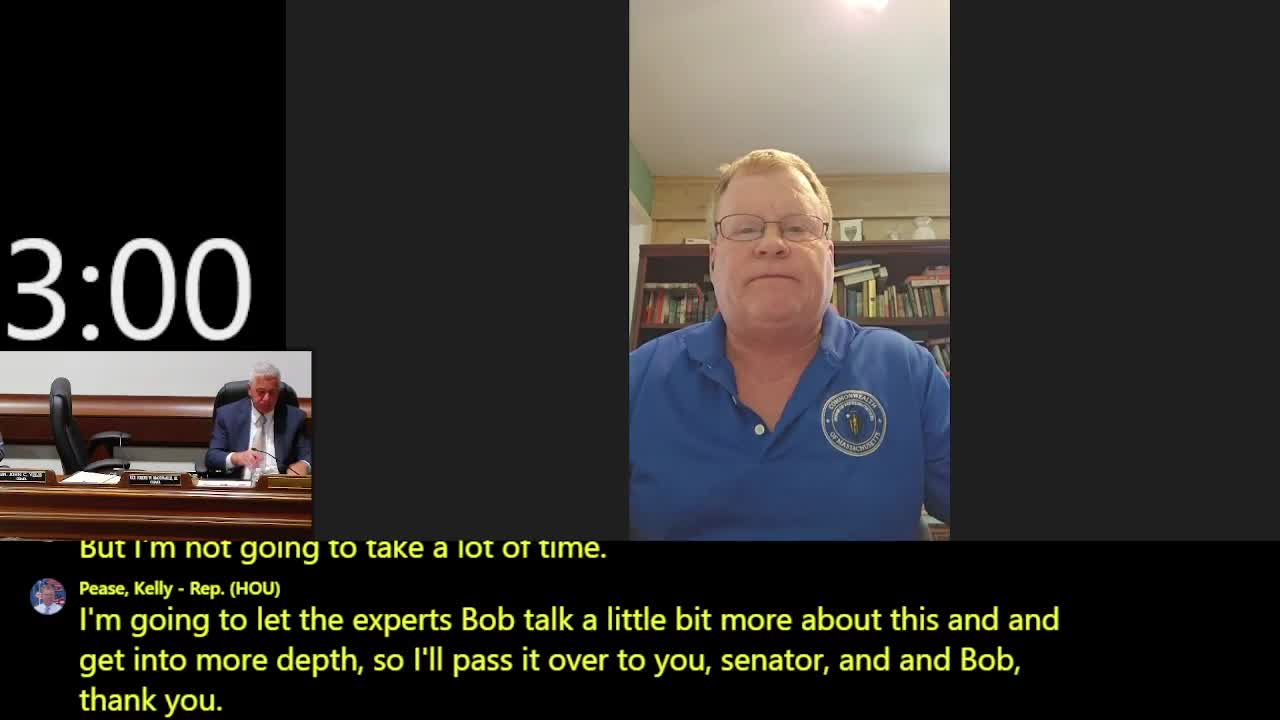
At a February public hearing, the Joint Committee on Veterans and Federal Affairs heard testimony on bills (including S.2466 and H.33872) that would expand the statutory mission of the Office of the Veteran Advocate to include active-duty members of the armed forces and to coordinate pre‑separation transition services.
Supporters told the committee that the change would let the office coordinate state resources with federal transition programs and provide earlier outreach to service members before they receive separation paperwork. Bob Notch, the Commonwealth’s veteran advocate, told the committee: "Expanding the office of the Veterans Advocate mission to include active serving members of the military of our commonwealth" would "simplify coordination to a single office through which to channel policy." He said earlier engagement could reduce the post‑separation “deadly gap” in needs and services.
Proponents argued the change would formalize existing collaborations between the Office of the Veteran Advocate and federal agencies — including the Department of Defense, Department of Veterans Affairs and Department of Labor — and help the Commonwealth retain service members and military families. Notch told the committee Massachusetts is home to "approximately 255,000 veterans," nearly "14,000" Guard and Reserve members, and "over 3,500 active duty service personnel," and he said a stronger state role could support retention and recruitment of military talent for Massachusetts employers.
Senator Fattman described personal experience with an Army unit whose members have struggled since deployment and urged additional supports; Representative Pease and other lawmakers echoed the need for earlier intervention and for connections between transition points and state employers. Notch and witnesses described outreach tools such as sharing job opportunities with service members before transition, placing information into transition locations, and coordinating state hiring needs with federal transition offices.
Committee members asked how the expanded role would relate to municipal veteran service officers (VSOs) and to existing federal Transition Assistance Program (TAP) services. Notch said municipal VSOs would continue to serve veterans after separation, and that the Office of the Veteran Advocate would coordinate across executive offices and federal agencies to provide information earlier in the process. He described existing federal TAP programs in all branches and said the proposed change is intended to add a state coordination role rather than replace federal TAP.
No formal committee action was taken during the hearing. Committee members expressed interest in the transition proposals and cautioned that identifying reserve and Guard members in transition and navigating Title 10/32 authority issues will require careful planning.
The hearing also included discussion of how an expanded office could support the Massachusetts Military Asset Security Strategy Task Force and state recruitment for high‑need roles.
Looking ahead, sponsors asked the committee to report the bills favorably so the proposals can be reviewed in detail by staff and stakeholders.
Supporters told the committee that the change would let the office coordinate state resources with federal transition programs and provide earlier outreach to service members before they receive separation paperwork. Bob Notch, the Commonwealth’s veteran advocate, told the committee: "Expanding the office of the Veterans Advocate mission to include active serving members of the military of our commonwealth" would "simplify coordination to a single office through which to channel policy." He said earlier engagement could reduce the post‑separation “deadly gap” in needs and services.
Proponents argued the change would formalize existing collaborations between the Office of the Veteran Advocate and federal agencies — including the Department of Defense, Department of Veterans Affairs and Department of Labor — and help the Commonwealth retain service members and military families. Notch told the committee Massachusetts is home to "approximately 255,000 veterans," nearly "14,000" Guard and Reserve members, and "over 3,500 active duty service personnel," and he said a stronger state role could support retention and recruitment of military talent for Massachusetts employers.
Senator Fattman described personal experience with an Army unit whose members have struggled since deployment and urged additional supports; Representative Pease and other lawmakers echoed the need for earlier intervention and for connections between transition points and state employers. Notch and witnesses described outreach tools such as sharing job opportunities with service members before transition, placing information into transition locations, and coordinating state hiring needs with federal transition offices.
Committee members asked how the expanded role would relate to municipal veteran service officers (VSOs) and to existing federal Transition Assistance Program (TAP) services. Notch said municipal VSOs would continue to serve veterans after separation, and that the Office of the Veteran Advocate would coordinate across executive offices and federal agencies to provide information earlier in the process. He described existing federal TAP programs in all branches and said the proposed change is intended to add a state coordination role rather than replace federal TAP.
No formal committee action was taken during the hearing. Committee members expressed interest in the transition proposals and cautioned that identifying reserve and Guard members in transition and navigating Title 10/32 authority issues will require careful planning.
The hearing also included discussion of how an expanded office could support the Massachusetts Military Asset Security Strategy Task Force and state recruitment for high‑need roles.
Looking ahead, sponsors asked the committee to report the bills favorably so the proposals can be reviewed in detail by staff and stakeholders.
Don't Miss a Word: See the Full Meeting!
Go beyond summaries. Unlock every video, transcript, and key insight with a Founder Membership.
✓
Get instant access to full meeting videos
✓
Search and clip any phrase from complete transcripts
✓
Receive AI-powered summaries & custom alerts
✓
Enjoy lifetime, unrestricted access to government data
30-day money-back guarantee
