Officials say natural and working lands can supply most—but not all—of Massachusetts’ 2050 offsets; bond bill would bolster conservation
July 22, 2025 | 2025 Legislature MA, Massachusetts
This article was created by AI summarizing key points discussed. AI makes mistakes, so for full details and context, please refer to the video of the full meeting. Please report any errors so we can fix them. Report an error »
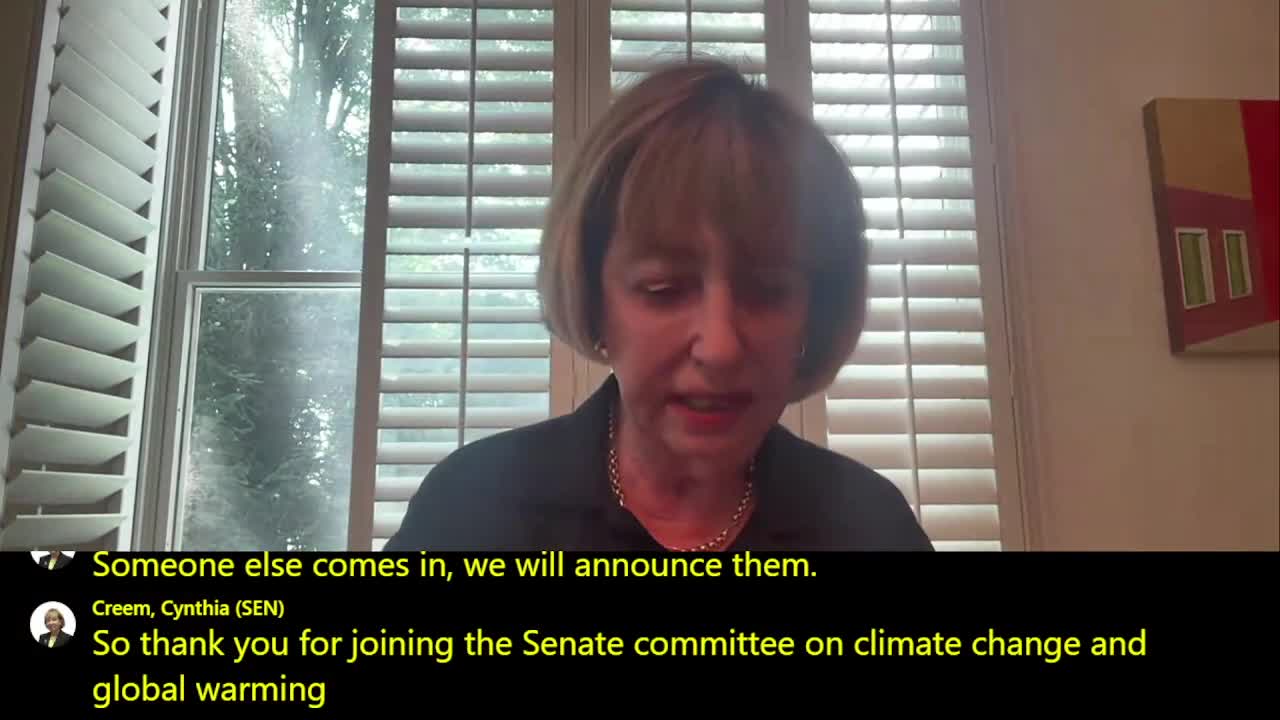
Massachusetts officials told a state legislative committee that protecting and better managing forests, wetlands, farms and soils—collectively “natural and working lands”—will be essential to meeting the Commonwealth’s net‑zero goals, even as they conceded those lands probably cannot supply the full amount of carbon removal the state has projected for 2050.
“By 2050, we expect to offset at least 10,000,000 metric tons in residual emissions and up to 7,000,000 metric tons could come from natural and working lands,” said Stephanie Cooper, executive officer at the Executive Office of Energy and Environmental Affairs (EEA), summarizing the administration’s current planning numbers. Cooper and other agency witnesses outlined components of Gov. Healey’s proposed $3,000,000,000 environmental bond bill, known in testimony as the Mass Ready Act, that would fund conservation, restoration and resilience projects across the state.
Why it matters: Massachusetts’ climate plan assumes dramatic public and private efforts to cut emissions and to “net out” the hardest‑to‑reduce residual emissions with nature‑based sequestration. Witnesses and advocates at the hearing agreed that those lands provide cost‑effective carbon removal and many co‑benefits—water protection, flood mitigation, biodiversity and public health—but said the state should not assume natural sequestration alone will close the gap to net zero.
EEA outlined the bond bill’s allocations and program updates in detail. Cooper listed program amounts included in the administration’s filing: $600,000,000 for inland and coastal flooding projects; $340,000,000 for open space and land protection; $30,000,000 for tree planting; $40,000,000 for wetlands restoration; $20,000,000 for biodiversity; $93,500,000 for dams and seawalls; and $200,000,000 for coastal resilience, including implementation of the state’s resilient coast plan. Cooper said the bill would also speed permitting for restoration by creating a general Chapter 91 license intended to approve eligible restoration projects within 60 days.
On sequestration capacity: Undersecretary Catherine Antos, EEA’s undersecretary for decarbonization and resilience, and Cooper reiterated that the state’s 2050 planning assumes roughly 10 million metric tons of residual emissions will need offsets and that “up to 7,000,000 metric tons of that could come from natural and working lands,” with the bulk from forests. Antos noted the administration released a forest carbon study earlier in the year that refines estimates of above‑ground forest carbon and underscores the importance of protecting and managing forested lands.
Federal funding setbacks and state leverage: Witnesses described recent federal grant rescissions that complicate planning. Cooper and agency staff said a multiyear USDA Regional Conservation Partnership Program award the Commonwealth expected was withdrawn; agency staff gave an approximate figure of about $22,000,000 for that grant. Assistant Secretary Kirk Gaertner said Massachusetts expects to continue to receive annual apportionments from the federal Land and Water Conservation Fund for eligible projects, and he noted the fund supports both natural lands and recreation projects.
Advocates and nonprofit partners pushed for more state funding and policy changes. Stephen Long of The Nature Conservancy and Sam Anderson of Mass Audubon both urged the Legislature to increase sustained public investment and to consider legislation that would generate recurring revenue for conservation. Long and Anderson said the administration’s proposals are a meaningful step but that advocacy coalitions are seeking larger, dedicated appropriations (witnesses cited proposals in the $100,000,000 range for new recurring state revenue and additional private financing mechanisms).
Forest policy and reserves: EEA officials described a forest climate‑solutions initiative and a goal to designate 10% of Massachusetts forests as passive reserves (managed with minimal active intervention); Cooper said the state is currently at about 3% and that agencies are reviewing state holdings and offering grants to expand reserves. The Mass Ready Act would codify a process for designating and de‑designating reserves and, Cooper said, would build in oversight by agency boards to make those decisions more durable.
Logging and active management: Cooper said active forest management on state lands affects less than 0.5% of state forest acres each year and that the administration’s new climate‑oriented stewardship guidelines aim to minimize soil disturbance and retain carbon when management occurs. The Department of Fish and Game commissioner, Tom O’Shea, joined the panel and was cited as a participant in those implementation discussions.
Permitting reform and Chapter 91: Cooper described the administration’s preference for a Chapter 91 general license that would create a checklist and certification pathway so eligible restoration projects could be “presumptively approved” in 60 days, reducing current processing times that can take many months. Advocate witnesses disagreed about whether a general license is sufficient: Steve Long (The Nature Conservancy) said his group “continues to be supportive of legislation to remove the requirement of a Chapter 91 license for ecological restoration projects,” arguing that the license process can add time and cost without improving project outcomes. Mass Audubon’s Sam Anderson made similar remarks for coastal restoration.
Soils, agriculture and urban trees: Cooper described the Healthy Soils initiative—EEA has awarded $4,700,000 in challenge grants to date and expects to award about $750,000 more this fiscal year—and said the administration plans to procure a dedicated healthy‑soils coordinator by the end of the summer. Urban forestry programs were highlighted by nonprofit witnesses: Cooper said the Greening the Gateway Cities program has planted about 49,000 trees since 2014; Cooper also described a Cool Corridors program that awarded $1,300,000 to plant trees along walking routes in 13 communities and a new riparian‑zone restoration planting plan expected this fall. David Meshullam of Speak for the Trees noted that increasing canopy reduces building energy use and cited state estimates that a 1% increase in canopy (above a 10% baseline) can reduce cooling demand by about 1.9% and heating demand by about 1.1%.
Equity, local capacity and the MVP program: Undersecretary Antos described changes to the Municipal Vulnerability Preparedness (MVP) program proposed in Mass Ready: the bill would authorize $315,000,000 for MVP and expand eligibility (including nonprofit applicants) and regional applicants so lower‑capacity rural and gateway communities could access planning and implementation funds more readily. Antos also described a resilience revolving fund—administered through the Clean Water Trust and run by EEA—to provide low‑interest loans for community resilience projects.
Local payments and Pilots: Cooper noted the bill would provide interim payments to 11 Quabbin watershed towns—$50,000 per town for two years—to acknowledge their unique role in protecting water supplies while broader PILOT (payments in lieu of taxes) reforms are studied.
Advocates’ recommendations: Conservation groups pressed for more funding and stronger protections. The Nature Conservancy and Mass Audubon urged the Legislature to scale up conserved acreage, increase public financing, improve pilot payment formulas for municipalities that host conserved lands, and adjust siting and mitigation policies so clean‑energy development avoids high‑value natural areas. Witnesses also flagged the canceled federal awards as a near‑term gap that state funding should help fill.
Next steps: Agency officials told the committee they will continue refining sequestration estimates, pursue regulatory reforms tied to the bond bill, and explore regional approaches with neighboring states to help cover the remaining offset gap. “We’re continuing to look at other strategies that we can pursue to offset the carbon dioxide equivalent that at this time we do not believe could come from natural and working lands,” Undersecretary Antos said, including discussions on carbon dioxide removal and regional accounting.
For now, the hearing left clear points of agreement—natural and working lands are cost‑effective, high‑value climate assets that deliver multiple co‑benefits—and areas of disagreement: whether Chapter 91 restoration projects should require a license and how much new state revenue is needed to meet the state’s 30‑by‑2030 and 40‑by‑2050 conservation goals. The Legislature will consider the bond bill and related statutory changes in the weeks ahead.
“By 2050, we expect to offset at least 10,000,000 metric tons in residual emissions and up to 7,000,000 metric tons could come from natural and working lands,” said Stephanie Cooper, executive officer at the Executive Office of Energy and Environmental Affairs (EEA), summarizing the administration’s current planning numbers. Cooper and other agency witnesses outlined components of Gov. Healey’s proposed $3,000,000,000 environmental bond bill, known in testimony as the Mass Ready Act, that would fund conservation, restoration and resilience projects across the state.
Why it matters: Massachusetts’ climate plan assumes dramatic public and private efforts to cut emissions and to “net out” the hardest‑to‑reduce residual emissions with nature‑based sequestration. Witnesses and advocates at the hearing agreed that those lands provide cost‑effective carbon removal and many co‑benefits—water protection, flood mitigation, biodiversity and public health—but said the state should not assume natural sequestration alone will close the gap to net zero.
EEA outlined the bond bill’s allocations and program updates in detail. Cooper listed program amounts included in the administration’s filing: $600,000,000 for inland and coastal flooding projects; $340,000,000 for open space and land protection; $30,000,000 for tree planting; $40,000,000 for wetlands restoration; $20,000,000 for biodiversity; $93,500,000 for dams and seawalls; and $200,000,000 for coastal resilience, including implementation of the state’s resilient coast plan. Cooper said the bill would also speed permitting for restoration by creating a general Chapter 91 license intended to approve eligible restoration projects within 60 days.
On sequestration capacity: Undersecretary Catherine Antos, EEA’s undersecretary for decarbonization and resilience, and Cooper reiterated that the state’s 2050 planning assumes roughly 10 million metric tons of residual emissions will need offsets and that “up to 7,000,000 metric tons of that could come from natural and working lands,” with the bulk from forests. Antos noted the administration released a forest carbon study earlier in the year that refines estimates of above‑ground forest carbon and underscores the importance of protecting and managing forested lands.
Federal funding setbacks and state leverage: Witnesses described recent federal grant rescissions that complicate planning. Cooper and agency staff said a multiyear USDA Regional Conservation Partnership Program award the Commonwealth expected was withdrawn; agency staff gave an approximate figure of about $22,000,000 for that grant. Assistant Secretary Kirk Gaertner said Massachusetts expects to continue to receive annual apportionments from the federal Land and Water Conservation Fund for eligible projects, and he noted the fund supports both natural lands and recreation projects.
Advocates and nonprofit partners pushed for more state funding and policy changes. Stephen Long of The Nature Conservancy and Sam Anderson of Mass Audubon both urged the Legislature to increase sustained public investment and to consider legislation that would generate recurring revenue for conservation. Long and Anderson said the administration’s proposals are a meaningful step but that advocacy coalitions are seeking larger, dedicated appropriations (witnesses cited proposals in the $100,000,000 range for new recurring state revenue and additional private financing mechanisms).
Forest policy and reserves: EEA officials described a forest climate‑solutions initiative and a goal to designate 10% of Massachusetts forests as passive reserves (managed with minimal active intervention); Cooper said the state is currently at about 3% and that agencies are reviewing state holdings and offering grants to expand reserves. The Mass Ready Act would codify a process for designating and de‑designating reserves and, Cooper said, would build in oversight by agency boards to make those decisions more durable.
Logging and active management: Cooper said active forest management on state lands affects less than 0.5% of state forest acres each year and that the administration’s new climate‑oriented stewardship guidelines aim to minimize soil disturbance and retain carbon when management occurs. The Department of Fish and Game commissioner, Tom O’Shea, joined the panel and was cited as a participant in those implementation discussions.
Permitting reform and Chapter 91: Cooper described the administration’s preference for a Chapter 91 general license that would create a checklist and certification pathway so eligible restoration projects could be “presumptively approved” in 60 days, reducing current processing times that can take many months. Advocate witnesses disagreed about whether a general license is sufficient: Steve Long (The Nature Conservancy) said his group “continues to be supportive of legislation to remove the requirement of a Chapter 91 license for ecological restoration projects,” arguing that the license process can add time and cost without improving project outcomes. Mass Audubon’s Sam Anderson made similar remarks for coastal restoration.
Soils, agriculture and urban trees: Cooper described the Healthy Soils initiative—EEA has awarded $4,700,000 in challenge grants to date and expects to award about $750,000 more this fiscal year—and said the administration plans to procure a dedicated healthy‑soils coordinator by the end of the summer. Urban forestry programs were highlighted by nonprofit witnesses: Cooper said the Greening the Gateway Cities program has planted about 49,000 trees since 2014; Cooper also described a Cool Corridors program that awarded $1,300,000 to plant trees along walking routes in 13 communities and a new riparian‑zone restoration planting plan expected this fall. David Meshullam of Speak for the Trees noted that increasing canopy reduces building energy use and cited state estimates that a 1% increase in canopy (above a 10% baseline) can reduce cooling demand by about 1.9% and heating demand by about 1.1%.
Equity, local capacity and the MVP program: Undersecretary Antos described changes to the Municipal Vulnerability Preparedness (MVP) program proposed in Mass Ready: the bill would authorize $315,000,000 for MVP and expand eligibility (including nonprofit applicants) and regional applicants so lower‑capacity rural and gateway communities could access planning and implementation funds more readily. Antos also described a resilience revolving fund—administered through the Clean Water Trust and run by EEA—to provide low‑interest loans for community resilience projects.
Local payments and Pilots: Cooper noted the bill would provide interim payments to 11 Quabbin watershed towns—$50,000 per town for two years—to acknowledge their unique role in protecting water supplies while broader PILOT (payments in lieu of taxes) reforms are studied.
Advocates’ recommendations: Conservation groups pressed for more funding and stronger protections. The Nature Conservancy and Mass Audubon urged the Legislature to scale up conserved acreage, increase public financing, improve pilot payment formulas for municipalities that host conserved lands, and adjust siting and mitigation policies so clean‑energy development avoids high‑value natural areas. Witnesses also flagged the canceled federal awards as a near‑term gap that state funding should help fill.
Next steps: Agency officials told the committee they will continue refining sequestration estimates, pursue regulatory reforms tied to the bond bill, and explore regional approaches with neighboring states to help cover the remaining offset gap. “We’re continuing to look at other strategies that we can pursue to offset the carbon dioxide equivalent that at this time we do not believe could come from natural and working lands,” Undersecretary Antos said, including discussions on carbon dioxide removal and regional accounting.
For now, the hearing left clear points of agreement—natural and working lands are cost‑effective, high‑value climate assets that deliver multiple co‑benefits—and areas of disagreement: whether Chapter 91 restoration projects should require a license and how much new state revenue is needed to meet the state’s 30‑by‑2030 and 40‑by‑2050 conservation goals. The Legislature will consider the bond bill and related statutory changes in the weeks ahead.
Don't Miss a Word: See the Full Meeting!
Go beyond summaries. Unlock every video, transcript, and key insight with a Founder Membership.
✓
Get instant access to full meeting videos
✓
Search and clip any phrase from complete transcripts
✓
Receive AI-powered summaries & custom alerts
✓
Enjoy lifetime, unrestricted access to government data
30-day money-back guarantee
