Legislators, librarians and authors urge Massachusetts bill to protect the ‘right to read’ and shield staff from retaliation
July 22, 2025 | 2025 Legislature MA, Massachusetts
This article was created by AI summarizing key points discussed. AI makes mistakes, so for full details and context, please refer to the video of the full meeting. Please report any errors so we can fix them. Report an error »
State legislators, library directors, authors and civil‑rights groups told a legislative hearing that Massachusetts needs a law to protect readers and librarians from coordinated book‑challenge campaigns.
At a June hearing convened by Representative Sean Garberly, House chair, and Senator Paul Mark, Senate chair, proponents asked the Joint Committee on Tourism, Arts and Cultural Development to report favorably on bills filed this session, including House Bill 3594 and Senate Bill 2328, described by sponsors as “an act regarding free expression.”
Supporters said the bills would do three things: preserve access to a wide range of materials by requiring clear, educationally grounded selection and reconsideration policies; keep materials available while challenges are considered; and protect librarians and school staff from termination, licensing discipline or other retaliation for carrying out professional duties under adopted policy.
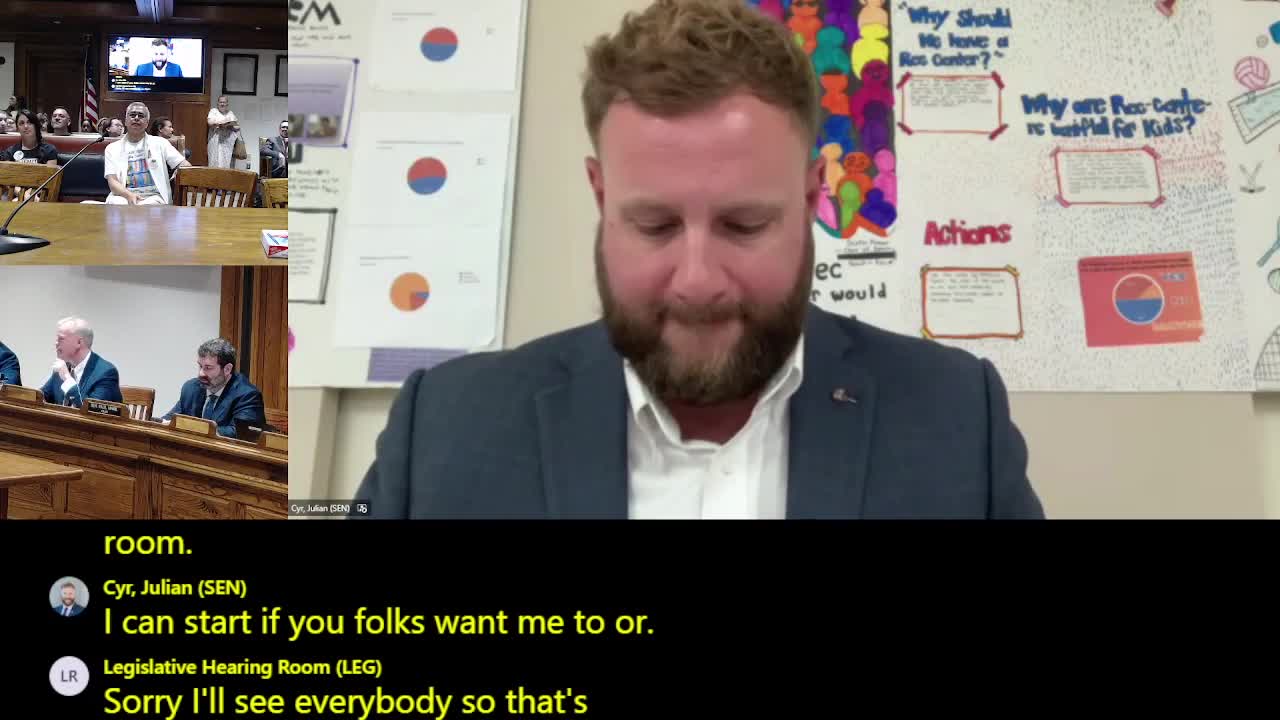
"This bill does three key things," said Senator Julian Cyr, introducing the legislation and testifying from the South Yarmouth Library. "It prevents book bans. It requires school and public libraries to maintain transparent, educationally grounded policies for selecting materials... and it prevents materials from being removed unless proven to lack value by clear and convincing evidence." His testimony noted the bill would also require annual reporting on challenges.
Authors and publishers told the committee that removals and threats are widespread and harm both creators and readers. "When our books are banned, it is our voices that are silenced," author Melinda Lo testified. Dan Novak, vice president and associate general counsel for Penguin Random House, said state law is the right level for protection: "Now is the time to do the same for the first amendment," Novak said, citing recent laws in other states as models.
Civil‑rights and library organizations described a sharp rise in challenges and related harassment. "These are politically motivated, targeted attacks," said Eva de Charleroi of the ACLU of Massachusetts, citing patterns reported by the American Library Association and local press. Several witnesses cited ALA data and press reporting that Massachusetts saw dozens of challenges in recent years and that many challenges target books by or about LGBTQ people and people of color.
School librarians and library directors gave concrete accounts of challenges, doxxing, threats and canceled programming. Reba Tierney, president of the Massachusetts School Library Association, described a challenge at her high school that left students in tears and librarians demoralized. Andrea Furillo, co‑chair of the Massachusetts Library Association’s intellectual freedom committee, said harassment has pushed library workers from the profession: "Our lives and livelihoods have been threatened," she said.
Speakers who are school librarians stressed that licensed professionals make acquisition decisions using training and established policies. "Books are sometimes windows, offering views of worlds that may be real or imagined," Reba Tierney said, quoting scholar Rudine Sims Bishop to explain why school collections should include diverse voices.
Opponents told the committee they are concerned about age‑appropriate access and parental rights. Opposition testimony referenced explicit passages in some titles and argued local school committees should retain control over materials and complaint processes. The committee hearing included several opponents who called for narrow parental oversight rather than a statewide standard.
Committee members did not take votes on the bills during the hearing. The session included more than 60 registered testifiers; speakers urged the committee to move the bills forward so that districts would have a consistent framework to handle challenges and so library workers would have legal protections when they act in good faith under local policy.
Proponents and witnesses pointed to model language and recent state precedents elsewhere. Dan Novak highlighted Rhode Island’s law as a recent example that incorporates many of the components sponsors seek to bring to Massachusetts. Several witnesses said the legislation would not bar parents from deciding what their own children read, but would limit removal of materials for the entire school or public library absent a formal review.
The hearing closed without floor action on the measures; committee members encouraged written testimony in addition to in‑person remarks.
The bill sponsors and advocates left the committee with a tally of testimony and a request that lawmakers prioritize protections for readers, for librarians’ professional judgment, and for transparent processes when materials are challenged.
At a June hearing convened by Representative Sean Garberly, House chair, and Senator Paul Mark, Senate chair, proponents asked the Joint Committee on Tourism, Arts and Cultural Development to report favorably on bills filed this session, including House Bill 3594 and Senate Bill 2328, described by sponsors as “an act regarding free expression.”
Supporters said the bills would do three things: preserve access to a wide range of materials by requiring clear, educationally grounded selection and reconsideration policies; keep materials available while challenges are considered; and protect librarians and school staff from termination, licensing discipline or other retaliation for carrying out professional duties under adopted policy.
"This bill does three key things," said Senator Julian Cyr, introducing the legislation and testifying from the South Yarmouth Library. "It prevents book bans. It requires school and public libraries to maintain transparent, educationally grounded policies for selecting materials... and it prevents materials from being removed unless proven to lack value by clear and convincing evidence." His testimony noted the bill would also require annual reporting on challenges.
Authors and publishers told the committee that removals and threats are widespread and harm both creators and readers. "When our books are banned, it is our voices that are silenced," author Melinda Lo testified. Dan Novak, vice president and associate general counsel for Penguin Random House, said state law is the right level for protection: "Now is the time to do the same for the first amendment," Novak said, citing recent laws in other states as models.
Civil‑rights and library organizations described a sharp rise in challenges and related harassment. "These are politically motivated, targeted attacks," said Eva de Charleroi of the ACLU of Massachusetts, citing patterns reported by the American Library Association and local press. Several witnesses cited ALA data and press reporting that Massachusetts saw dozens of challenges in recent years and that many challenges target books by or about LGBTQ people and people of color.
School librarians and library directors gave concrete accounts of challenges, doxxing, threats and canceled programming. Reba Tierney, president of the Massachusetts School Library Association, described a challenge at her high school that left students in tears and librarians demoralized. Andrea Furillo, co‑chair of the Massachusetts Library Association’s intellectual freedom committee, said harassment has pushed library workers from the profession: "Our lives and livelihoods have been threatened," she said.
Speakers who are school librarians stressed that licensed professionals make acquisition decisions using training and established policies. "Books are sometimes windows, offering views of worlds that may be real or imagined," Reba Tierney said, quoting scholar Rudine Sims Bishop to explain why school collections should include diverse voices.
Opponents told the committee they are concerned about age‑appropriate access and parental rights. Opposition testimony referenced explicit passages in some titles and argued local school committees should retain control over materials and complaint processes. The committee hearing included several opponents who called for narrow parental oversight rather than a statewide standard.
Committee members did not take votes on the bills during the hearing. The session included more than 60 registered testifiers; speakers urged the committee to move the bills forward so that districts would have a consistent framework to handle challenges and so library workers would have legal protections when they act in good faith under local policy.
Proponents and witnesses pointed to model language and recent state precedents elsewhere. Dan Novak highlighted Rhode Island’s law as a recent example that incorporates many of the components sponsors seek to bring to Massachusetts. Several witnesses said the legislation would not bar parents from deciding what their own children read, but would limit removal of materials for the entire school or public library absent a formal review.
The hearing closed without floor action on the measures; committee members encouraged written testimony in addition to in‑person remarks.
The bill sponsors and advocates left the committee with a tally of testimony and a request that lawmakers prioritize protections for readers, for librarians’ professional judgment, and for transparent processes when materials are challenged.
View the Full Meeting & All Its Details
This article offers just a summary. Unlock complete video, transcripts, and insights as a Founder Member.
✓
Watch full, unedited meeting videos
✓
Search every word spoken in unlimited transcripts
✓
AI summaries & real-time alerts (all government levels)
✓
Permanent access to expanding government content
30-day money-back guarantee
